Stock Analysis · Sally Beauty Holdings Inc (SBH)
Overview
Sally Beauty Holdings, Inc. (SBH) is a specialty retailer focused on beauty supplies. It sells hair color, hair care, nail products, styling tools, and other beauty-related items through a mix of physical stores and online channels. A key part of the business is serving two different audiences: everyday consumers and beauty professionals (such as salon owners and stylists) who buy products and supplies for their work.
The company’s operations are commonly described through two main business areas: Sally Beauty Supply (primarily serving retail consumers) and Beauty Systems Group (primarily serving beauty professionals). Revenue generally comes from selling branded and private-label beauty products, with sales influenced by repeat purchase patterns (for example, hair color and consumable supplies) and by trends in hair and beauty routines.
Main sources of revenue (high level):
- Retail beauty product sales to consumers (Sally Beauty Supply) — historically the larger portion of sales
- Sales to beauty professionals and salons (Beauty Systems Group)
- E-commerce sales (included within the segments above rather than a separate segment in financial reporting)
In recent years, total revenue has been relatively steady around the mid–$3.7B range annually, with profitability influenced by product margins, store operating costs, and interest expense on debt.
Over the period shown, total revenue trends slightly downward overall, while selling, general and administrative expenses remain a very large ongoing cost. Operating income and net income fluctuate, and interest expense is a meaningful recurring outflow, reflecting the importance of the company’s debt level in overall results.
Key Figures
| Metric | Value | Industry ⓘ |
|---|---|---|
| Date | Feb 08, 2026 | |
| Context | ||
| Sector | Consumer Cyclical | |
| Industry | Specialty Retail | |
| Market Cap ⓘ | $1.59B | |
| Beta ⓘ | 1.15 | |
| Fundamental | ||
| P/E Ratio ⓘ | 8.55 | 23.78 |
| Profit Margin ⓘ | 5.29% | 6.27% |
| Revenue Growth ⓘ | 1.30% | 5.20% |
| Debt to Equity ⓘ | 196.80% | 103.28% |
| PEG ⓘ | 1.04 | |
| Free Cash Flow ⓘ | $172.69M | |
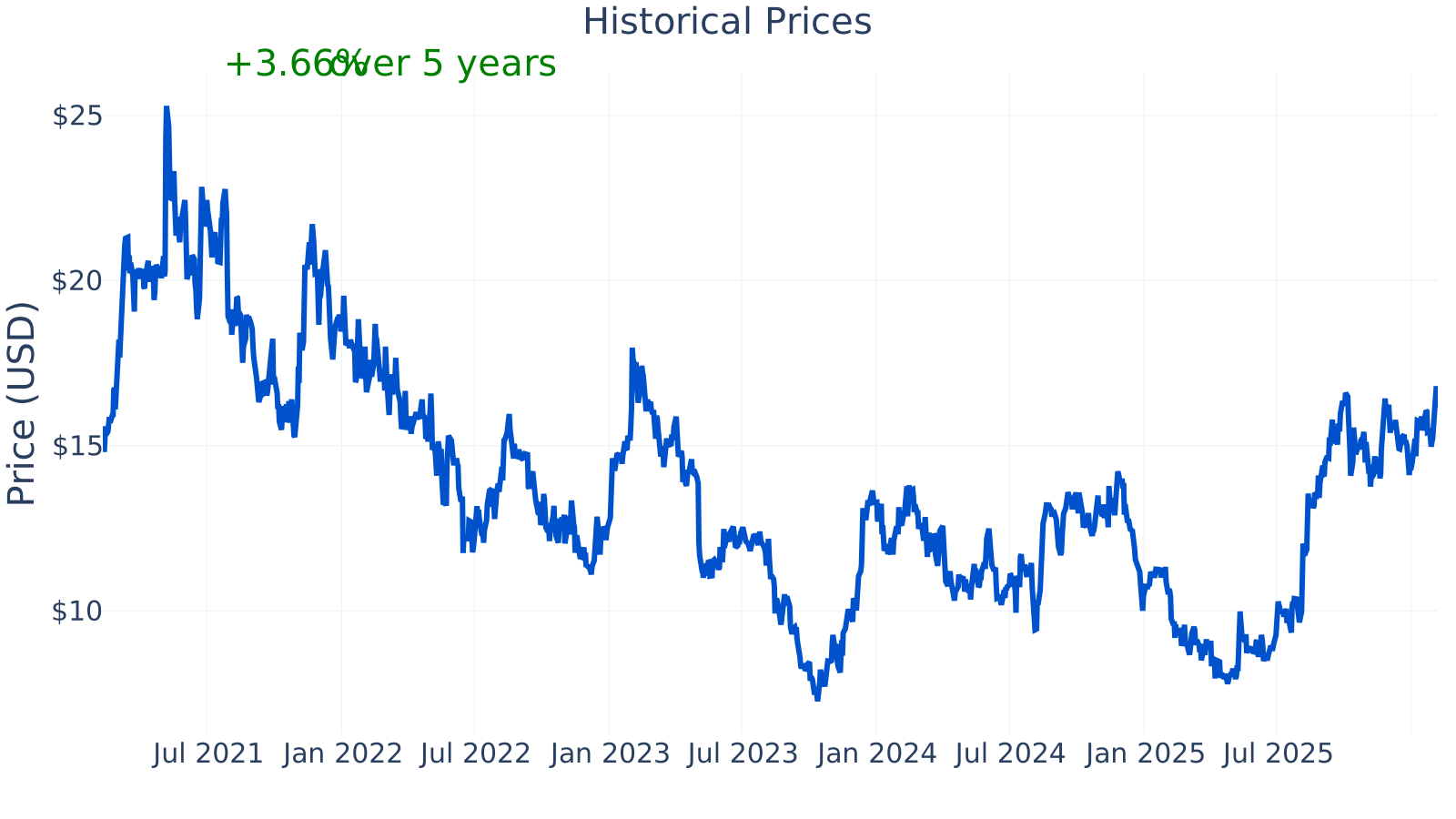
Sally Beauty’s market capitalization is about $1.59B, placing it in the small-to-mid cap range. The stock’s beta of ~1.15 suggests it has tended to move somewhat more than the broader market. The company’s latest P/E ratio is ~8.6, which is below the specialty retail industry median (~23.8). Profitability is positive, with a profit margin of ~5.3% (industry median ~6.3%). Recent top-line momentum is modest: year-over-year revenue growth ~1.3% versus an industry median around 5.2%. Leverage stands out: debt-to-equity ~197% compared with an industry median near 103%. Over the trailing twelve months, free cash flow is about $173M, indicating the business has been generating cash after operating needs and capital spending.
Growth (Low to Medium)
Beauty and personal care is a large, mature category where demand is often supported by repeat purchases (for example, hair care and coloring). For a retailer like Sally Beauty, long-term growth tends to depend less on the category simply “getting bigger” and more on execution—keeping loyal customers, staying relevant with product assortments, managing pricing and promotions, and growing digital and professional relationships.
The year-over-year revenue pattern shown is uneven, including several periods of decline and more recent quarters closer to flat-to-slightly-positive growth. This kind of profile typically implies the company is working in a competitive environment where gaining share or expanding baskets is challenging.
Free cash flow has remained positive in each period shown, though below the unusually high level seen earlier in the timeline. Consistent cash generation can matter for a retailer because it can support reinvestment (stores, supply chain, digital capabilities), debt reduction, and other corporate needs. A potential forward-looking catalyst for a business like this is improved execution that lifts comparable sales (existing-store sales) and/or expands margins through better merchandising, inventory management, and cost control—especially if interest expense declines with lower debt over time.
Risks (High)
This article is for informational purposes only and does not constitute financial advice. Some content is AI-generated. See Disclaimer