Stock Analysis · SPS Commerce Inc (SPSC)
Overview
SPS Commerce Inc. is a software company that helps retailers, grocery chains, distributors, and brands exchange business documents and data with each other. In plain terms, it supports the “behind-the-scenes” connections that keep product ordering, shipping, invoices, and inventory information moving between trading partners. The company’s platform is commonly used for electronic data interchange (EDI), which replaces manual processes (emails, spreadsheets, paper documents) with standardized, automated information flows.
SPS Commerce primarily generates revenue by providing cloud-based subscription services and related support that help customers connect to large retail networks and manage ongoing document exchange. Based on how the business is typically described in company filings, the main revenue sources can be summarized as:
- Recurring subscription and platform services (ongoing access to the network and software capabilities)
- Transaction and usage-based services (fees tied to document volumes and activity)
- Implementation, integration, and support services (help onboarding new customers and connecting systems)
The income statement trend over recent years shows a business that has expanded revenue while remaining profitable, with operating expenses largely concentrated in sales/marketing and product development—consistent with a software company investing to grow its customer base and capabilities.
From 2021 to 2025, total revenue increased from about $385 million to about $752 million, while net income increased from about $45 million to about $93 million. Over the same period, spending on research and development and on selling/general/administrative activities also rose, indicating continued investment alongside growth.
Key Figures
| Metric | Value | Industry ⓘ |
|---|---|---|
| Date | Apr 27, 2026 | |
| Context | ||
| Sector | Technology | |
| Industry | Software - Application | |
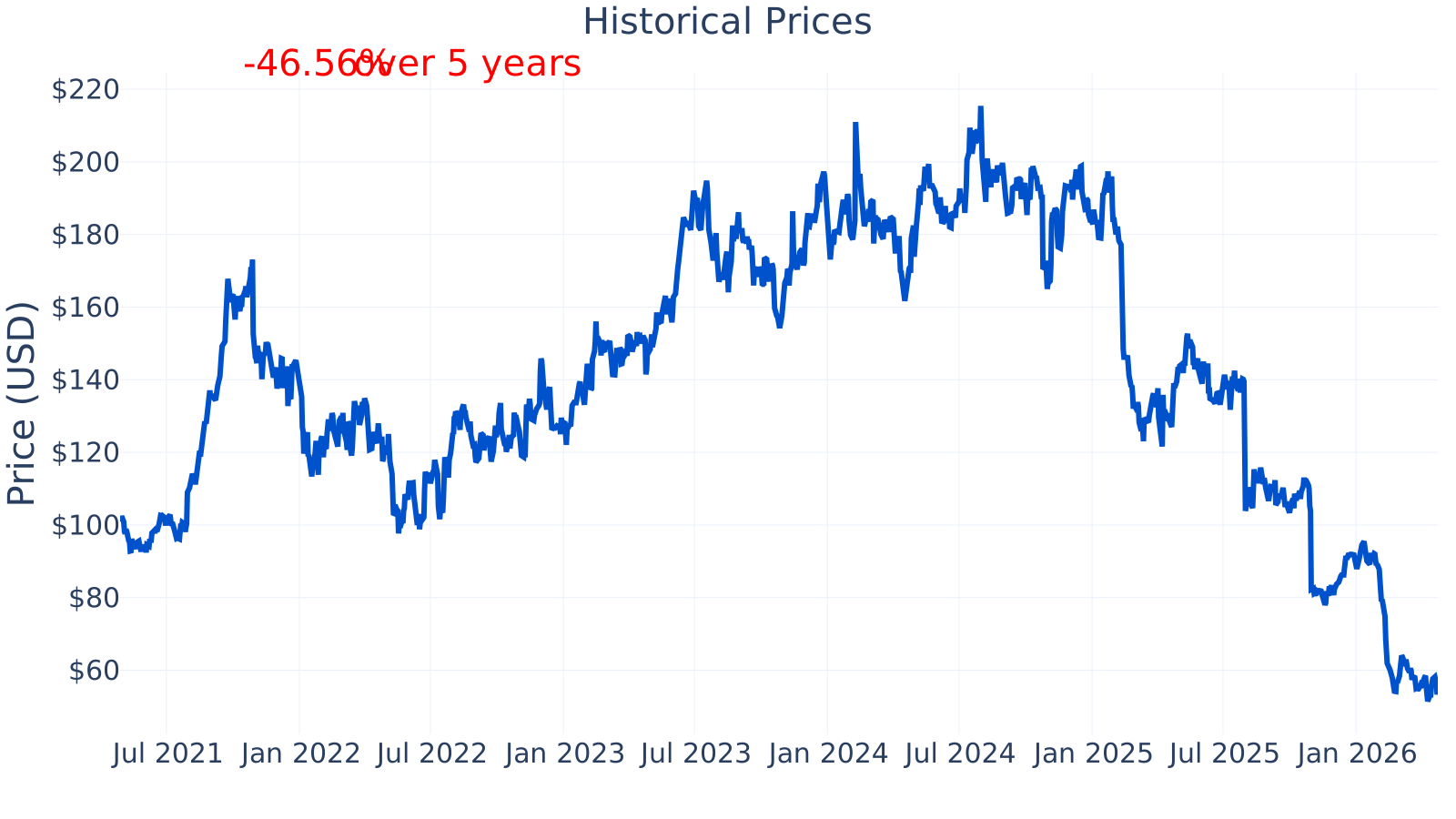
| Market Cap ⓘ | $2.04B | |
| Beta ⓘ | 0.61 | |
| Fundamental | ||
| P/E Ratio ⓘ | 22.22 | 25.81 |
| Profit Margin ⓘ | 12.42% | 7.87% |
| Revenue Growth ⓘ | 12.70% | 16.05% |
| Debt to Equity ⓘ | 1.03% | 25.08% |
| PEG ⓘ | 4.71 | |
| Free Cash Flow ⓘ | $152.27M | |
SPS Commerce’s market capitalization is about $2.0 billion, and its beta of 0.62 indicates the stock has historically moved less than the broader market on average (though any individual stock can still be volatile). The company’s latest P/E ratio is about 22.2 versus an industry median of about 25.8. Net profit margin is about 12.4%, above the industry median of about 7.9%, while year-over-year revenue growth is about 12.7%, below the industry median of about 16.1%. Debt appears very low, with debt-to-equity around 1.0% versus an industry median near 25.1%. Trailing twelve-month free cash flow is about $152 million.
Growth (medium)
SPS Commerce operates in an area of business software focused on connecting supply-chain partners and automating routine processes. This type of software tends to benefit from long-term trends such as increased digitization of supply chains, higher expectations for real-time inventory visibility, and the ongoing push for automation to reduce errors and labor-intensive manual work. In many industries, once a company’s processes are integrated into daily operations, the software can become “sticky,” supporting recurring revenue.
A key element of the company’s growth strategy is expanding its network of connected trading partners and deepening usage among existing customers. Network-style platforms often strengthen as more participants connect, because customers gain easier access to partners already on the system and can add new partners with less friction over time.
Recent year-over-year revenue growth shows a slowdown from the low- to mid-20% range earlier in the period to about 12.7% in the most recent point shown. That pattern can reflect normal maturation as a company becomes larger, but it can also indicate a need to monitor whether demand is stabilizing at a lower growth rate.
Free cash flow has risen meaningfully over time (from about $75 million to about $141 million across the dates shown), which is often an important indicator for software businesses because it reflects the cash left after operating costs and necessary investments. Sustained free cash flow can support reinvestment, product development, and resilience during slower economic periods.
Risks (medium)
A central business risk for SPS Commerce is competitive pressure in supply-chain connectivity and B2B integration software. Larger software providers and specialized integration vendors can compete on features, pricing, and bundling with broader enterprise suites. If competitors make it easier or cheaper to connect trading partners, SPS Commerce could face slower customer additions, pricing pressure, or higher sales and marketing costs to maintain growth.
Another risk is customer concentration in certain retail ecosystems. Companies that serve retail supply chains can be indirectly exposed to shifts in retailer requirements, consolidation among retailers and distributors, or changes in how trading partner mandates are enforced. If major retailers alter standards, adopt alternative solutions, or reduce transaction volumes during downturns, it may affect usage-driven revenue for vendors serving these networks.
Execution risk also matters: the company must keep improving its platform while maintaining reliable uptime and data accuracy. For systems that exchange purchase orders, invoices, and shipping notices, service disruptions or errors can be costly for customers and could harm retention.
The balance-sheet risk from leverage appears limited. Debt-to-equity trends downward over time and is very low (around 1% at the latest point shown), well below the industry median (about 25%). Low leverage can reduce financial risk, but it does not remove competitive or operational risks.
Profitability has been comparatively steady, with net profit margin generally around the low-teens and recently about 12.4%, above the industry median of about 8.2%. That relative advantage can be a sign of operating discipline and pricing power, but it can also narrow if growth slows and the company must spend more on sales efforts or product enhancements.
In terms of competitive positioning, SPS Commerce is often described in filings as focused on retail supply-chain connectivity and enabling ongoing trading partner relationships. Key competitors typically include:
- Large enterprise software and ERP providers that offer integration/EDI capabilities as part of broader suites
- B2B integration and EDI network providers offering managed services and connectivity solutions
- Systems integrators and middleware vendors that can build or manage connections in alternative ways
Competitive advantages for SPS Commerce commonly relate to its established network in retail-focused ecosystems, ongoing onboarding and support capabilities, and recurring subscription model. The durability of these advantages depends on continued network expansion, high service reliability, and maintaining a cost-effective path for customers to add and manage trading partner connections.
Valuation
The P/E ratio has moved substantially over time, reaching very high levels earlier in the series and trending down to lower levels more recently. At the latest point shown, the company’s P/E is around 33.4, while the industry median is around 30.4 at the same date. Separately, the latest snapshot metrics show a current P/E around 22.2 versus an industry median near 25.8 (different dates and calculation points can produce different readings, so it is useful to view the chart and the latest snapshot together as context rather than as a single definitive number).
In general, valuation for a software business like SPS Commerce tends to be shaped by (1) the durability of recurring revenue, (2) the pace of revenue growth, and (3) the ability to maintain margins and generate cash. The latest metrics show profit margin above the industry median and very low leverage, while year-over-year revenue growth is below the industry median. The PEG ratio shown (about 4.71) suggests the stock’s valuation relative to growth is on the higher side by that measure, which makes future growth and execution important factors in how the valuation is ultimately perceived over time.
Conclusion
SPS Commerce is a software company focused on automating and standardizing data exchange across retail supply chains, with a business model that is largely recurring and supported by ongoing customer usage. Financial trends shown here indicate rising revenue over multiple years, steady profitability, increasing free cash flow, and very low debt—characteristics often associated with resilient software operators.
At the same time, recent revenue growth has moderated compared with earlier periods, and the company operates in a competitive environment where larger platforms and specialized connectivity providers can challenge pricing and customer acquisition. From a fundamentals perspective, the main long-term questions to track are whether SPS Commerce can sustain solid growth as it scales, preserve its margin profile, and continue expanding the reach and usefulness of its network while managing competitive pressure.
Sources:
- SPS Commerce Inc. — Annual Report (Form 10-K)
- SPS Commerce Inc. — Quarterly Report (Form 10-Q)
- SEC EDGAR — SPS Commerce Inc. filings
- SPS Commerce Inc. — Investor Relations materials (press releases and presentations, when available)
- Wikipedia — “SPS Commerce” (company background)
This article is for informational purposes only and does not constitute financial advice. Some content is AI-generated. See Disclaimer