Stock Analysis · Rush Enterprises A Inc (RUSHA)
Overview
Rush Enterprises, Inc. (Class A shares: RUSHA) operates a network of commercial vehicle dealerships and service centers in the United States. In practical terms, it sells and services medium- and heavy-duty trucks, and it also supports truck owners and fleet operators with parts, maintenance/repair work, and other dealership-related offerings. This business model blends more cyclical activities (like selling new and used trucks) with more recurring demand (like parts and service), because trucks already on the road need ongoing upkeep.
Across the company’s operations, revenue typically comes from a mix of vehicle sales and after-sales support. Based on how commercial truck dealers generally report their lines of business in SEC filings, the main revenue sources are usually organized as follows (exact percentages can vary by year and are reported in the company’s filings):
- New truck sales (highly tied to freight activity, fleet replacement cycles, and truck availability)
- Used truck sales (also cyclical, influenced by residual values and inventory levels)
- Parts (often steadier because repairs and maintenance continue through the cycle)
- Service and repair (labor and shop work; typically recurring in nature)
- Other dealership-related revenue (may include finance/insurance-related items and other ancillary activities, depending on reporting)
One way to think about Rush is as an operator that aims to capture value across the truck lifecycle: sell the vehicle, then provide parts and service over many years as the truck stays in use.
From 2021 to 2025, total revenue rose from about $5.1B to about $7.4B, while net income moved from about $241M to about $264M. Over the same period, interest expense increased meaningfully (from roughly $2M in 2021 to roughly $46M in 2025), which helps explain why profits did not rise as much as revenue.
Key Figures
| Metric | Value | Industry ⓘ |
|---|---|---|
| Date | Feb 23, 2026 | |
| Context | ||
| Sector | Consumer Cyclical | |
| Industry | Auto & Truck Dealerships | |
| Market Cap ⓘ | $5.94B | |
| Beta ⓘ | 0.93 | |
| Fundamental | ||
| P/E Ratio ⓘ | 22.33 | 19.15 |
| Profit Margin ⓘ | 3.55% | 2.54% |
| Revenue Growth ⓘ | -11.80% | 3.90% |
| Debt to Equity ⓘ | 70.36% | 157.49% |
| PEG ⓘ | 3.16 | |
| Free Cash Flow ⓘ | $693.58M | |
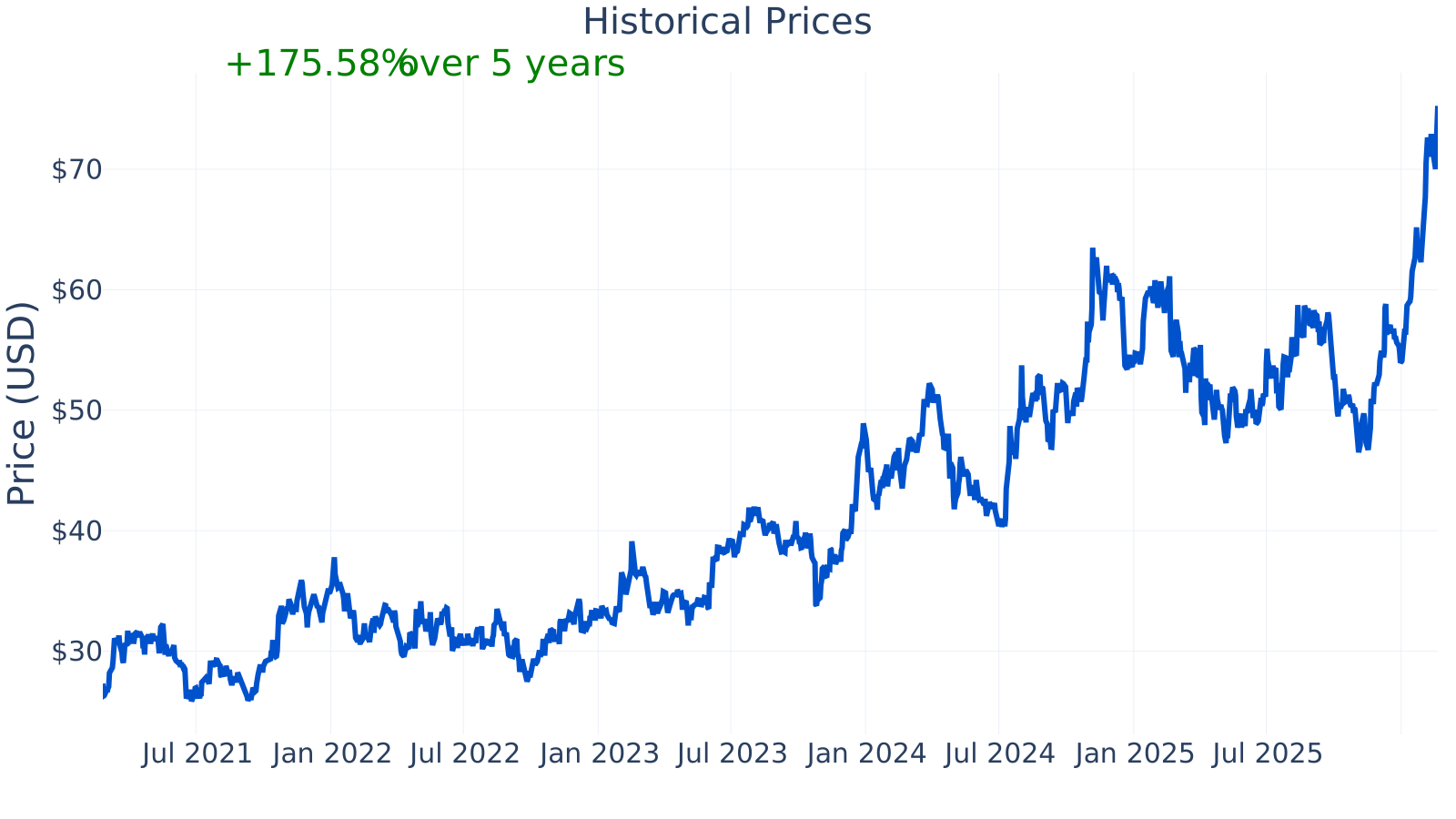
Rush Enterprises has a market capitalization of about $5.94B and a beta of about 0.93, which suggests the stock has historically moved somewhat similarly to the broader market. The current P/E ratio is ~22.3 versus an industry median of ~19.1. Profitability is modest in absolute terms (as is common in vehicle retail), with a profit margin of ~3.55%, but that is higher than the industry median of ~2.54%. The company’s year-over-year revenue growth is -11.8% versus an industry median of +3.9%, pointing to recent top-line pressure. Leverage appears lower than many peers, with debt-to-equity ~70% compared with an industry median near 157%. Trailing twelve-month free cash flow is shown at about $694M.
Growth (Medium)
Rush operates in the commercial vehicle dealership and service space, which tends to grow with freight demand, the size/age of the truck population, and regulatory or efficiency-driven replacement cycles. Over long periods, parts and service activity is often supported by “trucks in operation,” while new and used vehicle sales can swing more sharply depending on the economy, interest rates, and equipment availability.
A strategy that often supports durability in this industry is emphasizing the after-sales side of the business—parts availability, service capacity, technician staffing, and convenient locations—because these can create repeat customer relationships and steadier revenue streams than vehicle sales alone. A potential catalyst in this type of model is an expanding fleet of vehicles in operation that need service, along with any operational investments that increase service throughput (more bays, extended hours, better parts fulfillment).
The year-over-year revenue growth trend shows a shift from strong growth in 2022 and early 2023 to weaker—and later negative—growth through 2024 and 2025, ending at about -11.8%. That pattern is consistent with a business that can experience normalization after unusually strong industry conditions, as well as sensitivity to the broader trucking cycle.
Free cash flow has been volatile over time, including a period where it turned negative (around 2024) before rebounding strongly (around 2025). For a dealership model, this can be influenced by working capital swings—especially inventory levels and timing of vehicle purchases and sales—so it is often most informative to view cash generation across a full cycle rather than a single year.
Risks (Medium)
This article is for informational purposes only and does not constitute financial advice. Some content is AI-generated. See Disclaimer


