Stock Analysis · Rumble Inc (RUM)
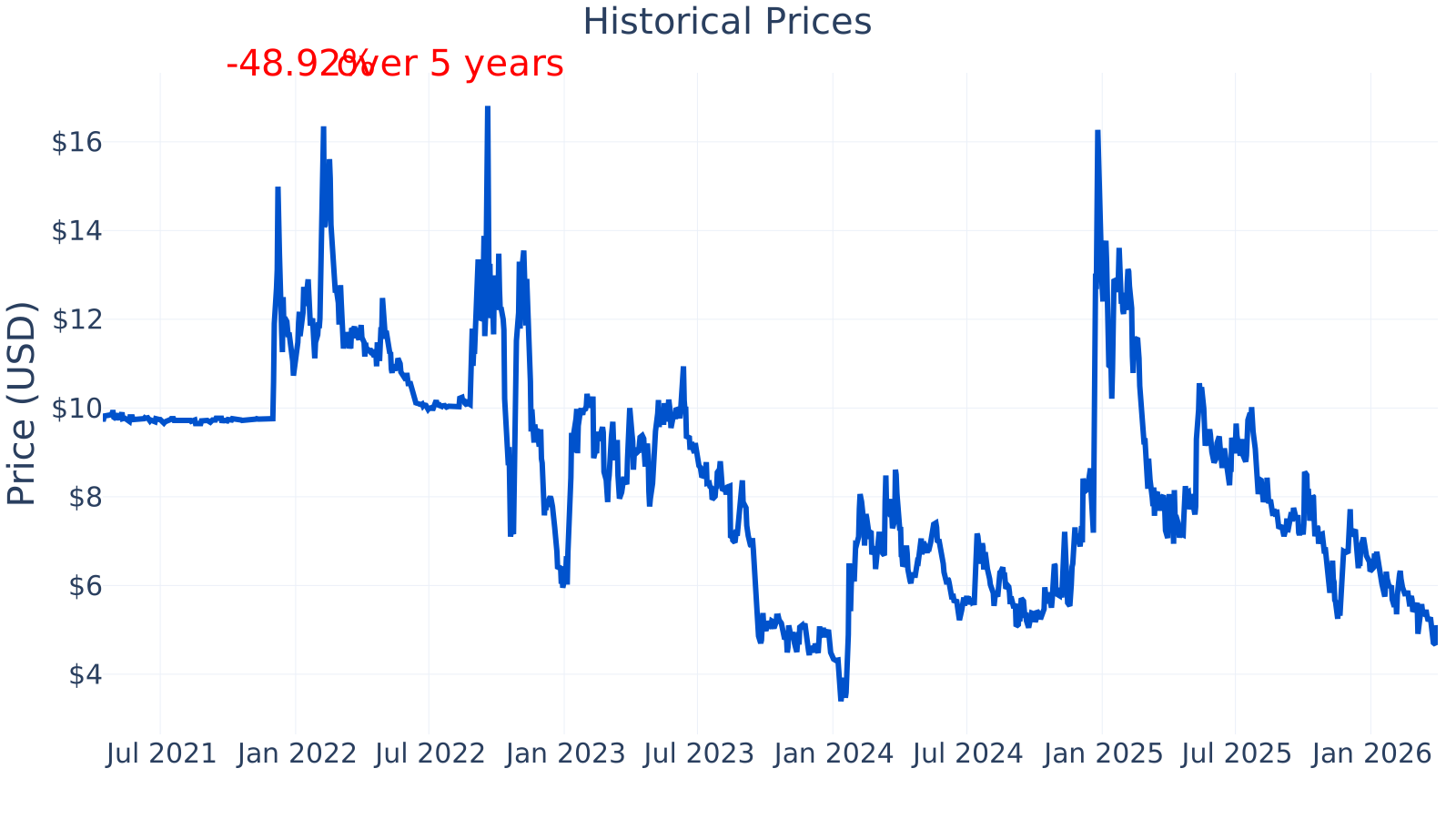
Overview
Rumble Inc (RUM) operates a video-sharing platform and related cloud and advertising technology services. The company positions its platform as an alternative place to publish and watch video content, with a focus on direct relationships between creators and audiences. Alongside the consumer-facing video product, Rumble has also discussed building infrastructure capabilities that can support content delivery and related services.
In practical terms, the business is built around attracting viewers, helping creators distribute content, and then monetizing that activity through advertising and other platform-related arrangements.
Based on the company’s disclosures, revenue is generally concentrated in a small number of categories rather than many diversified lines. Commonly described revenue sources include:
- Advertising and marketing-related revenue (ads served on the platform and related arrangements)
- Other platform revenue (creator/partner arrangements and other services described in filings)
Exact percentages by revenue line can vary by period and depend on how the company breaks out categories in its filings.
Over the years shown, total revenue increased materially (from about $9.5M in 2021 to about $100.6M in 2025), while the cost to deliver services remained very high for much of the period. A notable change appears in 2025, when revenue exceeded cost of revenue and the company reported positive gross profit (about $14.2M), compared with negative gross profit in 2022–2024.
Key Figures
| Metric | Value | Industry ⓘ |
|---|---|---|
| Date | Apr 06, 2026 | |
| Context | ||
| Sector | Communication Services | |
| Industry | Internet Content & Information | |
| Market Cap ⓘ | $1.69B | |
| Beta ⓘ | 0.71 | |
| Fundamental | ||
| P/E Ratio ⓘ | N/A | 15.72 |
| Profit Margin ⓘ | -81.32% | 9.94% |
| Revenue Growth ⓘ | -10.50% | 6.80% |
| Debt to Equity ⓘ | 0.70% | 10.97% |
| PEG ⓘ | N/A | |
| Free Cash Flow ⓘ | -$75.79M | |
Rumble’s market capitalization is about $1.69B, and the stock’s beta is about 0.72 (a measure that can indicate how strongly the stock has tended to move versus the broader market). The company currently shows a negative profit margin of about -81% versus an industry median around +9.9%, and its latest year-over-year revenue growth is about -10.5% versus an industry median around +6.8%. Debt relative to equity is very low at roughly 0.7% (industry median ~11.0%). Free cash flow over the trailing twelve months is about -$75.8M. The P/E ratio is not meaningful while earnings are negative.
Growth (medium)
Rumble operates in online video and digital advertising—an industry that has long benefited from large audience shifts from traditional TV toward internet streaming and short/long-form video. However, industry growth does not automatically translate into company growth; platforms also need scale, strong creator ecosystems, and effective ad technology to monetize attention.
The company’s strategy centers on expanding its audience and creator base, improving monetization (especially advertising), and developing infrastructure that could support its services at greater scale. In that context, the main long-term growth questions tend to be whether Rumble can (1) grow active users and engagement, (2) improve ad fill and pricing, and (3) keep infrastructure costs under control as usage expands.
Revenue growth has been volatile. After very high year-over-year growth earlier in the timeline, growth rates moderated and turned negative more recently, including approximately -10.5% in the latest period shown. That pattern suggests the company may be transitioning from early rapid expansion to a stage where sustaining growth could depend more on improving monetization efficiency and retaining/expanding its user base.
Free cash flow has also fluctuated. The company moved from negative free cash flow (for example, about -$133.9M in 2024) to positive in 2025 (about $23.7M), and then back to a negative trailing figure (about -$75.8M). For long-term durability, a key point to monitor is whether improvements in gross profit and operating discipline can translate into more consistent cash generation over time.
Risks (high)
The biggest risk visible in the fundamentals is profitability. Despite revenue growth over several years, the company has reported large losses, and its profit margin remains deeply negative versus peers. This typically indicates that the business is still working toward a cost structure and monetization level that supports sustained earnings.
The profit margin trend remains far below the industry median across the timeline, ending around -81% while the industry median is near +9.9%. Even with signs of improvement in some periods, this gap highlights that Rumble’s economics are not yet comparable to established, profitable platforms in the same broad category.
Another major risk is competitive positioning. Online video is dominated by very large platforms that have global scale, strong advertising demand, mature creator monetization tools, and deep technical infrastructure. Rumble’s ability to compete often depends on differentiation (brand positioning, creator relationships, and audience loyalty) and on whether it can reach enough scale for advertising efficiency. In addition, platform moderation decisions, advertiser preferences, and creator migration dynamics can materially influence growth and monetization.
Financial risk from leverage looks limited, based on low debt levels. That said, low debt does not eliminate funding risk: if operating losses and negative cash flow persist, the company could rely on cash reserves, asset sales, or equity issuance, each of which can have different consequences for shareholders.
Debt-to-equity is very low (about 0.7%) and has generally been below the industry median over time. This suggests limited balance-sheet leverage, though it should be considered alongside cash flow trends and ongoing operating losses.
Valuation
For companies with consistent profits, the P/E ratio is often a common valuation tool. Here, Rumble’s P/E is not meaningful in the periods shown (displayed as 0 on the chart), which usually happens when earnings are negative. In those cases, valuation discussions typically shift toward measures such as revenue scale, gross profit trajectory, cash burn, and the credibility/timing of a path to profitability.
With a market capitalization around $1.69B and a business that has grown revenue over multiple years but still shows substantial losses and negative trailing free cash flow, the stock price is largely influenced by expectations about future monetization and cost structure. Whether the current price level is “high” or “low” cannot be concluded from a single metric; it depends on whether the company can sustain revenue growth, expand gross profit, and reduce operating losses over time, despite intense competition.
Conclusion
Rumble is an online video platform operating in a large, long-term relevant industry, with revenue that has expanded significantly since 2021 and a recent period showing positive gross profit. At the same time, the company’s overall profitability remains far below industry norms, revenue growth has recently turned negative, and free cash flow has been inconsistent.
From a long-term perspective, the central facts to track are whether (1) revenue growth re-accelerates and becomes more stable, (2) gross profit stays positive and improves, and (3) operating losses and cash usage narrow in a sustained way. Competitive intensity and monetization execution remain key uncertainties, while low debt reduces (but does not eliminate) financial risk.
Sources:
- SEC EDGAR — Rumble Inc filings (Form 10-K, Form 10-Q, Form 8-K)
- Rumble Inc — Investor Relations materials and press releases
- Rumble Inc — Company-hosted earnings call materials / transcripts (when available)
- Wikipedia — “Rumble (company)”
This article is for informational purposes only and does not constitute financial advice. Some content is AI-generated. See Disclaimer


