Stock Analysis · Ross Stores Inc (ROST)
Overview
Ross Stores, Inc. is a U.S. off-price retailer. It sells brand-name and designer apparel, footwear, accessories, home fashions, and related items at discounted prices compared with many traditional department and specialty stores. The company operates primarily under two store brands: Ross Dress for Less (the larger chain) and dd’s DISCOUNTS (a smaller-format discount concept). Its model is built around buying merchandise opportunistically from thousands of vendors and offering frequent turnover (“treasure-hunt” shopping), which encourages repeat store visits.
Ross’s revenue is largely generated through in-store retail sales (the company has historically emphasized a store-based model rather than large-scale e-commerce). Based on company reporting structure, revenue is mainly tied to these sources:
- Ross Dress for Less stores (largest share)
- dd’s DISCOUNTS stores (smaller share)
In its filings, the company typically highlights that sales are derived from selling branded merchandise through these store formats, rather than breaking revenue into many separate product lines.
Over recent fiscal years, total revenue increased (about $18.9B in FY2022 to about $21.1B in FY2024), while profitability also improved, with net income rising from about $1.72B (FY2022) to about $2.09B (FY2024). This suggests that operating costs and merchandise margins have been managed well enough to support earnings growth alongside sales growth.
Key Figures
| Metric | Value | Industry ⓘ |
|---|---|---|
| Date | Feb 07, 2026 | |
| Context | ||
| Sector | Consumer Cyclical | |
| Industry | Apparel Retail | |
| Market Cap ⓘ | $62.03B | |
| Beta ⓘ | 0.99 | |
| Fundamental | ||
| P/E Ratio ⓘ | 29.76 | 17.99 |
| Profit Margin ⓘ | 9.47% | 8.42% |
| Revenue Growth ⓘ | 10.40% | 7.30% |
| Debt to Equity ⓘ | 88.18% | 104.73% |
| PEG ⓘ | 2.80 | |
| Free Cash Flow ⓘ | $1.96B | |
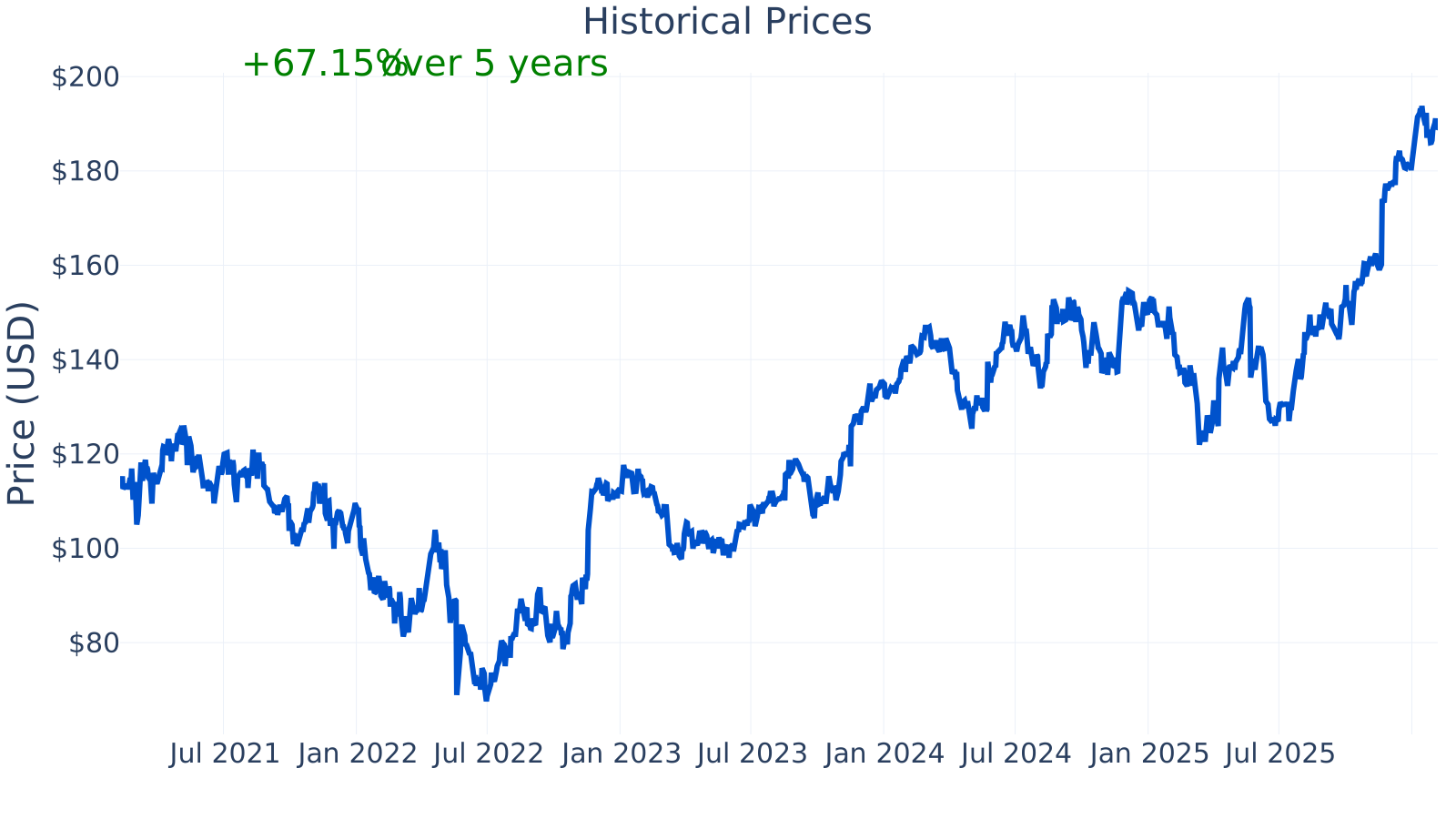
Ross Stores’ market capitalization is about $62.0B, placing it among the larger U.S. retailers. The stock’s beta of ~0.99 indicates price moves that have been roughly in line with the overall market historically.
On profitability, the company’s profit margin is ~9.47%, above the apparel retail industry median shown here (~8.42%). Growth is also currently higher than the industry median, with year-over-year revenue growth of ~10.4% versus an industry median of ~7.3%.
On financial structure, debt-to-equity is ~88%, below the industry median shown (~105%), indicating comparatively less leverage than the typical peer in this set. Free cash flow over the trailing twelve months is about $2.0B, which is an important support for reinvestment in stores, repurchases, dividends, and overall balance-sheet flexibility.
Growth (Medium)
Ross operates in discount and off-price retail, a segment that can benefit when shoppers prioritize value. In general terms, the off-price model is designed to stay relevant across economic cycles: when consumers feel pressure, they may trade down to discounted retailers; when conditions are strong, the “treasure-hunt” experience and branded discounts can still attract demand. That said, apparel demand remains influenced by consumer spending, employment, and inflation in essentials.
Strategically, Ross’s approach is straightforward: expand and optimize its store base, keep merchandise fresh through opportunistic buying, and run a cost-focused operating model. Store expansion can be a long runway if the company continues finding attractive locations and maintaining store-level economics.
The revenue growth pattern shows variability (including periods of negative growth), followed by a more recent rebound to about 10.4% year-over-year. This kind of swing is common in retail because results depend on comparisons, inventory availability in the off-price market, consumer demand, and execution (pricing, assortment, and traffic).
Free cash flow has been consistently positive in the periods shown, rising from roughly $1.18B (FY2021) to about $1.64B (FY2024), with a higher level around $1.75B (FY2023). Sustained free cash flow matters in retail because it helps fund new stores, technology and supply-chain spending, and shareholder returns without relying heavily on borrowing.
Possible catalysts for continued growth (without assuming outcomes) include steady new store openings, improved merchandise availability from vendors (which affects buying opportunities in off-price), and ongoing operating discipline that protects margins during cost inflation.
Risks (Medium)
This article is for informational purposes only and does not constitute financial advice. Some content is AI-generated. See Disclaimer