Stock Analysis · Roper Technologies Inc (ROP)
Overview
Roper Technologies Inc is a diversified technology company that owns a collection of specialized businesses. Instead of selling one mass-market product, Roper focuses on niche, “mission-critical” software and technology-enabled solutions that customers use to run important daily operations. Many of these products are deeply integrated into customer workflows (for example, systems that support regulated processes, billing, compliance, or operating logistics), which can make switching to another provider disruptive.
Roper’s business model has historically emphasized acquiring established, cash-generating companies and then operating them with a focus on recurring revenue, high margins, and steady cash flow. In its filings, Roper describes itself as having asset-light operations and targeting businesses with durable competitive positions.
In its annual reporting, Roper groups results into segments (and the names and composition of segments can evolve over time based on acquisitions and portfolio changes). Across the company, revenue generally comes from a mix of subscription-like software arrangements, transaction-based fees, and product/service revenue tied to specific industry verticals. Exact percentages by revenue source can vary year to year and by segment, so the most reliable breakdowns are the segment tables in the latest Form 10-K.
Main revenue drivers (high-level)
- Vertical/industry-focused software (recurring licenses/subscriptions and support/maintenance)
- Technology-enabled services (often recurring or transaction-based)
- Products and related services in selected niche markets (more variable, generally a smaller portion versus software)
Over the years shown, revenue rises meaningfully (from about $4.83B in 2021 to about $7.90B in 2025). Gross profit expands along with revenue, and operating income also grows, which is consistent with a model that aims to maintain strong profitability while scaling.
Key Figures
| Metric | Value | Industry ⓘ |
|---|---|---|
| Date | Feb 07, 2026 | |
| Context | ||
| Sector | Technology | |
| Industry | Software - Application | |
| Market Cap ⓘ | $39.01B | |
| Beta ⓘ | 0.93 | |
| Fundamental | ||
| P/E Ratio ⓘ | 25.50 | 27.79 |
| Profit Margin ⓘ | 19.44% | 6.02% |
| Revenue Growth ⓘ | 9.70% | 15.80% |
| Debt to Equity ⓘ | 46.78% | 25.15% |
| PEG ⓘ | 1.59 | |
| Free Cash Flow ⓘ | $2.49B | |
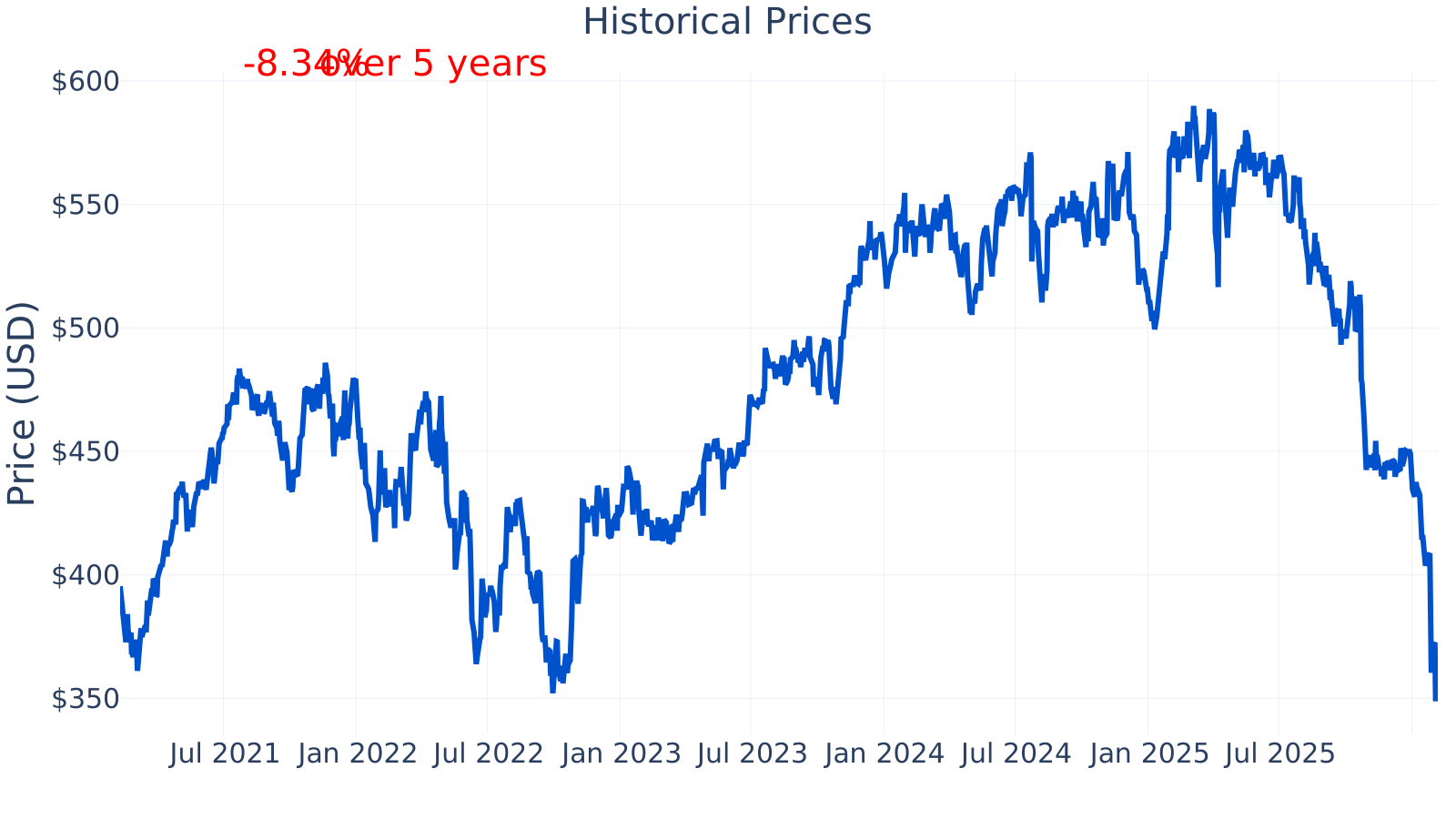
Roper’s equity value is about $39.0B, and its beta of 0.93 suggests the stock has historically moved somewhat similarly to the broader market (slightly less volatile than a beta of 1.0). The company’s P/E ratio is ~25.5, modestly below the stated industry median (~27.8). Profitability stands out: profit margin is ~19.4% versus an industry median of ~6.0%. Recent year-over-year revenue growth is ~9.7%, below the industry median (~15.8%), indicating the company’s growth profile may be steadier rather than “high-growth.” Leverage is higher than the industry median: debt-to-equity is ~46.8% versus ~25.2%. Trailing twelve-month free cash flow is about $2.49B, supporting flexibility for reinvestment, acquisitions, and debt service.
Growth (medium)
Roper operates primarily in software and technology-enabled markets where long-term demand is supported by ongoing digitization, automation, compliance requirements, and the need for operational efficiency. Many of its businesses serve specialized professional or industrial end-markets where software is embedded in workflows and the value proposition is tied to uptime, accuracy, and regulatory or operational needs. These characteristics can support resilient demand even when economic conditions are uneven.
Strategically, Roper’s approach is built around (1) owning niche businesses with durable customer relationships, (2) emphasizing recurring revenue and high margins, and (3) using cash generation to reinvest and, at times, acquire additional businesses. A key “catalyst” for growth in this model is execution on acquisitions and integration—adding new revenue streams and expanding the portfolio—along with steady expansion in existing businesses (pricing, customer retention, and product enhancements).
Revenue growth has been positive in most of the periods shown, often in the low-to-mid teens, with the most recent point around 9.7%. This pattern suggests a business that can grow without relying on extreme cyclicality, but it may also indicate that growth is not always as fast as the median company in the broader application software peer set.
Free cash flow is substantial in absolute terms (about $2.49B TTM). The chart shows a notable dip around 2023 followed by a rebound and improvement into 2024–2025. For a company with an acquisition-oriented history, free cash flow matters because it can help fund internal investment, repay debt, or support acquisitions without relying solely on new borrowing or stock issuance.
Risks (medium)
This article is for informational purposes only and does not constitute financial advice. Some content is AI-generated. See Disclaimer