Stock Analysis · Rollins Inc (ROL)
Overview
Rollins Inc. is a pest control company best known for its Orkin brand. It provides services that prevent, manage, and remove pests for both homes and businesses. Its work typically involves recurring service visits (for example, ongoing protection against termites, rodents, or insects), plus one-time treatments when needed. The company operates through a mix of company-owned branches and franchise arrangements, and it also expands by acquiring local pest control providers.
From a revenue standpoint, Rollins’ business is largely built around service contracts and repeat customer relationships. In its filings, the company reports revenue by operating segments (such as the U.S. and international operations), and emphasizes pest and termite control as core services. A simple way to think about the revenue mix is:
- Residential pest control (recurring service plans and treatments)
- Commercial pest control (restaurants, warehouses, offices, healthcare, etc.)
- Termite and ancillary services (termite protection and related services)
- International operations (pest control services outside the U.S.)
Exact percentages can vary by year and by how the company groups categories in its reporting, so the most precise breakdown is the segment information in the latest annual report (Form 10‑K).
Over recent years, total revenue has increased steadily (from about $2.42B in 2021 to about $3.76B in 2025). Operating income and net income also rose over that span, while interest expense became more noticeable in later years, consistent with a higher use of debt.
Key Figures
| Metric | Value | Industry ⓘ |
|---|---|---|
| Date | Feb 23, 2026 | |
| Context | ||
| Sector | Consumer Cyclical | |
| Industry | Personal Services | |
| Market Cap ⓘ | $29.52B | |
| Beta ⓘ | 0.79 | |
| Fundamental | ||
| P/E Ratio ⓘ | 56.28 | 20.84 |
| Profit Margin ⓘ | 14.00% | 12.83% |
| Revenue Growth ⓘ | 9.70% | 9.70% |
| Debt to Equity ⓘ | 96.69% | 183.91% |
| PEG ⓘ | 4.56 | |
| Free Cash Flow ⓘ | $650.02M | |
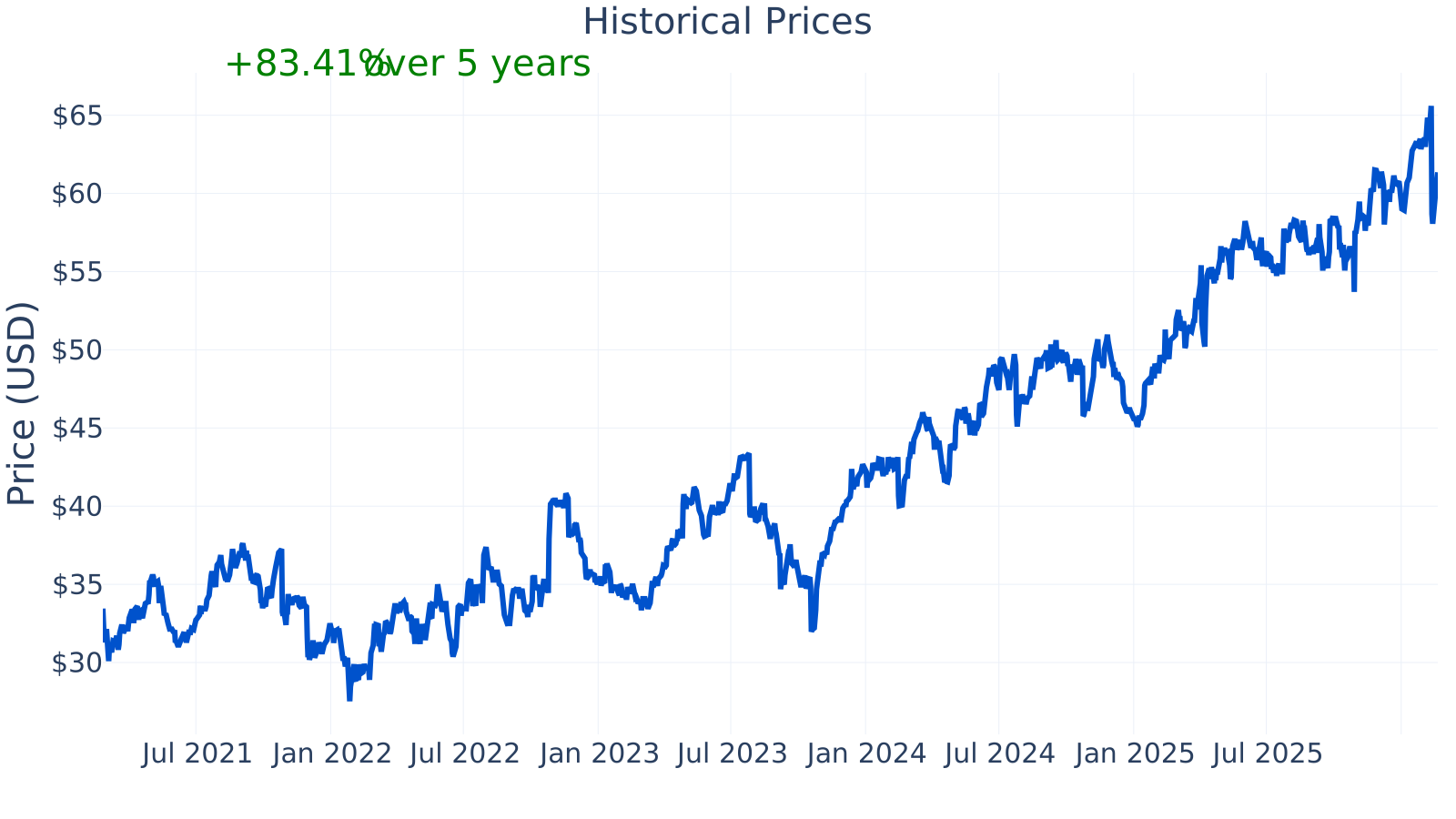
Rollins has a market capitalization of about $29.5B and a beta of ~0.79, which indicates the stock has historically moved less than the overall market. Profit margin is about 14%, slightly above the industry median (~12.8%). Year-over-year revenue growth is about 9.7%, roughly in line with the industry median. Debt-to-equity is about 97%, below the industry median (~184%) but meaningfully higher than the company’s own levels earlier in the period shown. Free cash flow over the trailing twelve months is about $650M. The P/E ratio is about 56, well above the industry median (~21).
Growth (Medium)
Pest control is generally tied to broad, long-running drivers rather than short product cycles. Demand often comes from ongoing pest pressure, housing turnover, food handling and safety requirements in commercial settings, and consumer preference for contracted services rather than DIY solutions. This tends to support recurring revenue, because many customers stay on regular service schedules.
Rollins’ growth approach described in company filings has typically combined route density and local scale (more customers per branch and technician), pricing and service mix, and acquisitions of smaller providers. In a service business, scale can matter: technician training, call centers, purchasing, and brand awareness can be leveraged across a larger customer base, while local routes can become more efficient as density improves.
Revenue growth has been consistently positive in the period shown, commonly around the high single digits to mid-teens year over year, and most recently about 9.7%. This pattern suggests steady expansion rather than highly cyclical swings.
Free cash flow (cash left after operating needs and capital spending) increased from about $439M in 2021 to about $600M in 2025 (TTM figures shown at March each year), with the latest value around $650M. For long-term business building, sustained free cash flow can support reinvestment in the field workforce, acquisitions, and shareholder returns, though the specific use of cash depends on management decisions and conditions at the time.
Risks (Medium)
This article is for informational purposes only and does not constitute financial advice. Some content is AI-generated. See Disclaimer


