Stock Analysis · Roku Inc (ROKU)
Overview
Roku Inc. is a streaming-TV platform company. In simple terms, it helps people watch streaming services on their televisions (through Roku-branded devices and Roku TV operating system) and helps advertisers and content partners reach those viewers. The company’s platform includes the Roku operating system (embedded in many smart TVs), the Roku Channel (a free, ad-supported channel owned by Roku), and tools that let advertisers buy and measure ads shown across Roku’s ecosystem.
Roku reports its business in two main segments, which also represent its main revenue sources:
- Platform revenue (the larger segment in most years): primarily advertising sales, content distribution arrangements, and other services tied to the Roku platform.
- Device revenue: sales of streaming players and related hardware (often positioned to support platform growth rather than maximize hardware profit).
Platform revenue tends to be more important over time because it is tied to ongoing usage and monetization, while device sales can be more cyclical and price-competitive.
Looking at the multi-year income flow, total revenue rises meaningfully from 2021 through 2025 ($2.76B to $4.74B). Over the same period, operating income swings from positive (2021) to significantly negative (2022–2024) and then close to break-even (2025), showing that cost structure and operating expenses have been a major driver of results while the top line expanded.
Key Figures
| Metric | Value | Industry ⓘ |
|---|---|---|
| Date | Feb 16, 2026 | |
| Context | ||
| Sector | Communication Services | |
| Industry | Entertainment | |
| Market Cap ⓘ | $13.31B | |
| Beta ⓘ | 1.99 | |
| Fundamental | ||
| P/E Ratio ⓘ | 152.64 | 51.67 |
| Profit Margin ⓘ | 1.87% | 4.43% |
| Revenue Growth ⓘ | 16.10% | 5.50% |
| Debt to Equity ⓘ | 32.80% | 76.35% |
| PEG ⓘ | N/A | |
| Free Cash Flow ⓘ | $593.51M | |
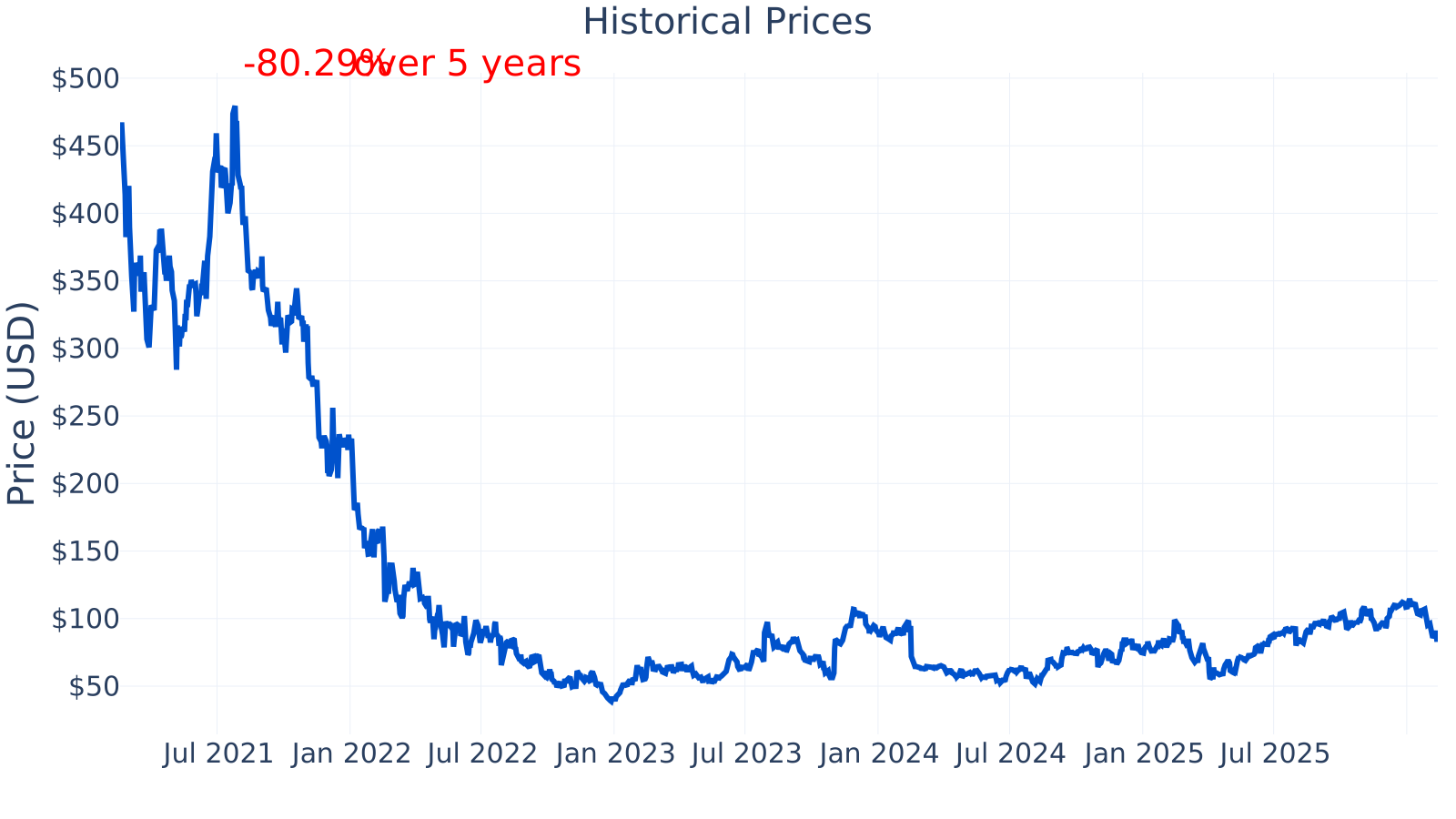
Roku’s market capitalization is about $13.3B, and the stock has a high beta (1.99), which commonly indicates larger-than-market price swings. On profitability, the latest profit margin is about 1.87% versus an industry median near 4.43%, suggesting Roku’s bottom-line profitability is currently below the typical peer level. Growth is stronger: latest year-over-year revenue growth is about 16.1% compared with an industry median near 5.5%. Financial leverage appears lower than many peers, with debt-to-equity around 32.8% versus an industry median around 76.4%. Over the trailing twelve months, free cash flow is about $593.5M, a notable improvement versus periods when free cash flow was negative.
Growth (Medium)
Roku operates in the broader shift from traditional cable television to streaming. That long-term transition is supported by ongoing consumer adoption of streaming apps and smart TVs, and by advertisers gradually moving budgets toward digital and streaming environments where targeting and measurement can be more granular than traditional TV.
Roku’s strategy is centered on expanding its platform footprint (especially Roku OS in smart TVs) and then monetizing usage through advertising and platform-related partnerships. This approach can make logical sense for long-term growth because an operating system embedded in TVs can create a recurring relationship with households over many years, rather than relying only on one-time hardware purchases.
Revenue growth shows a clear pattern: extremely high growth in 2021, a sharp slowdown into 2022–2023, then a re-acceleration through 2024–2025. The most recent year-over-year growth is around 16%, which is higher than the peer median shown.
Free cash flow has been volatile over time—positive in 2021–2022, turning sharply negative in 2023, and then returning to positive territory in 2024–2025. The latest trailing twelve-month free cash flow (about $593M) suggests improved cash generation, which can matter because it helps fund product development, content, and operations without relying as heavily on external financing.
Risks (High)
This article is for informational purposes only and does not constitute financial advice. Some content is AI-generated. See Disclaimer