Stock Analysis · Rogers Corporation (ROG)
Overview
Rogers Corporation is a materials company that designs and manufactures engineered materials used inside demanding electronics and industrial applications. In simple terms, it makes specialty “building-block” materials that help other companies make products that must handle heat, electricity, vibration, or high-frequency signals reliably.
Based on how the company describes its operations in its SEC filings, Rogers organizes its business around three main segments:
- Advanced Electronics Solutions (AES): materials used in high-performance electronics, including applications that involve high-frequency or high-power performance (for example, communications and other advanced electronic systems).
- Elastomeric Material Solutions (EMS): engineered elastomer (rubber-like) materials used in industrial and consumer applications where cushioning, sealing, and vibration control matter.
- Other: smaller activities that do not fit into the two main segments.
Public, segment-level revenue percentages are typically disclosed in annual reports (10-K) and can vary year to year; this article keeps the discussion at the segment level rather than assigning fixed percentages without the latest segment breakdown.
Looking at the recent multi-year income statement flow, total revenue declined from about $971.2M (2022) to $830.1M (2024), and profitability compressed meaningfully over that period (net income falling from about $116.6M in 2022 to about $26.1M in 2024). That direction matters because it frames many of the “why” questions investors typically ask next: end-market demand, pricing, product mix, and operating cost structure.
Key Figures
| Metric | Value | Industry ⓘ |
|---|---|---|
| Date | Feb 08, 2026 | |
| Context | ||
| Sector | Technology | |
| Industry | Electronic Components | |
| Market Cap ⓘ | $1.92B | |
| Beta ⓘ | 0.39 | |
| Fundamental | ||
| P/E Ratio ⓘ | N/A | 41.23 |
| Profit Margin ⓘ | -8.35% | 6.11% |
| Revenue Growth ⓘ | 2.70% | 13.80% |
| Debt to Equity ⓘ | 1.91% | 39.00% |
| PEG ⓘ | 0.77 | |
| Free Cash Flow ⓘ | $47.20M | |
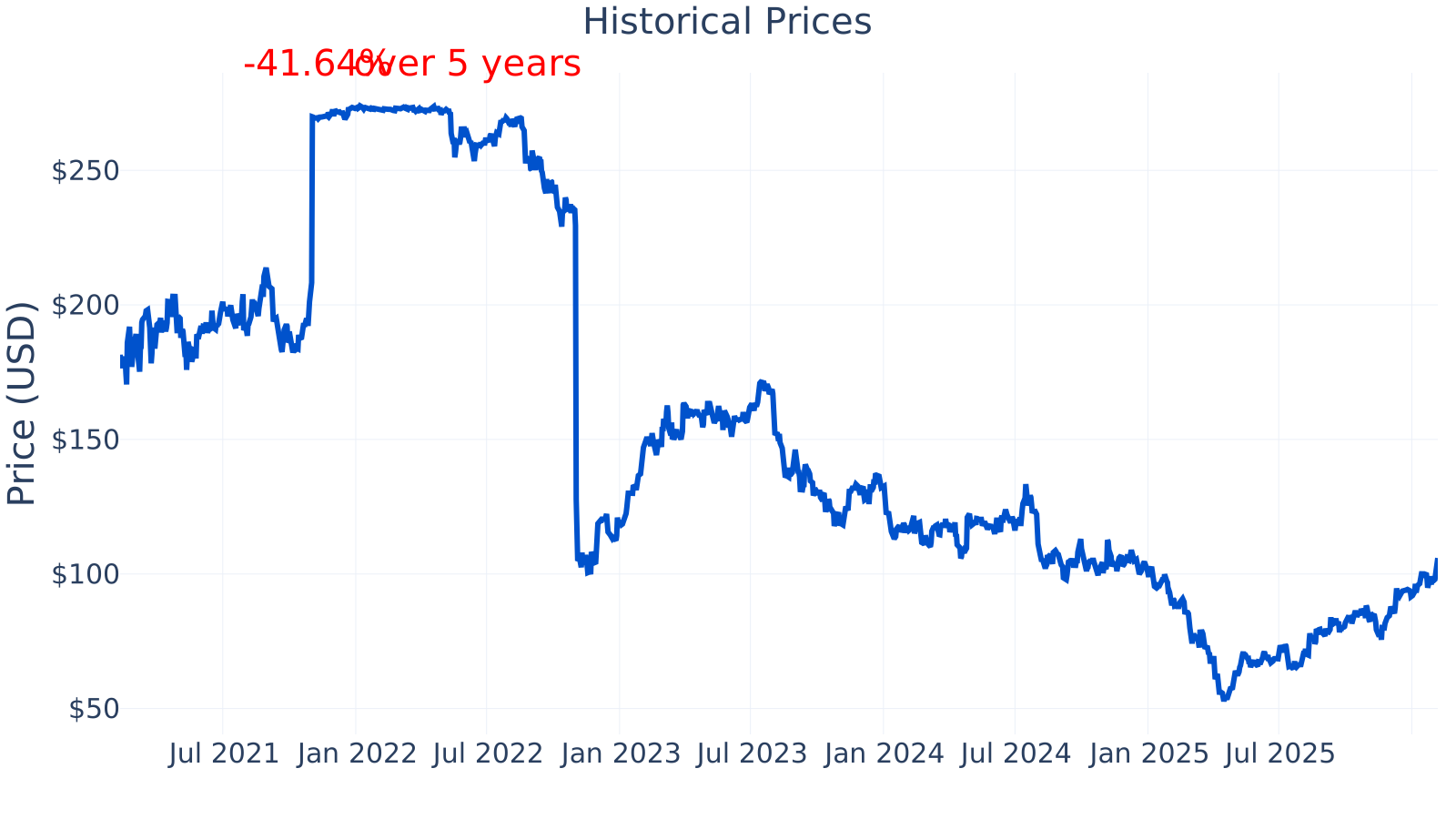
Rogers’ equity market value is about $1.92B, and the stock’s beta of roughly 0.39 suggests it has historically moved less than the broader market. The latest profit margin shown is about -8.35% versus an industry median near 6.11%, highlighting a recent period of losses. Year-over-year revenue growth is about 2.7% versus an industry median near 13.8%, which indicates slower recent top-line momentum relative to peers. On the balance-sheet side, debt-to-equity is about 1.9% versus an industry median near 39.0%, pointing to comparatively low leverage. Trailing twelve-month free cash flow is about $47.2M, a positive figure even while accounting profitability has been pressured.
Growth (Medium)
Rogers operates in electronic components and engineered materials—areas that can benefit from long-run trends such as rising electronics content per device, ongoing upgrades in communications infrastructure, and increased performance requirements for industrial systems. However, these end markets can also be cyclical, and demand can fluctuate with customer inventory cycles and broader industrial activity.
A practical way to gauge whether “growth” is currently showing up is to look at recent sales momentum and cash generation over time.
The year-over-year revenue growth pattern shows a shift from strong positive growth in 2021 to negative comparisons through much of 2023–2025, with the most recent point close to flat (around -0.9%). This can be consistent with a down-cycle and/or customer de-stocking, but it also means the company needs a clearer re-acceleration to demonstrate sustained demand improvement.
Free cash flow has been positive in most of the periods shown, with a notable dip in 2022 (negative) and then recovery afterward (roughly $107.7M in 2024 and about $54.4M in 2025). For a manufacturing and materials business, consistent free cash flow can matter because it supports reinvestment (capacity, R&D) and resilience during softer demand periods.
In filings, companies like Rogers typically describe growth strategy in terms of focusing R&D on higher-performance materials, deepening relationships with large customers, and improving manufacturing efficiency. Whether that strategy translates into measurable growth depends heavily on product adoption and the timing of customer programs (which can take time in engineered materials due to qualification requirements).
Risks (High)
This article is for informational purposes only and does not constitute financial advice. Some content is AI-generated. See Disclaimer