Stock Analysis · Roblox Corp (RBLX)
Overview
Roblox Corp (RBLX) operates an online platform where people can create, publish, and play interactive 3D experiences. The company’s ecosystem is built around user-generated content: a large community of creators builds experiences and virtual items, while users spend time and money inside those experiences. Roblox supports this with developer tools (Roblox Studio), infrastructure to run the platform, safety and moderation systems, and an in-platform virtual currency called Robux.
Roblox’s revenue is primarily tied to activity on its platform and spending on virtual items and experiences. In its financial reporting, Roblox describes revenue as being generated mainly from sales of its virtual currency (Robux), which is later spent by users and recognized as revenue as the virtual items and services are delivered over time. Other revenue streams exist but are smaller in comparison.
Main revenue sources (largest to smallest, as described in company filings):
- Virtual currency and in-experience spending (Robux): sales of Robux that are spent across experiences and virtual items; recognized as revenue over time as the related services are delivered.
- Advertising and partnerships (smaller portion): brand integrations and related commercial arrangements (where applicable).
- Other platform-related revenue: additional services and arrangements connected to operating the ecosystem.
One simple way to think about the business is that Roblox aims to increase (1) the number of people who use the platform, (2) the time they spend, and (3) how much value is exchanged in the ecosystem—while keeping creators incentivized to build high-quality content.
From 2021 to 2025, total revenue increased meaningfully, reaching about $4.89B in 2025 versus about $1.92B in 2021. Over the same span, the company continued to spend heavily on operating costs—especially research & development—and net income stayed negative in each year shown. This pattern is consistent with a platform investing to expand features, infrastructure, and safety systems while pursuing scale.
Key Figures
| Metric | Value | Industry ⓘ |
|---|---|---|
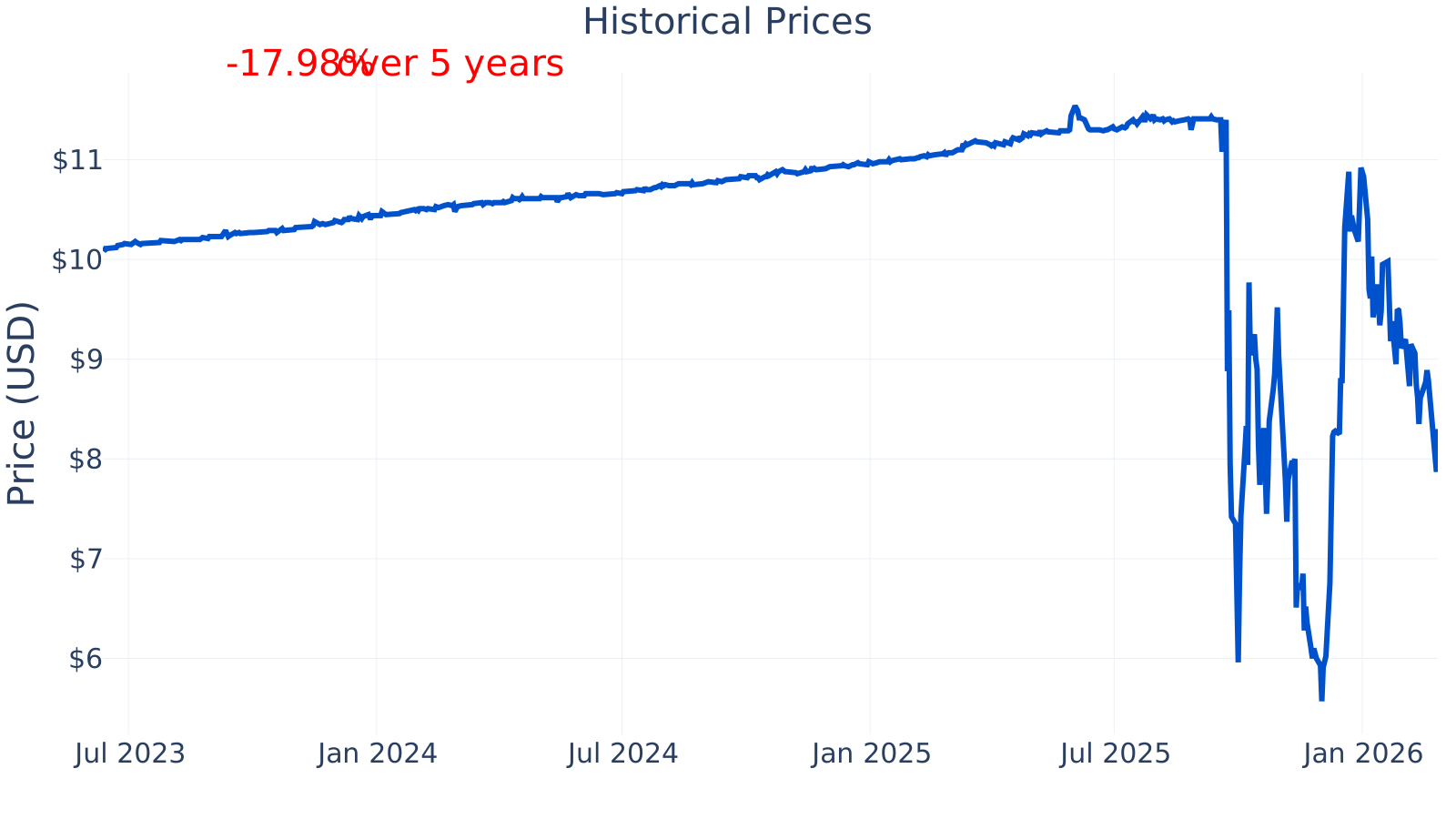
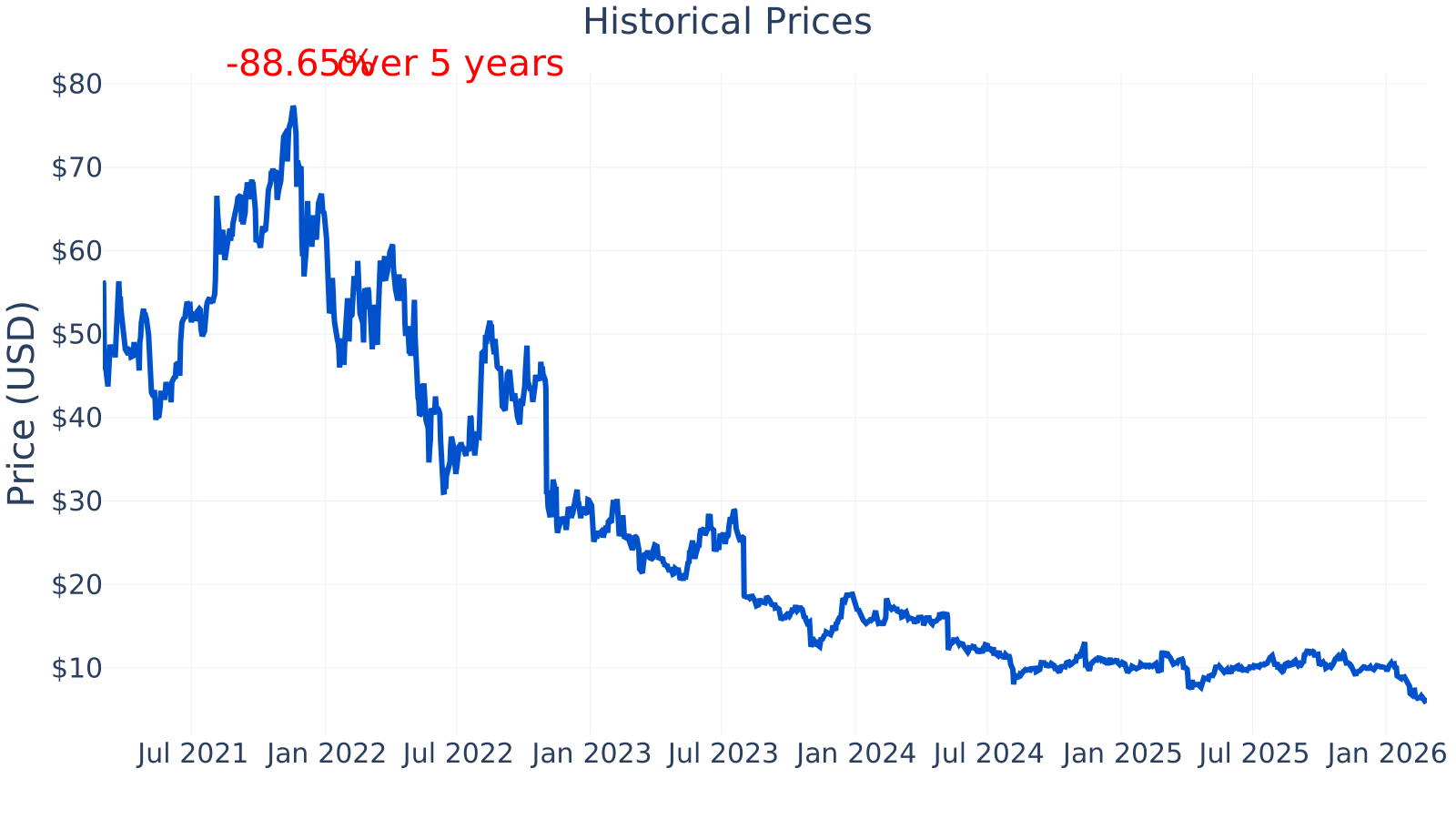
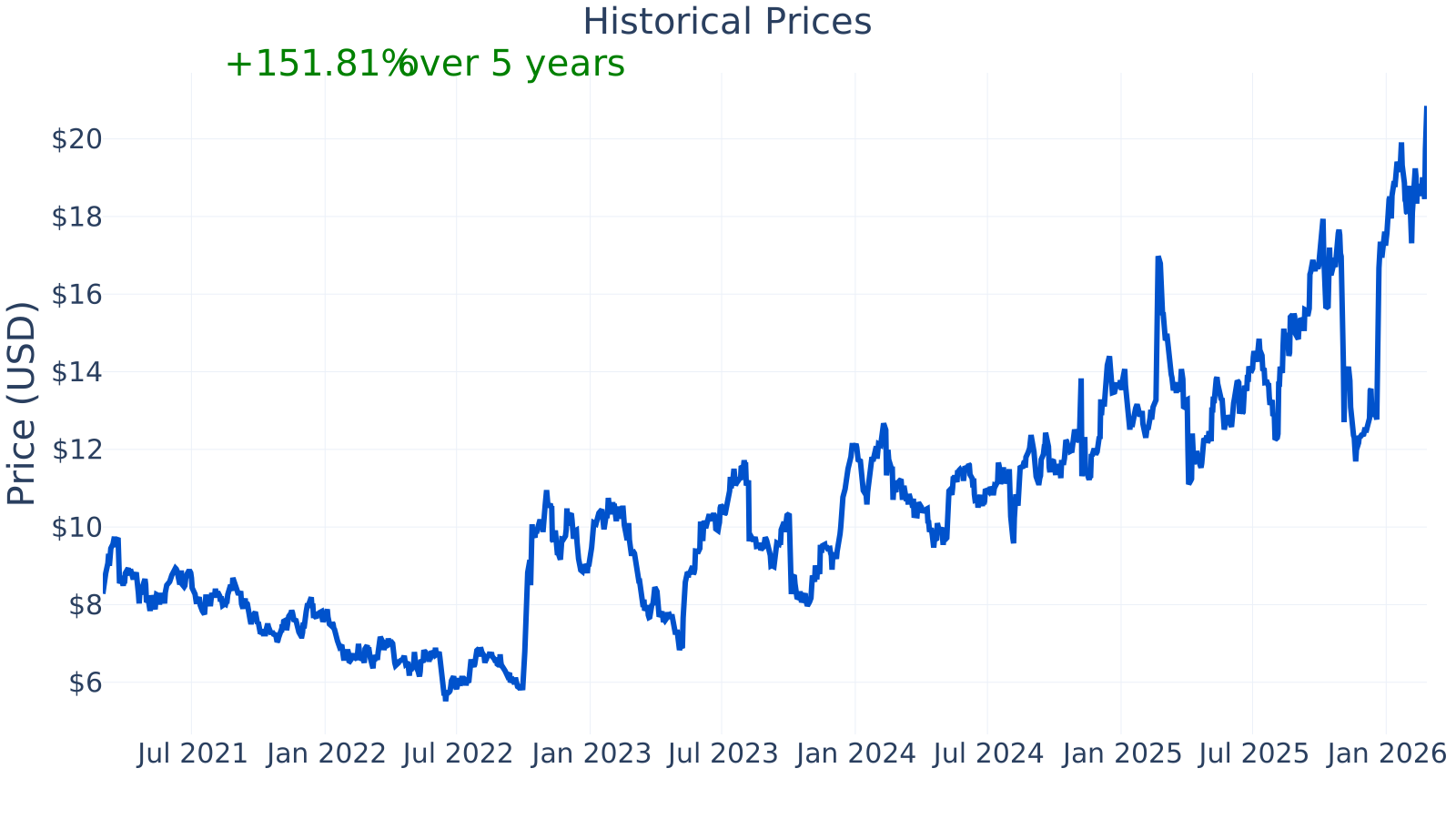
| Date | Feb 07, 2026 | |
| Context | ||
| Sector | Communication Services | |
| Industry | Electronic Gaming & Multimedia | |
| Market Cap ⓘ | $46.62B | |
| Beta ⓘ | 1.64 | |
| Fundamental | ||
| P/E Ratio ⓘ | N/A | |
| Profit Margin ⓘ | -21.78% | 3.16% |
| Revenue Growth ⓘ | 43.20% | 8.70% |
| Debt to Equity ⓘ | 414.83% | 31.70% |
| PEG ⓘ | 8.18 | |
| Free Cash Flow ⓘ | $1.48B | |
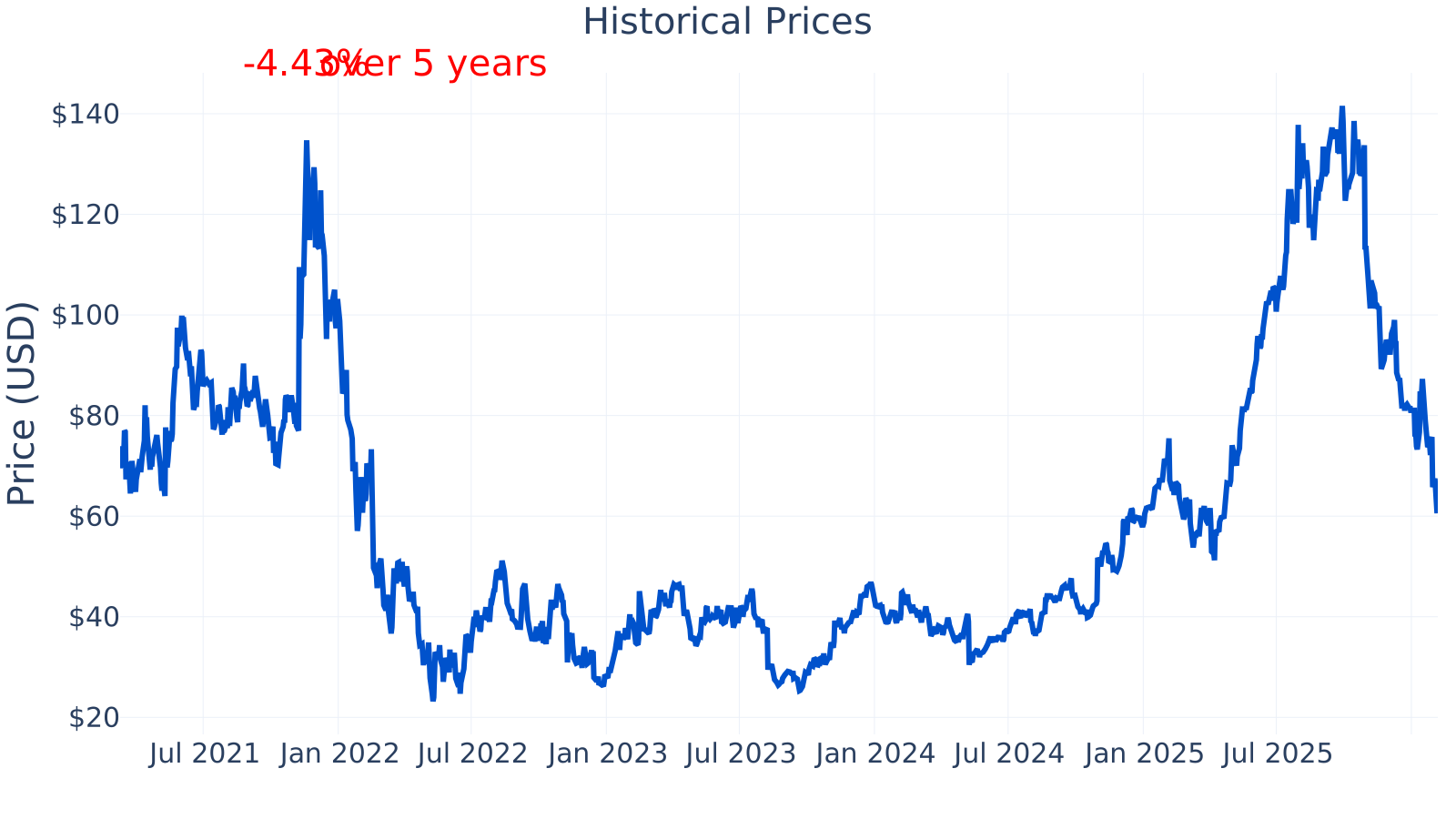
Roblox’s market capitalization is about $46.6B. The stock’s beta (1.64) suggests it has historically moved more than the broader market, which is common for growth-oriented companies. The company shows a negative profit margin (~-21.8%) versus an industry median near +3.2%, meaning it is still unprofitable on a net basis. At the same time, year-over-year revenue growth (~43.2%) is far above the industry median shown (~8.7%). Roblox also reports positive trailing twelve-month free cash flow of roughly $1.48B, which indicates the business has recently generated cash even while reporting accounting losses. The debt-to-equity ratio (~415%) is substantially higher than the industry median (~31.7%), highlighting a more leveraged balance sheet than peers on this measure.
Growth (high)
Roblox operates in the broader interactive entertainment and gaming market, where long-term growth has been supported by ongoing shifts toward digital content, live services, creator ecosystems, and social experiences inside games. Roblox is positioned specifically in a “platform” model rather than a single-game model: as long as creators keep publishing engaging experiences and users keep returning, the ecosystem can compound over time through network effects (more users can attract more creators, and more creators can attract more users).
Strategically, Roblox has emphasized improving its technology stack and creator tools, expanding content variety, and building systems that support safety and trust—important factors for a platform with a large youth audience. The company also focuses on the economics of its ecosystem: attracting creators, enabling them to earn, and keeping users engaged so spending continues across many experiences rather than relying on a single hit title.
Revenue growth has been volatile but strong overall. After extremely high growth rates in 2021, growth slowed sharply in late 2022, then re-accelerated. By the end of 2025, year-over-year growth is shown around 43%, which is well above the industry median in the table. Sustaining elevated growth rates typically requires continued user engagement gains, successful expansion to new demographics/regions, and stable monetization.
Free cash flow improved significantly over time: it was positive in 2021 and 2022, turned slightly negative around early 2023, and then climbed, reaching roughly $877M (TTM) by early 2025 and about $1.48B in the latest table. This improvement can matter because it may provide flexibility to keep investing in the platform (infrastructure, moderation, product development) without relying as heavily on external financing.
Risks (high)
This article is for informational purposes only and does not constitute financial advice. Some content is AI-generated. See Disclaimer