Stock Analysis · Rivian Automotive Inc (RIVN)
Overview
Rivian Automotive Inc. designs and manufactures electric vehicles (EVs) and related software and services. The company’s lineup has historically centered on consumer vehicles (such as its pickup and SUV) and commercial vans, with production primarily in the United States. Rivian’s strategy combines vehicle sales with ongoing investment in technology (software, battery systems, and vehicle platforms) and manufacturing scale, aiming to improve costs and margins over time.
Rivian’s revenue is primarily generated from vehicle-related activities. Based on how Rivian reports its business in SEC filings, the main revenue sources can be summarized as:
- Automotive sales (vehicles delivered to customers) — the largest contributor
- Automotive regulatory credits — typically a smaller and potentially volatile contribution
- Automotive services and other (including items such as service, repairs, and other vehicle-related services) — generally smaller than vehicle sales
While revenue has grown from early-stage levels, Rivian has also had sizable costs tied to manufacturing ramp-up, warranty/service infrastructure, and continued research and development.
From 2021 to 2025, total revenue increased sharply (from about $55 million in 2021 to about $5.387 billion in 2025). Over the same period, Rivian’s cost of revenue remained high, but the direction has improved: gross profit moved from negative levels in prior years to a positive figure in 2025 (about $144 million). Operating expenses (notably R&D and selling, general, and administrative costs) remained substantial, which kept net income negative in 2025 (about -$3.646 billion).
Key Figures
| Metric | Value | Industry ⓘ |
|---|---|---|
| Date | Feb 16, 2026 | |
| Context | ||
| Sector | Consumer Cyclical | |
| Industry | Auto Manufacturers | |
| Market Cap ⓘ | $22.00B | |
| Beta ⓘ | 1.77 | |
| Fundamental | ||
| P/E Ratio ⓘ | N/A | 20.79 |
| Profit Margin ⓘ | -67.68% | -1.64% |
| Revenue Growth ⓘ | -25.80% | 7.40% |
| Debt to Equity ⓘ | 108.64% | 108.37% |
| PEG ⓘ | N/A | |
| Free Cash Flow ⓘ | -$2.49B | |
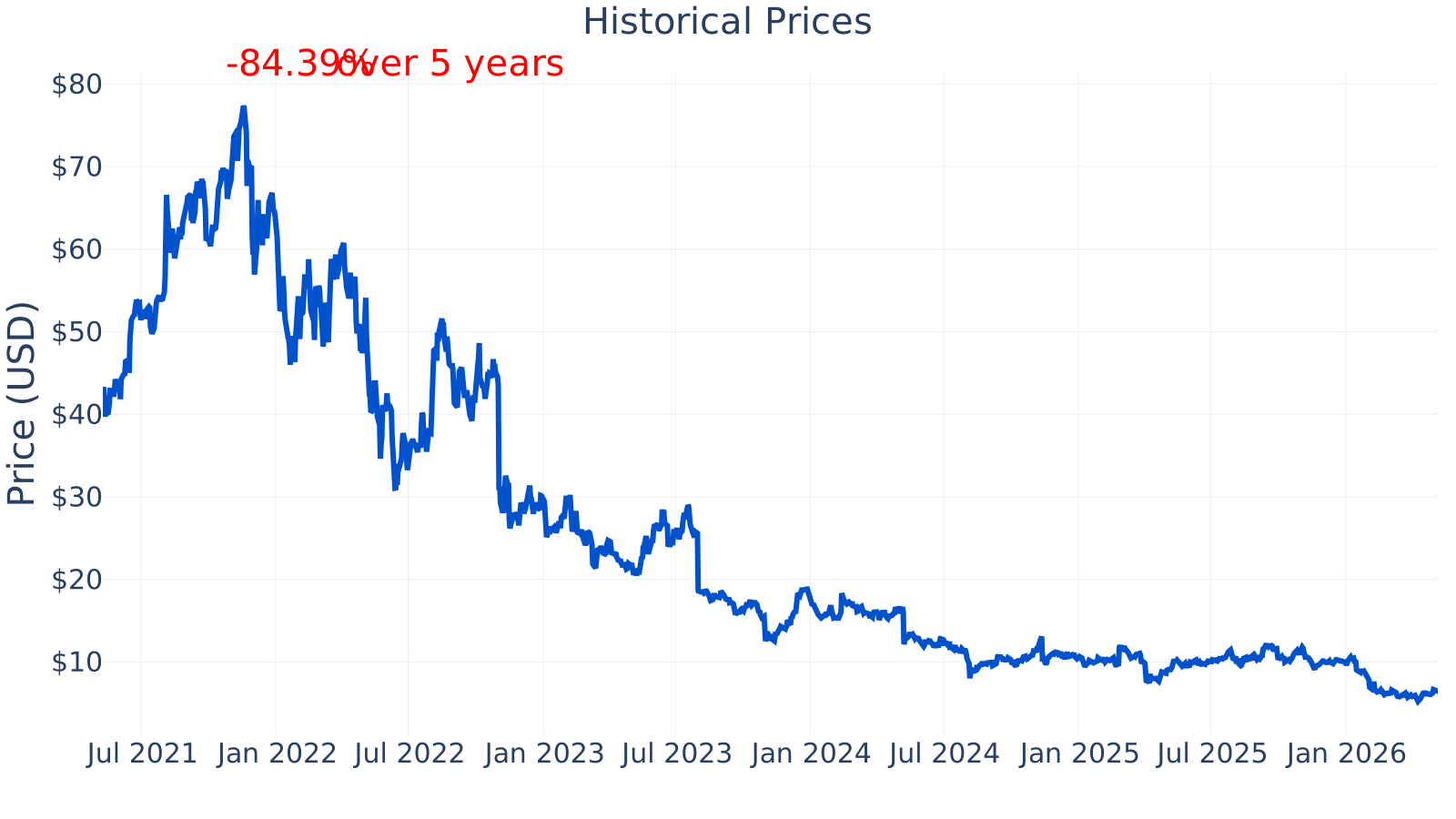
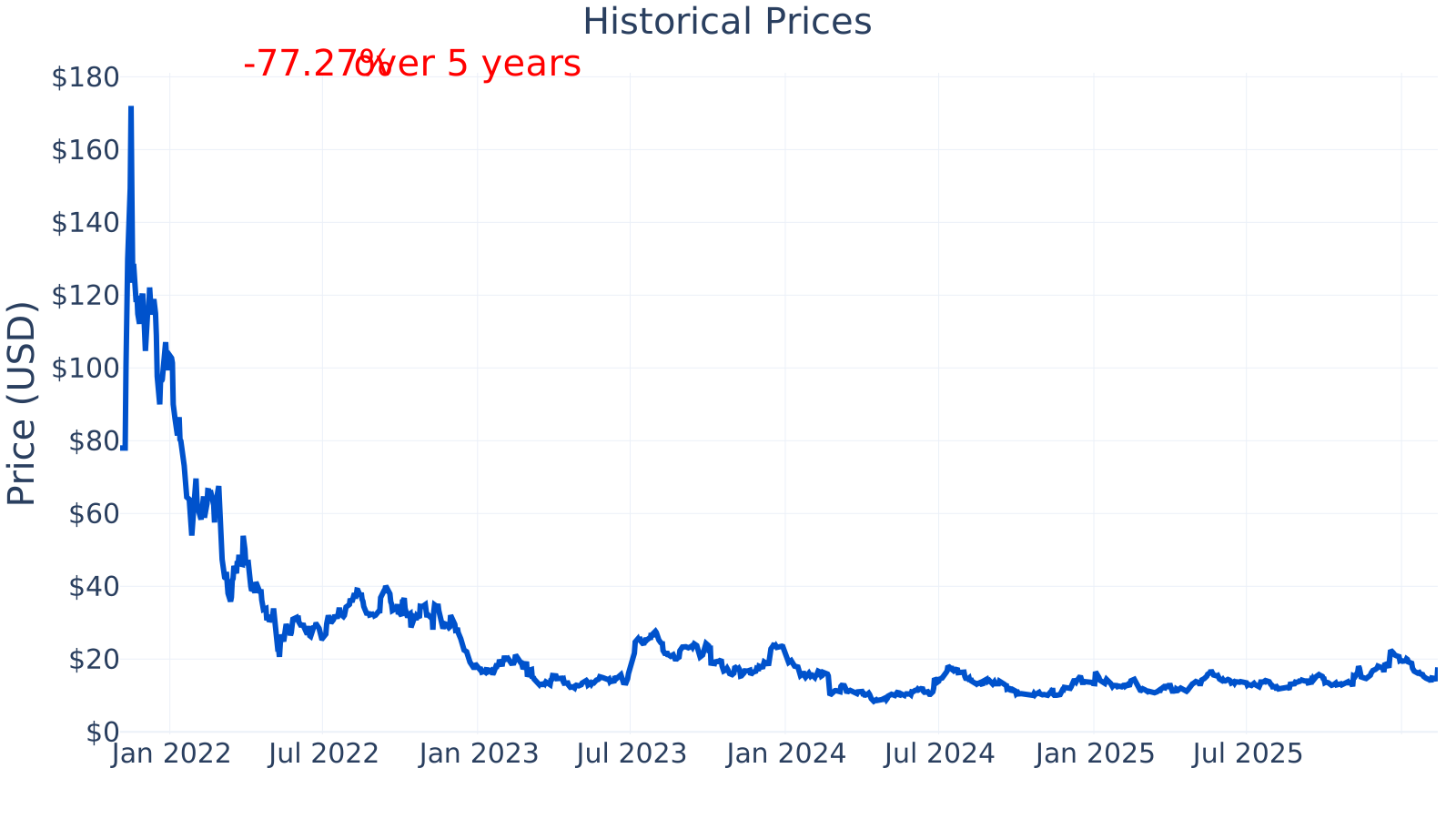
Rivian’s market capitalization is about $22.0 billion. The stock’s beta is about 1.77, which commonly indicates larger price swings than the broader market. Profitability remains a major open item: the latest profit margin shown is about -67.7% versus an industry median around -1.6%. Recent growth has also been uneven, with the latest year-over-year revenue growth shown at about -25.8%, compared with an industry median around +7.4%. Balance sheet leverage (debt relative to equity) is about 108.6%, broadly similar to the industry median (~108.4%). Free cash flow over the trailing twelve months is about -$2.489 billion, reflecting continued cash usage while scaling the business.
Growth (Medium)
Rivian operates in the global automotive market, where the long-term shift toward electrification is a major structural trend. That said, EV adoption does not move in a straight line: consumer demand, charging availability, model pricing, incentives, and interest rates can all influence how fast EV volumes grow in any given year. For Rivian, the central growth question is less about whether EVs exist in the future and more about whether Rivian can scale production efficiently, keep demand healthy, and move toward sustainable profitability.
A key part of Rivian’s long-term logic is improving unit economics—reducing the cost to build each vehicle while keeping pricing competitive. The company’s financials show some evidence of progress in that direction (for example, gross profit turning positive in 2025), but operating expenses remain high, which matters because it can delay the point where the overall business becomes profitable.
Revenue growth has been volatile. Early periods show extremely high growth rates (typical when a company starts from a small base), followed by a visible slowdown and a negative year-over-year result in the most recent point shown (-25.8%). This pattern highlights that production, deliveries, and pricing dynamics can meaningfully affect reported growth from one period to the next.
Cash generation remains a key area to watch. Free cash flow is still negative, but the trend shown improves meaningfully from about -$6.773 billion (2023-03-31) to about -$1.860 billion (2025-03-31). Even with that improvement, negative free cash flow typically implies continued reliance on existing cash reserves and/or external financing over time.
Risks (High)
Rivian’s risks are strongly tied to execution. Auto manufacturing is capital-intensive, and reaching consistent profitability typically depends on high utilization of factories, stable supply chains, competitive product positioning, and disciplined cost control. If production costs remain elevated, warranty/service costs rise, or demand is weaker than expected, losses can persist longer than the market anticipates.
Competition is another central risk. Rivian competes with large, established automakers (many of which can fund EV programs with profits from other vehicle lines) as well as pure-play EV manufacturers. Competitors can use pricing, incentives, broad dealer/service networks, and high-volume purchasing power to pressure newer entrants. In addition, competition in electric trucks and SUVs has intensified, increasing the importance of differentiation (brand, performance, design, software experience) and cost structure.
Rivian does have potential competitive strengths—such as a recognizable EV brand, distinct product design in the adventure/truck segment, and in-house technology development—but it is not the volume leader in the broader auto market. Its positioning is better described as a focused EV maker working to scale, rather than the dominant player in the category.
Leverage has risen markedly over time, from roughly 7.9% (2021-12-31) to about 108.6% (2025-12-31). This level is close to the industry median in the latest period, but the increase itself is important because it can reduce financial flexibility if cash burn persists or if capital markets become less favorable.
Profit margin has improved significantly from extremely negative levels earlier in the timeline, but it remains negative at about -67.7% in the latest period shown. Relative to the industry median (about -36.0% in the latest point shown), Rivian’s margin indicates it is still under heavier profitability pressure than a typical peer in the same industry grouping.
Valuation
A traditional price-to-earnings (P/E) comparison is not very informative here because Rivian has reported net losses, and the P/E values shown are effectively not meaningful (displayed as zero across the periods shown). In situations like this, market value is often discussed more in relation to factors such as revenue scale, gross margin trajectory, expected future profitability, and the company’s ability to reduce cash burn over time.
With a market capitalization around $22.0 billion and ongoing negative profit margins and negative free cash flow, the stock price implicitly reflects expectations that Rivian can continue improving manufacturing efficiency, stabilize demand, and move closer to sustainable profitability. Whether that valuation is “expensive” or “cheap” cannot be concluded from P/E alone; it largely depends on future execution (margins, production scale, operating expense discipline) and the competitive environment.
Conclusion
Rivian is an EV manufacturer transitioning from early ramp-up toward a more mature operating phase. The company has demonstrated meaningful revenue scale compared with its earliest years and has shown improvement in gross profit by 2025, suggesting progress on manufacturing and cost factors. At the same time, the business still shows large net losses, negative profit margins, and negative free cash flow, which keep the risk profile elevated and make long-term outcomes heavily dependent on execution.
From a long-term perspective, the key facts to monitor are whether Rivian can (1) sustain demand while expanding production efficiently, (2) continue improving margins beyond gross profit into operating profitability, and (3) reduce cash burn without taking on destabilizing levels of financing risk. The company’s results so far show both forward progress and remaining financial strain, which is why the overall profile combines long-run industry tailwinds with high company-specific execution risk.
Sources:
- SEC EDGAR — Rivian Automotive, Inc. Form 10-K (Annual Report)
- SEC EDGAR — Rivian Automotive, Inc. Form 10-Q (Quarterly Reports)
- Rivian Investor Relations — Shareholder letters / quarterly results materials (company-hosted)
- Wikipedia — “Rivian” (basic company background; non-financial reference)
This article is for informational purposes only and does not constitute financial advice. Some content is AI-generated. See Disclaimer