Stock Analysis · Rigetti Computing Inc (RGTI)
Overview
Rigetti Computing Inc is a U.S.-based quantum computing company. In simple terms, it works on a new kind of computer that uses quantum physics to solve certain specialized problems. Rigetti’s business has historically combined (1) developing its own quantum processors and systems and (2) providing access to its quantum computers through cloud-based services and collaborations with research institutions, governments, and commercial partners.
Because the technology is still early, Rigetti’s revenue has been relatively small compared with traditional hardware or software companies, and it can vary from year to year depending on the timing of contracts and projects. In its filings, the company describes revenue coming primarily from providing quantum computing-related services and from related contracts (often with a research or development focus). Specific product lines and exact revenue mix can change over time as the company adjusts its go-to-market approach.
At a high level, the revenue sources described in company filings typically include:
- Quantum computing services and contracts (work delivered under customer agreements, often project-based)
- Access to quantum computing via cloud or related offerings (where customers run work on Rigetti systems through supported platforms)
From the long-term income flow, a key takeaway is that operating costs—especially research and development—have been far larger than gross profit in recent years, which is typical for R&D-heavy companies trying to build a new computing platform. For example, in 2025 the company reported total revenue of about $7.1M versus research and development expense of about $61.3M, and it reported a sizable net loss.
Key Figures
| Metric | Value | Industry ⓘ |
|---|---|---|
| Date | Mar 09, 2026 | |
| Context | ||
| Sector | Technology | |
| Industry | Computer Hardware | |
| Market Cap ⓘ | $5.61B | |
| Beta ⓘ | 1.72 | |
| Fundamental | ||
| P/E Ratio ⓘ | N/A | 24.02 |
| Profit Margin ⓘ | N/A | 4.46% |
| Revenue Growth ⓘ | -17.90% | 21.50% |
| Debt to Equity ⓘ | 1.31% | 5.95% |
| PEG ⓘ | N/A | |
| Free Cash Flow ⓘ | -$77.22M | |
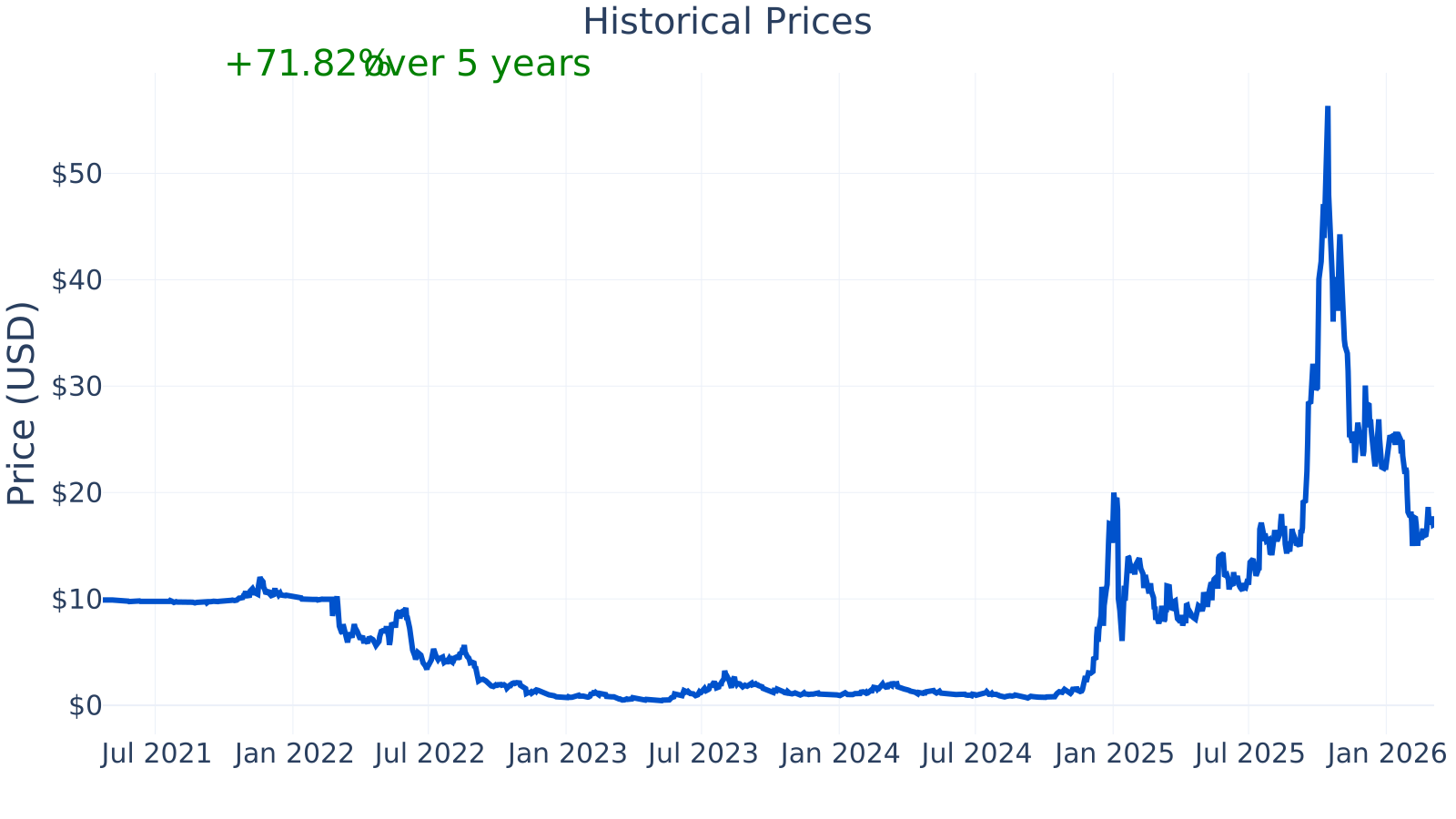
Rigetti’s equity value is around $5.6B, and the stock has shown high volatility (beta about 1.72), which means it has tended to move more than the broader market. Profitability is currently not present (profit margin is negative across the history shown), and the company’s latest year-over-year revenue growth is -17.9%, below the industry median shown (+21.5%). The balance sheet leverage looks low based on debt-to-equity of about 1.3% versus an industry median near 5.9%. Free cash flow over the trailing twelve months is about -$77.2M, indicating the business is still consuming cash to fund operations and development.
Growth (Medium)
Quantum computing is widely discussed as a potentially important future technology, but it is still in a research-and-commercialization phase. That matters for long-term business building: adoption tends to be slower, projects are often experimental, and revenue can be lumpy. The industry’s direction can be favorable over time if quantum computers become useful for real-world problems at scale (for example, in certain simulation or optimization tasks), but the timeline and the eventual winners are uncertain.
Rigetti’s strategy—building its own quantum hardware and making it accessible to users through cloud-based access and partnerships—matches how early quantum computing has generally been commercialized: organizations test the technology through paid pilots, research collaborations, and government or enterprise programs. Potential catalysts for growth typically include technical performance improvements (more reliable qubits, better error rates), larger and longer-duration customer contracts, and broader software and ecosystem adoption around Rigetti’s systems.
The revenue growth pattern has been volatile. There were periods of strong growth (including a very large spike in late 2022), followed by multiple quarters of contraction. The most recent stretch shown is consistently negative year-over-year growth, which suggests the company has not yet reached a stable scaling phase on the revenue line.
Free cash flow has remained negative in the period shown, reaching around -$77M on a trailing basis. For a long-duration R&D story, negative cash flow is not unusual, but it increases the importance of cash management and future funding strategy (because the company must cover operating needs while it works toward larger commercial demand).
Risks (Very High)
The central risk is that quantum computing may take longer than expected to become broadly commercial, or it may require technical breakthroughs that are difficult, expensive, or uncertain. Even if the industry grows, a second risk is that the market could consolidate around a few platforms, and smaller providers could struggle to earn sustainable economics.
A third risk is financial: Rigetti has reported large net losses historically, which can lead to funding needs. Companies in this stage often rely on cash reserves, partnerships, or capital markets over multiple years while they work toward product-market fit and scale. If funding conditions become unfavorable, it can constrain research pace or go-to-market investment.
The leverage picture looks relatively conservative in the most recent period shown: debt-to-equity is about 1.3%, which is low and roughly in line with the industry median displayed at the same date. However, low debt does not eliminate the risk associated with sustained cash burn; it mainly indicates the company is not heavily financed with traditional borrowing.
Profit margins have been deeply negative for an extended period (for example, the most recent value shown is about -3050%, while the industry median is around 3.7%). This highlights the current reality of the business model: today’s revenue base is small relative to the cost structure needed to develop advanced hardware and support customer projects.
Competition is intense. Rigetti operates in an ecosystem that includes very large technology companies and well-funded specialized labs pursuing different quantum hardware approaches (such as superconducting qubits, trapped ions, neutral atoms, and photonics). In practice, competitive positioning is often judged by a mix of technical milestones (hardware performance, reliability, scaling path), developer ecosystem, customer traction, and ability to fund multi-year R&D. Rigetti has experience in superconducting quantum hardware and offers access to its systems, but it is not the only credible platform, and larger competitors may have more resources for sustained investment.
Valuation
A common valuation shortcut for established companies is the price-to-earnings (P/E) ratio, but Rigetti’s P/E is not meaningful in the period shown (displayed as 0) because earnings are negative. In contrast, the industry median P/E shown is generally positive and often in the teens to 30s range, which reflects that many companies in the broader comparison set have positive earnings.
In situations like this, the market value tends to reflect expectations about future outcomes rather than current profitability—such as the probability of technical progress, future contract wins, and a path to materially higher revenue. With a market capitalization around $5.6B and annual revenue shown in the single-digit millions (for example, about $7.1M in 2025), the valuation implies that investors are assigning substantial value to future growth that has not yet appeared in current financial results. Whether that context is “expensive” or “cheap” cannot be concluded from P/E, and it depends primarily on uncertain long-term execution and the pace of quantum computing adoption.
Conclusion
Rigetti Computing Inc is building quantum computing hardware and related access/services in a field that could become important over the long run but remains early and uncertain today. The company’s recent financial profile shows small and volatile revenue, persistent negative free cash flow, and very large losses relative to revenue, alongside relatively low debt levels.
From a fundamentals standpoint, the key items to track over time are whether revenue becomes less project-driven and more repeatable, whether cash burn trends improve, and whether the company can demonstrate sustained technical and commercial progress in a highly competitive landscape. The current market value appears to embed significant expectations about future scaling, while current profitability-based valuation measures are not applicable due to losses.
Sources:
- SEC EDGAR — Rigetti Computing Inc filings (Form 10-K, Form 10-Q)
- Rigetti Computing Inc — Investor Relations materials and press releases (company website)
- Wikipedia — “Rigetti Computing” (basic background; non-financial context)
This article is for informational purposes only and does not constitute financial advice. Some content is AI-generated. See Disclaimer