Stock Analysis · Reynolds Consumer Products Inc (REYN)
Overview
Reynolds Consumer Products Inc. (REYN) makes everyday household items used mainly in kitchens and around the home. Its products are typically “consumables” (items that are used up and repurchased), such as aluminum foil, trash bags, food storage, and other disposable or semi-disposable items. The company sells primarily through large retailers, grocery chains, and other distribution channels, which tends to make demand more tied to household usage than to big-ticket discretionary spending.
In its SEC filings, Reynolds Consumer Products generally describes its business through product categories rather than one single product line. The largest sources of revenue are typically aligned to these categories:
- Waste & storage (for example: trash bags and storage products)
- Cooking & baking (for example: aluminum foil and baking-related products)
- Tableware (for example: disposable plates/cups and related items)
The exact percentages by category can change year to year based on pricing, promotional activity, and consumer demand. For a precise split, the company’s latest annual report (Form 10‑K) is the most reliable reference.
Across the years shown, revenue appears relatively stable (roughly in the mid-$3 billions), while profitability moves more with costs (materials, freight, and manufacturing) and operating expenses. Operating income and net income fluctuate meaningfully from year to year even when revenue is fairly steady, which is common in packaging/consumer products where input costs and pricing power can shift.
Key Figures
| Metric | Value | Industry ⓘ |
|---|---|---|
| Date | Feb 16, 2026 | |
| Context | ||
| Sector | Consumer Cyclical | |
| Industry | Packaging & Containers | |
| Market Cap ⓘ | $4.99B | |
| Beta ⓘ | 0.57 | |
| Fundamental | ||
| P/E Ratio ⓘ | 16.59 | 22.22 |
| Profit Margin ⓘ | 8.09% | 5.56% |
| Revenue Growth ⓘ | 1.40% | 5.90% |
| Debt to Equity ⓘ | 78.34% | 137.29% |
| PEG ⓘ | N/A | |
| Free Cash Flow ⓘ | $316.00M | |
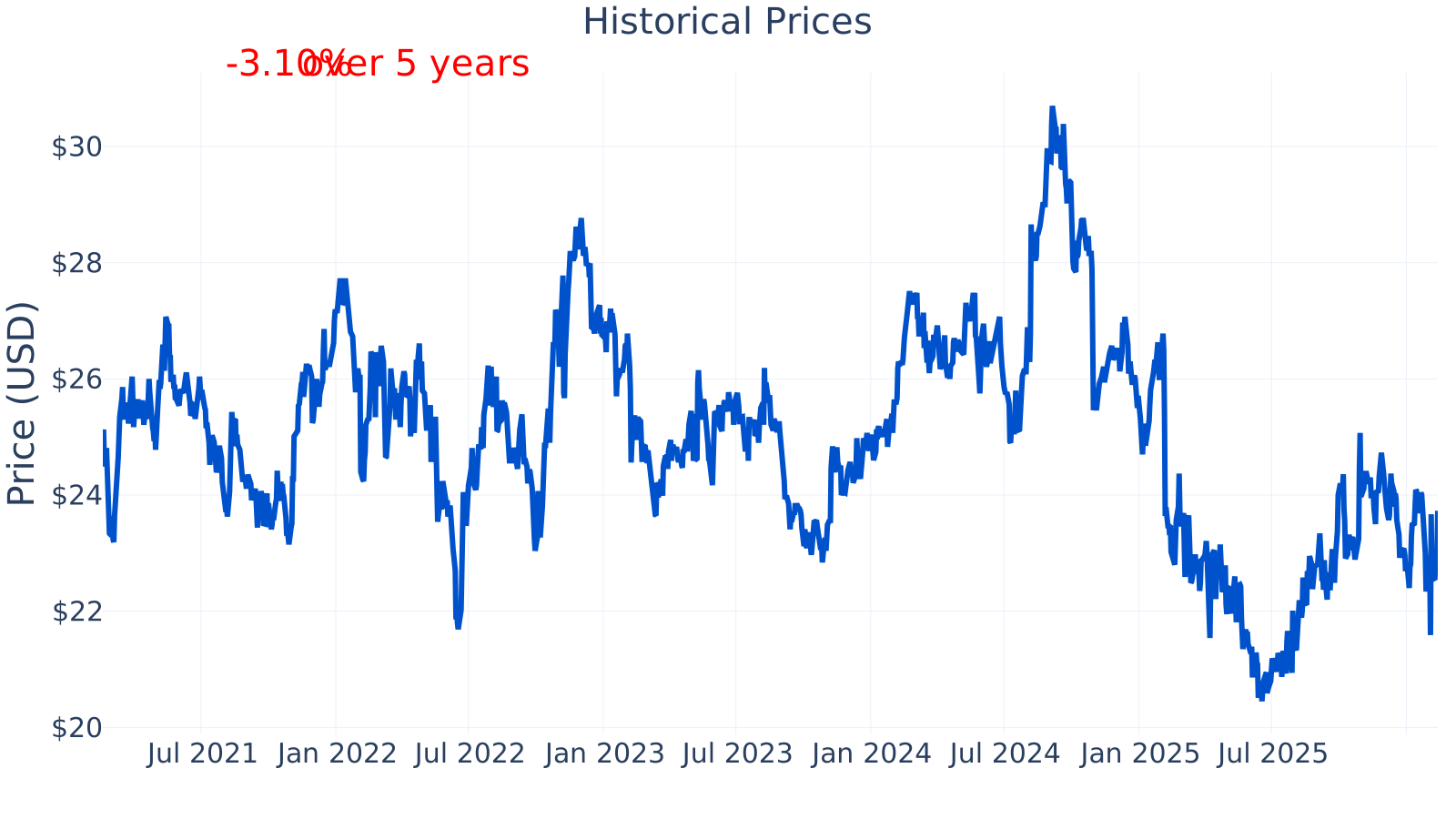
Reynolds Consumer Products has a market capitalization of about $5.0B and a relatively low beta (~0.57), which means the stock has historically moved less than the broader market. The company’s latest P/E ratio is ~16.6, below the industry median (~22.2) in the Packaging & Containers peer set provided. Profitability (net profit margin) is about 8.1%, above the industry median (~5.6%). Revenue growth year-over-year is about 1.4%, below the industry median (~5.9%). Leverage is moderate: debt-to-equity ~78%, lower than the industry median (~137%). Trailing twelve-month free cash flow is about $316M.
Growth (Low)
Reynolds Consumer Products operates in a mature, everyday-necessities part of the consumer market. Over long periods, this kind of business often grows more slowly than high-growth industries because household penetration is already high and many categories are mature. That said, demand can be relatively resilient because people continue to buy trash bags, foil, and storage products in many economic environments.
The revenue growth pattern shown is mixed: stronger growth in 2021–2022, followed by several quarters of declines in 2023–2024, and then a return to low single-digit growth more recently (around ~1% to ~2% in the latest periods shown). This profile suggests that long-term expansion may rely more on pricing, product mix, distribution execution, and selective innovation than on rapid category growth.
Free cash flow can matter a lot for a business like this because it helps fund dividends, debt reduction, and reinvestment. The chart shows that trailing free cash flow has varied substantially (from roughly $166M to $544M across the periods shown), with the latest level around $316M. This variability can reflect working-capital swings, changes in profitability, and the timing of capital spending.
Potential catalysts in this type of business are usually practical rather than transformational: improved pricing versus input costs, operational efficiency (manufacturing productivity), and steady brand/distribution execution. M&A can also be a catalyst in consumer packaging, but it is inherently uncertain and depends on valuation and integration outcomes.
Risks (Medium)
This article is for informational purposes only and does not constitute financial advice. Some content is AI-generated. See Disclaimer


