Stock Analysis · Upbound Group Inc (UPBD)
Overview
Upbound Group Inc. (UPBD) is a specialty consumer finance and retail company focused on serving customers who may not use traditional credit. Its best-known business is rent-to-own, where customers can acquire durable goods (such as furniture, appliances, electronics, and other home essentials) through lease-to-own agreements. Upbound also has a direct-to-consumer leasing operation, and it provides some loan-related products tied to its customer base.
In simple terms, the company earns money by (1) leasing merchandise to customers over time, (2) selling products in its retail network and digital channels, and (3) collecting fees and interest-like income embedded in lease and lending arrangements, after paying for the merchandise, store operations, and funding costs.
Main revenue streams are typically described along these lines (exact percentages can vary by year and are detailed in company filings):
- Lease-to-own / rent-to-own payments (the largest driver in most periods)
- Retail sales of merchandise (often tied to the same product categories)
- Other income (may include fees and ancillary financial products, depending on the period)
The company’s results tend to be influenced by consumer spending on household essentials, credit availability for non-prime customers, and the cost of financing its operations.
Across the years shown, total revenue moved within a relatively narrow band (about $4.0B–$4.7B). Operating income stayed positive, while net income fluctuated more noticeably—an indication that items like interest expense and other below-operating-line costs can have a meaningful impact on bottom-line results.
Key Figures
| Metric | Value | Industry ⓘ |
|---|---|---|
| Date | Feb 23, 2026 | |
| Context | ||
| Sector | Technology | |
| Industry | Software - Application | |
| Market Cap ⓘ | $1.32B | |
| Beta ⓘ | 1.86 | |
| Fundamental | ||
| P/E Ratio ⓘ | 15.60 | 25.48 |
| Profit Margin ⓘ | 1.56% | 7.23% |
| Revenue Growth ⓘ | 10.90% | 15.70% |
| Debt to Equity ⓘ | 244.29% | 25.08% |
| PEG ⓘ | N/A | |
| Free Cash Flow ⓘ | $196.91M | |
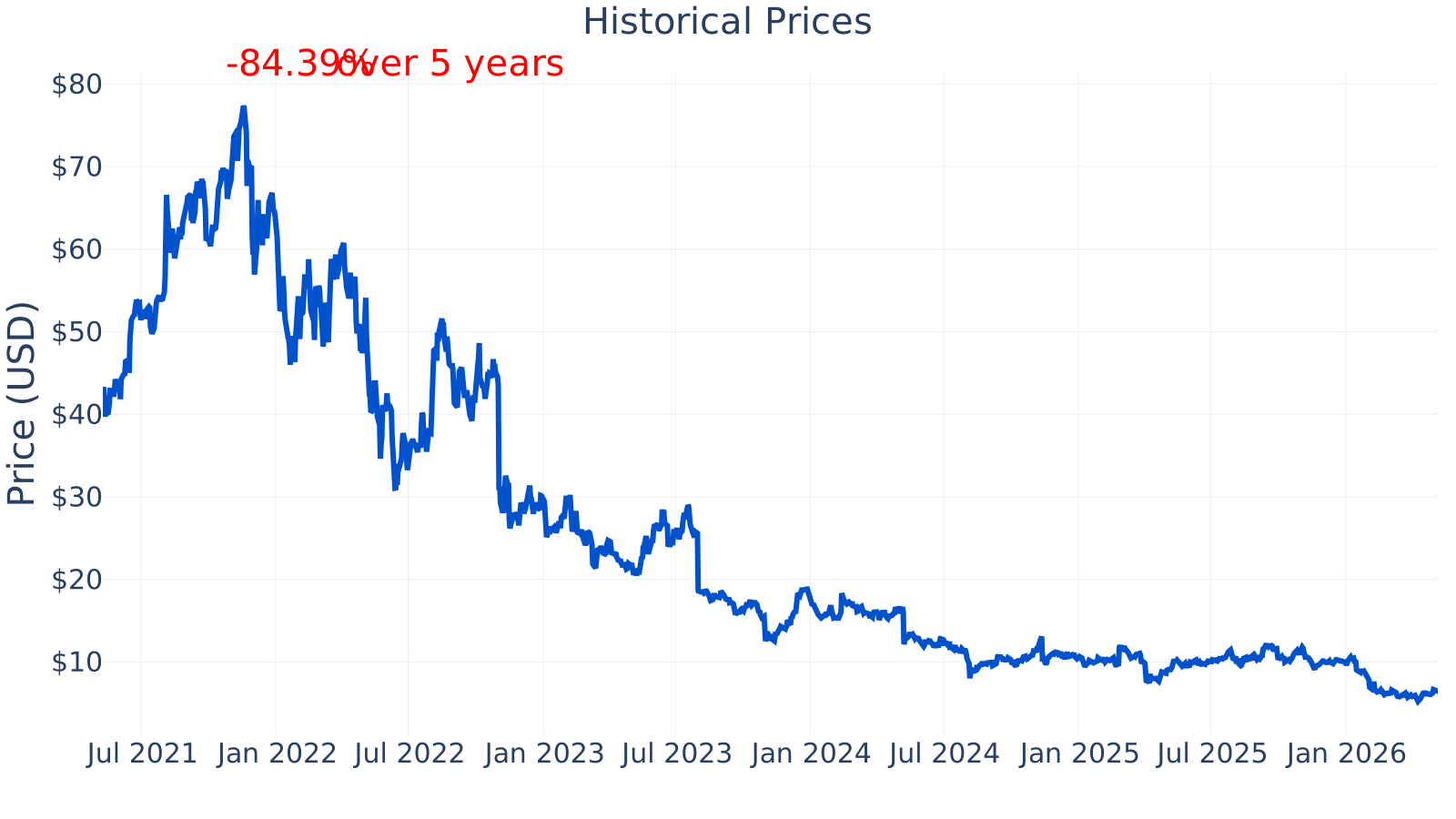
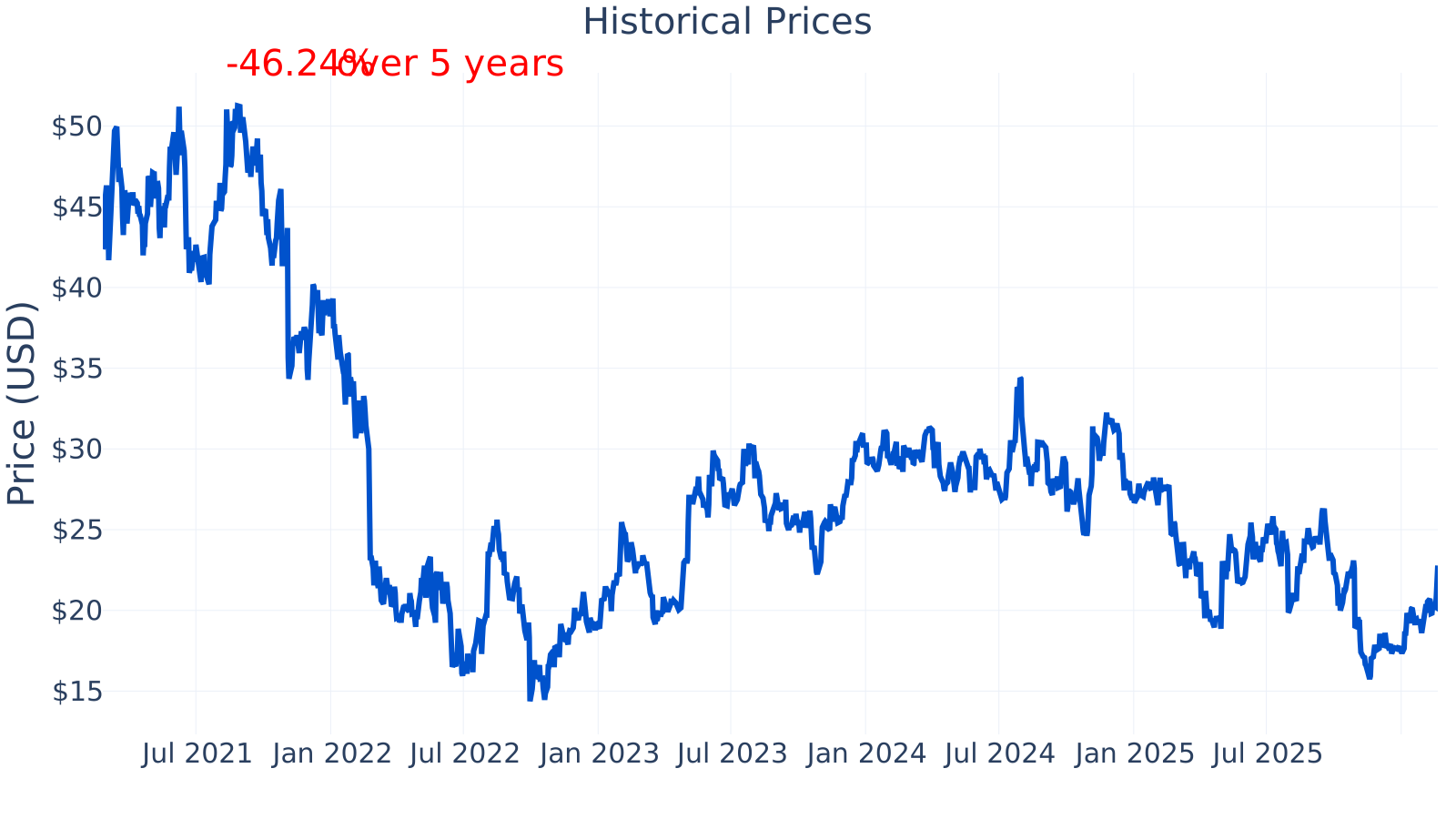
Upbound’s market capitalization is about $1.32B, and the stock has a relatively high beta of ~1.86, which commonly corresponds to larger price swings than the broader market. The company’s P/E ratio is ~15.6, below the industry median (~25.5) shown here. Profitability is modest: the latest profit margin is ~1.6% versus an industry median of ~7.2%. Recent year-over-year revenue growth is ~10.9%, below the listed industry median (~15.7%). Leverage stands out: debt-to-equity is ~244% compared with an industry median of ~25%. Trailing twelve-month free cash flow is ~$197M, indicating the business has recently generated meaningful cash after operating and capital spending.
Growth (Medium)
Upbound operates in consumer-oriented categories that are not purely “high-growth tech.” Demand is often tied to household formation, replacement cycles for essential goods, and the financial health of value-focused consumers. In periods when traditional credit tightens, lease-to-own can remain relevant because it offers an alternative path to obtaining needed items—though this can be offset if customer payment performance weakens.
The company’s strategy generally centers on maintaining and improving its retail and digital reach, optimizing underwriting and collections, and expanding product/service options for its core customer base. For long-term expansion, the key question is whether Upbound can grow customer relationships while keeping losses and operating costs under control.
The revenue growth pattern shown is uneven: very strong growth in 2021, a decline through much of 2022 and parts of 2023, then a return to positive growth from late 2023 onward, reaching about 10.9% most recently. This suggests the business has moved from contraction back into expansion, but not in a straight line.
Free cash flow has also varied by year. It was higher earlier in the period (peaking above $390M on a trailing basis in 2022), dropped sharply by 2024 (below $100M), and recovered to about $198M in 2025. For a model that depends on funding and customer repayment behavior, consistently strong cash generation can be an important support—but the variability matters when assessing resilience across cycles.
Risks (High)
A central risk for Upbound is customer credit performance. Because the company serves consumers outside traditional prime credit channels, results can be sensitive to job markets, inflation pressures on household budgets, and changes in delinquency and charge-off behavior. Higher losses can reduce profitability quickly.
Another major risk is financial leverage and funding costs. The company uses debt to finance a portion of its assets and operations, which can amplify results both positively and negatively. Higher interest rates or tighter credit markets can raise borrowing costs and pressure earnings.
Debt-to-equity remains elevated throughout the period shown, ending near 244%—far above the displayed industry median (around 27%). Even though the ratio has moved around over time, it consistently indicates a balance sheet that is more debt-heavy than many companies in the comparison group.
Competition is also a meaningful factor. In rent-to-own, Upbound competes with other lease-to-own providers and with traditional retailers offering promotions, store credit cards, and “buy now, pay later” options (where available to the customer). Competitive pressure can show up through pricing, marketing costs, and customer retention challenges. Upbound’s potential advantages can include brand recognition in rent-to-own, operating scale, established underwriting/collections capabilities, and an existing store footprint; however, the business is not insulated from rivals or from substitutes that can reduce demand.
Profit margin has been low in recent years relative to the industry median shown. After dipping slightly negative in parts of 2023–2024, it improved to positive territory and stands around 1.6% most recently, still below the industry median (about 7.6% at the end of the series). Thin margins can leave less room for error if losses rise or funding costs increase.
Valuation
The P/E ratio history suggests a valuation that has moved substantially over time, with some periods not shown due to very high or non-meaningful values. More recently, the company’s P/E (about 15.6) is below the listed industry median (about 25.5). In general terms, a lower P/E can reflect a mix of factors such as lower expected growth, higher perceived risk, or a business model that the market views as more cyclical.
For context, Upbound’s valuation picture should be interpreted alongside (1) the company’s modest profit margin, (2) the elevated leverage profile, and (3) the improved but still variable revenue growth and cash generation. A single multiple may look low compared with a software/application industry median, but the company’s business characteristics (consumer finance/retail sensitivity, credit risk, and leverage) can lead to different valuation norms than many asset-light software firms.
Conclusion
Upbound Group Inc. is a consumer-focused rent-to-own and leasing business whose results depend heavily on customer payment behavior and the cost of funding. The company has produced meaningful revenue scale (around the mid-single-digit billions) and has generated positive free cash flow recently, but profitability has been relatively thin and leverage has remained high compared with the industry median shown.
From a long-term perspective, the main considerations typically center on whether Upbound can sustain revenue growth while improving margins, managing credit losses through different economic environments, and maintaining access to reasonably priced funding. The current valuation multiples shown are lower than the industry median, which may align with the company’s risk profile and business mix rather than signaling anything by itself.
Sources:
- SEC EDGAR — Upbound Group Inc. Forms 10-K, 10-Q, and 8-K (company business description, risk factors, financial statements)
- Upbound Group Inc. — Investor Relations materials and SEC filing exhibits (company-hosted documents and releases)
- Wikipedia — “Upbound Group” (basic company background and history)
This article is for informational purposes only and does not constitute financial advice. Some content is AI-generated. See Disclaimer