Stock Analysis · Remitly Global Inc (RELY)
Overview
Remitly Global Inc. (RELY) operates a digital financial services platform focused on cross-border money transfers. In simple terms, it helps people living abroad send money to family and friends in their home countries using a mobile app or website. The company emphasizes speed (including instant delivery in some cases), transparent fees, and a customer experience designed for repeat use.
Remitly’s business model is tied to “remittances,” which are the funds migrants send back home. Remittances are typically many smaller, recurring transactions rather than a few large transfers, so the platform’s scale, reliability, and trust matter.
In its filings, Remitly describes revenue primarily coming from fees and foreign exchange (“FX”) spreads (the difference between the exchange rate offered to customers and the rate Remitly obtains in the market), which are common revenue sources for money transfer providers.
Main revenue sources (high-level):
- Transaction fees charged to customers for sending money
- Foreign exchange (FX) spread embedded in currency conversion when applicable
From 2021 to 2025, total revenue expanded from about $459 million to about $1.64 billion. Over the same period, the company moved from operating losses to positive operating income in 2025, suggesting the cost structure scaled more efficiently as revenue grew.
Key Figures
| Metric | Value | Industry ⓘ |
|---|---|---|
| Date | Feb 23, 2026 | |
| Context | ||
| Sector | Technology | |
| Industry | Software - Infrastructure | |
| Market Cap ⓘ | $3.59B | |
| Beta ⓘ | 0.11 | |
| Fundamental | ||
| P/E Ratio ⓘ | 190.56 | 24.87 |
| Profit Margin ⓘ | 4.16% | 6.79% |
| Revenue Growth ⓘ | 25.70% | 15.30% |
| Debt to Equity ⓘ | 25.35% | 26.59% |
| PEG ⓘ | N/A | |
| Free Cash Flow ⓘ | $193.47M | |
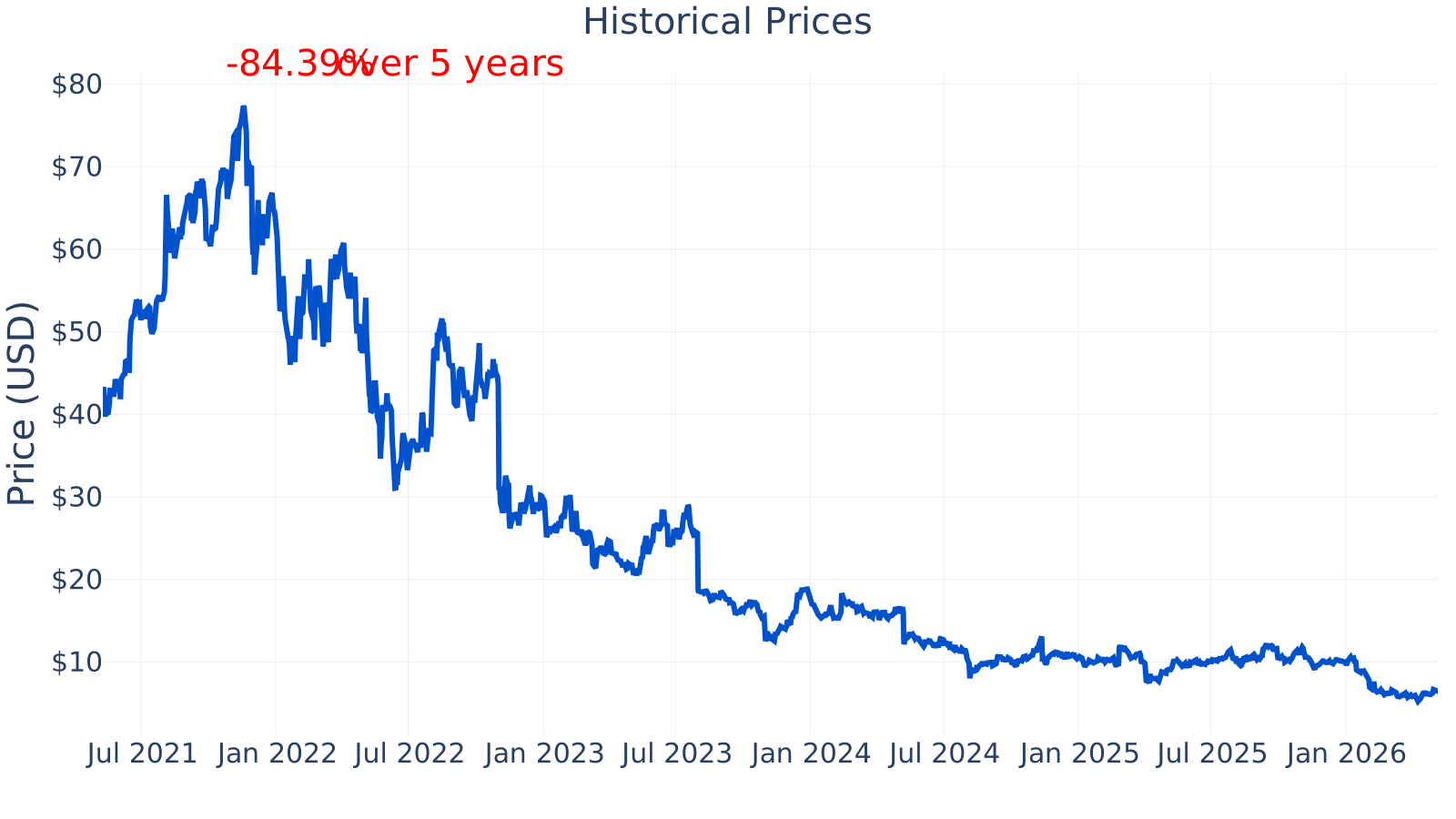
Remitly’s market capitalization is about $3.59 billion. The stock’s beta of ~0.11 indicates that, historically, its price movements have been much less correlated with broad market swings than the average stock (though beta can change over time and may not capture company-specific volatility).
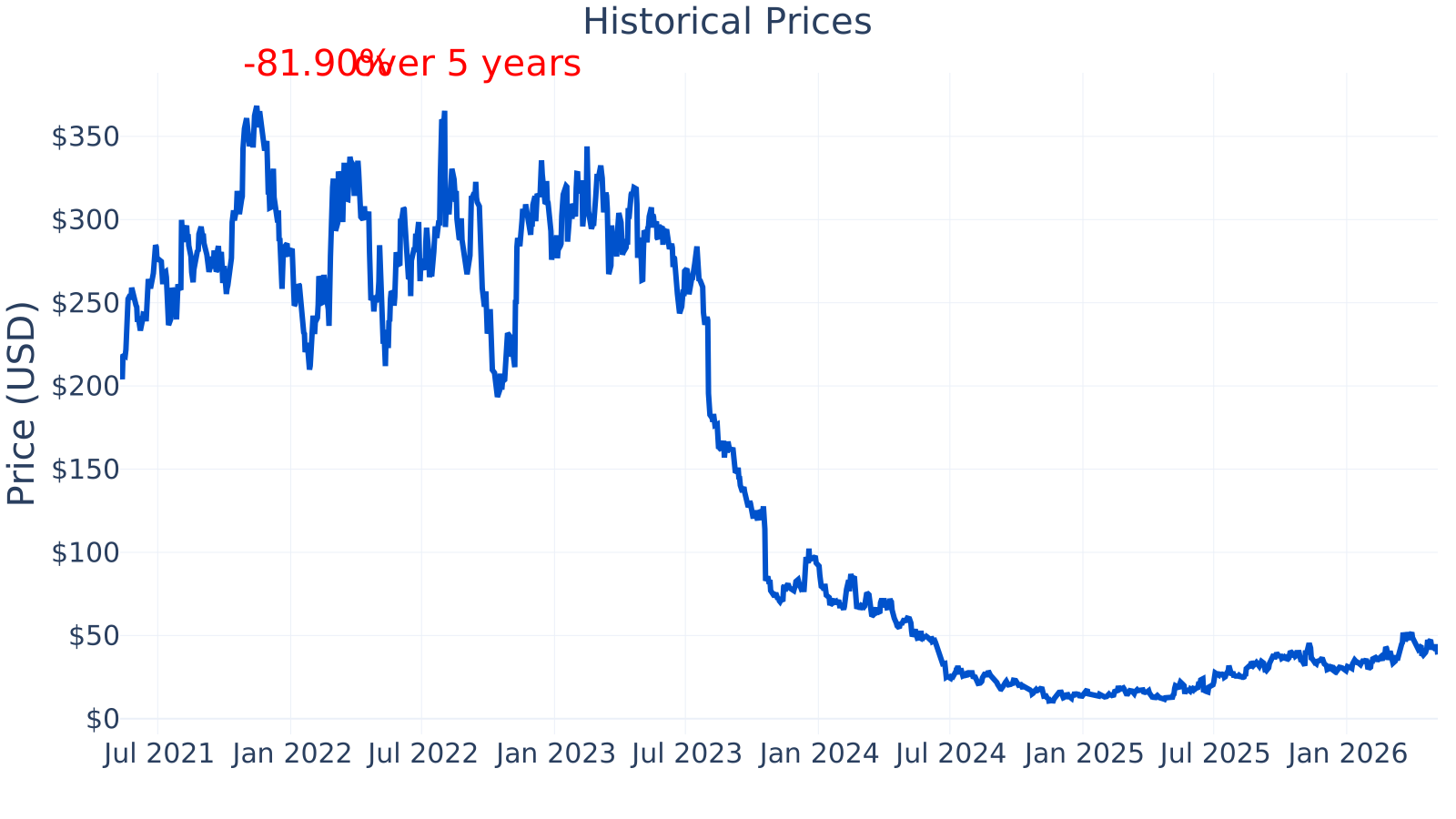
On growth and profitability, revenue growth year-over-year is about 25.7%, above the listed industry median of 15.3%. Profit margin is about 4.16%, which is below the industry median of 6.79%, but it represents a meaningful improvement compared with Remitly’s negative margins in earlier periods.
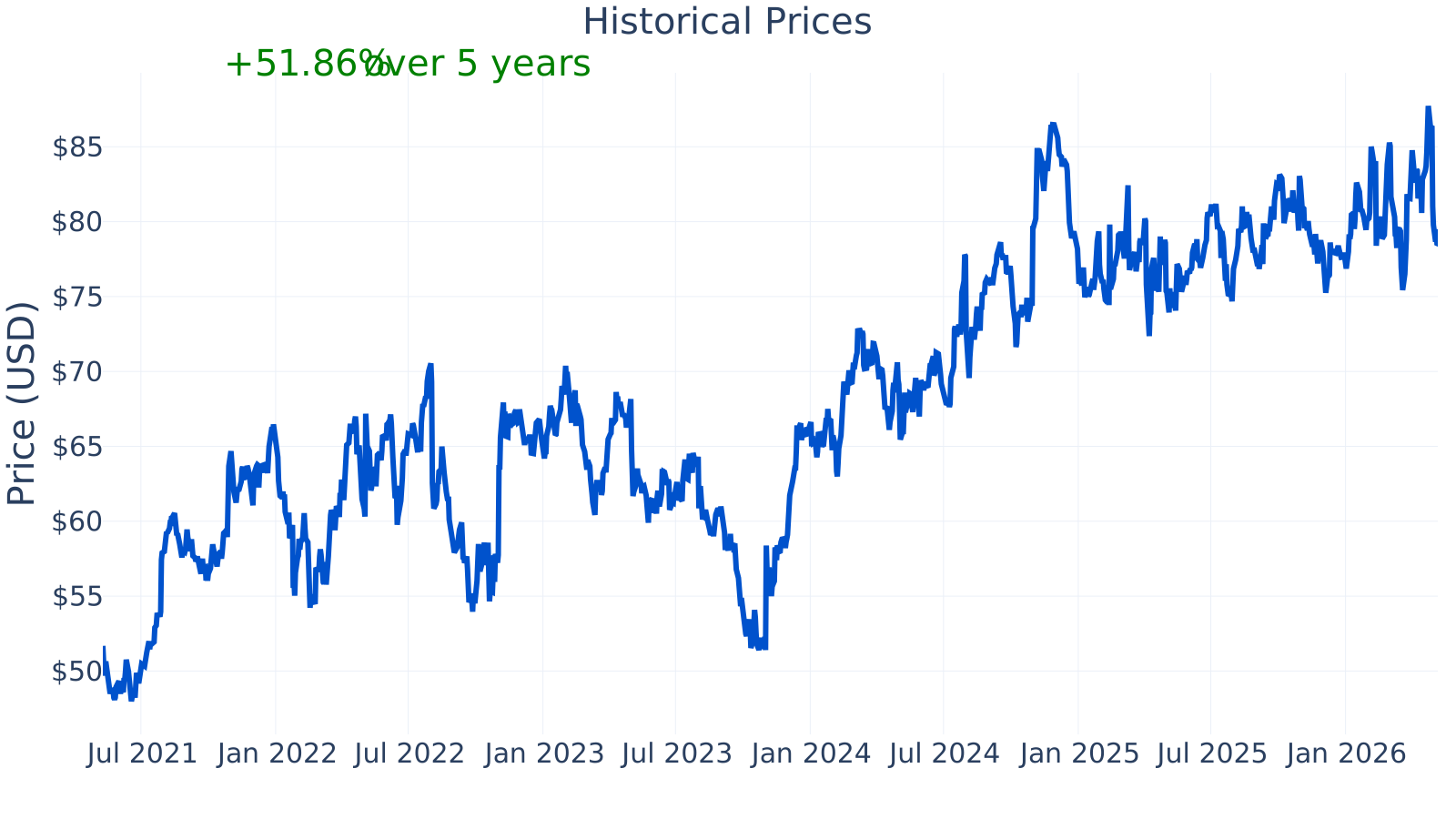
Financial leverage appears moderate: debt-to-equity is about 25.4%, near the industry median of 26.6%. Free cash flow over the trailing twelve months is about $193.5 million, a notable shift compared with earlier periods that showed negative free cash flow.
Growth (medium)
Remitly participates in the global remittance market, which is supported by long-running trends such as international migration and ongoing financial ties to home countries. A key structural shift within this market has been the steady move from cash-based and in-person transfers toward digital and mobile-first experiences—an area where Remitly is directly positioned.
Its strategy is centered on expanding its “send” and “receive” network (more corridors, more payout options such as bank deposit, cash pickup, and mobile wallets), improving the product experience, and building brand trust so customers keep using the service repeatedly. In money transfer, repeat behavior matters: customers often send funds monthly or even more frequently.
The chart shows revenue growth remained elevated over multiple years, even as the pace moderated from very high rates earlier on. Recent year-over-year growth around the mid-20% range still indicates expansion at a pace that is meaningfully above the referenced industry median.
Free cash flow improved substantially over time, moving from negative levels in prior years to a positive trailing twelve-month figure. For long-term business durability, consistently positive free cash flow can matter because it may increase flexibility for reinvestment, balance sheet strength, and resilience during weaker economic periods.
Risks (high)
Remitly operates in a competitive and highly regulated area of financial services. Regulations can affect how customers are onboarded (identity checks), how transactions are monitored (anti-money laundering rules), and which partners can be used to deliver funds. Compliance failures can lead to fines, restrictions, or reputational damage, and compliance spending can remain significant even as the company grows.
Competition is a major risk. Remitly faces other digital-first providers and also large, established money transfer brands, plus fintech “super-apps” and banks that can bundle transfers into broader offerings. Competitive intensity can pressure pricing (fees and FX spreads) and raise marketing costs to acquire and retain customers.
Remitly’s competitive advantages described in filings generally relate to its digital product design, delivery network, and customer experience (including speed and reliability). However, the industry does not typically “lock in” customers through long contracts, so customer loyalty can be influenced by price, trust, app experience, and delivery speed—areas where competitors continuously invest. This makes sustained differentiation challenging.
Other practical risks include fraud attempts and cyber threats, dependence on third-party payment rails and banking partners, and foreign exchange volatility (which can influence customer behavior and unit economics). In addition, as a company with meaningful international operations exposure, results can be affected by corridor-specific economic conditions.
Debt-to-equity has generally been below (or around) the industry median for much of the period shown, but it has also moved around over time. The latest level near 25% suggests a moderate use of leverage, though changes in financing structure can shift this ratio quickly.
The profit margin trend shows a multi-year improvement from negative levels to a positive margin more recently (about 4.16%). Even with that progress, the margin remains below the referenced industry median (about 6.79%), implying there may still be ongoing pressure from operating costs, pricing, or both.
Main competitors commonly discussed for digital and cross-border money movement include Wise, PayPal/Xoom, Western Union, and MoneyGram, as well as various regional and bank-led transfer options depending on corridor. Relative positioning varies by country pair (corridor), payout method, and customer segment; leadership is not universal across the market and often differs corridor-by-corridor.
Valuation
Valuation often depends on how durable a company’s growth and profitability can be over time. One simple lens is the price-to-earnings (P/E) ratio, which compares the stock price to earnings. For companies transitioning from losses to profits, P/E ratios can be unusually high or swing sharply because earnings are still stabilizing.
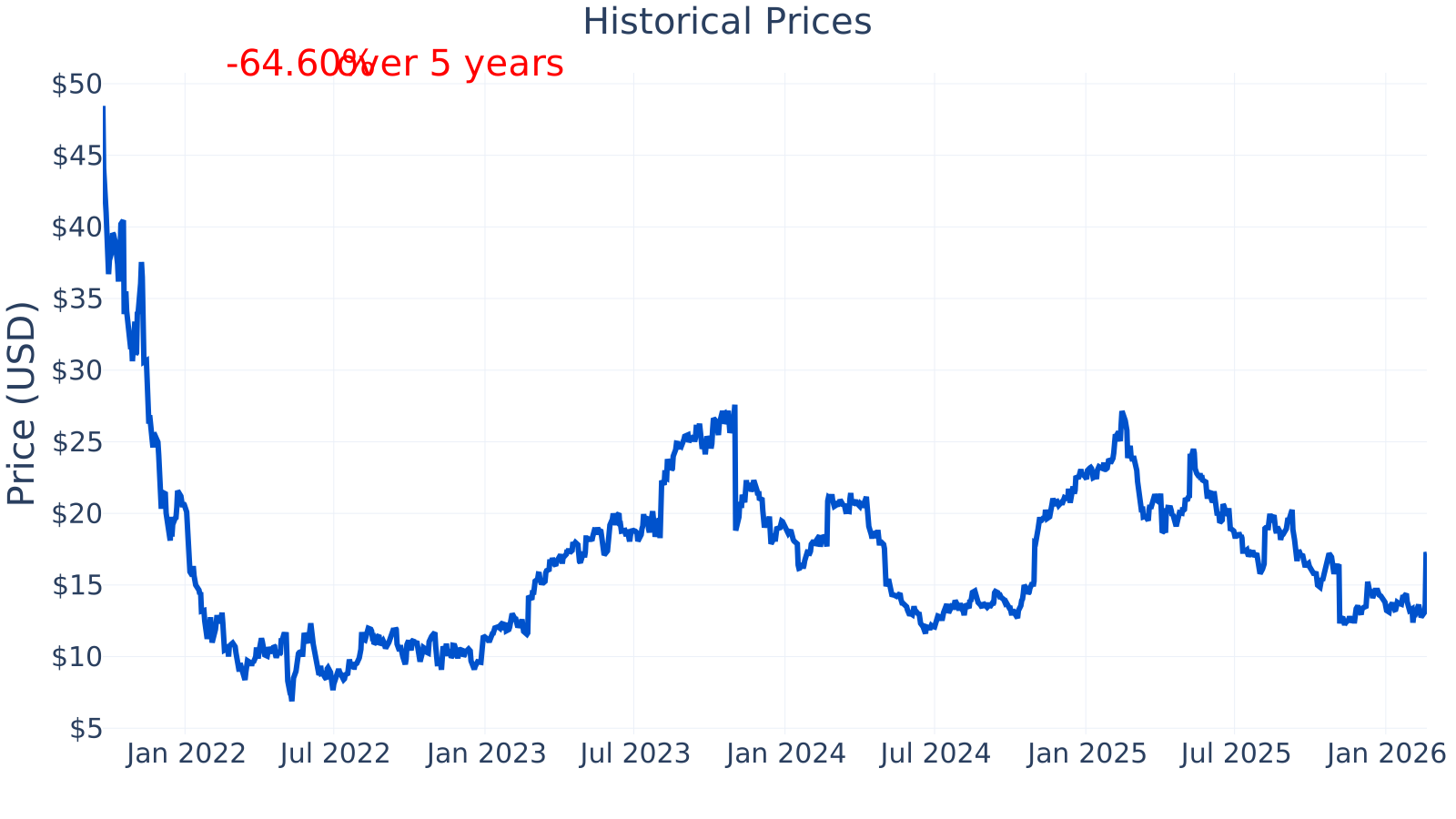
Remitly’s latest P/E is about 190.6, which is far above the referenced industry median of about 24.9. The historical series also shows large changes once the company’s earnings became meaningfully positive. This pattern is consistent with a business where profitability is improving but not yet mature; small earnings changes can have an outsized effect on the P/E ratio.
In context, Remitly combines above-median revenue growth with improving profitability and positive free cash flow, but the current earnings-based multiple indicates that the market price reflects substantial expectations for continued execution. If growth slows, customer acquisition costs rise, or margins do not expand as anticipated, valuation metrics can reset quickly. Conversely, if profitability scales meaningfully while growth remains healthy, earnings-based valuation measures can compress over time even without large stock price changes.
Conclusion
Remitly is a digital-first remittance company positioned around a long-running use case: cross-border money transfers from migrants to families abroad. The business has demonstrated strong top-line expansion over several years, and recent periods show important progress in operating profitability and free cash flow generation.
At the same time, the company operates in an environment with high competition and significant regulatory and compliance requirements. While the company appears to be improving margins, profitability still sits below the referenced industry median, and the earnings-based valuation (P/E) is materially higher than the industry median, reflecting substantial expectations embedded in the stock price.
Overall, the long-term profile depends heavily on whether Remitly can continue growing while sustaining improvements in unit economics (fees/FX spread versus delivery and customer acquisition costs) and maintaining strong compliance and trust across its global network.
Sources:
- U.S. SEC EDGAR — Remitly Global, Inc. filings (Form 10-K, 10-Q, 8-K)
- Remitly Investor Relations — SEC filings and shareholder materials
- Wikipedia — “Remitly” (basic company background)
This article is for informational purposes only and does not constitute financial advice. Some content is AI-generated. See Disclaimer