Stock Analysis · Red Rock Resorts Inc (RRR)
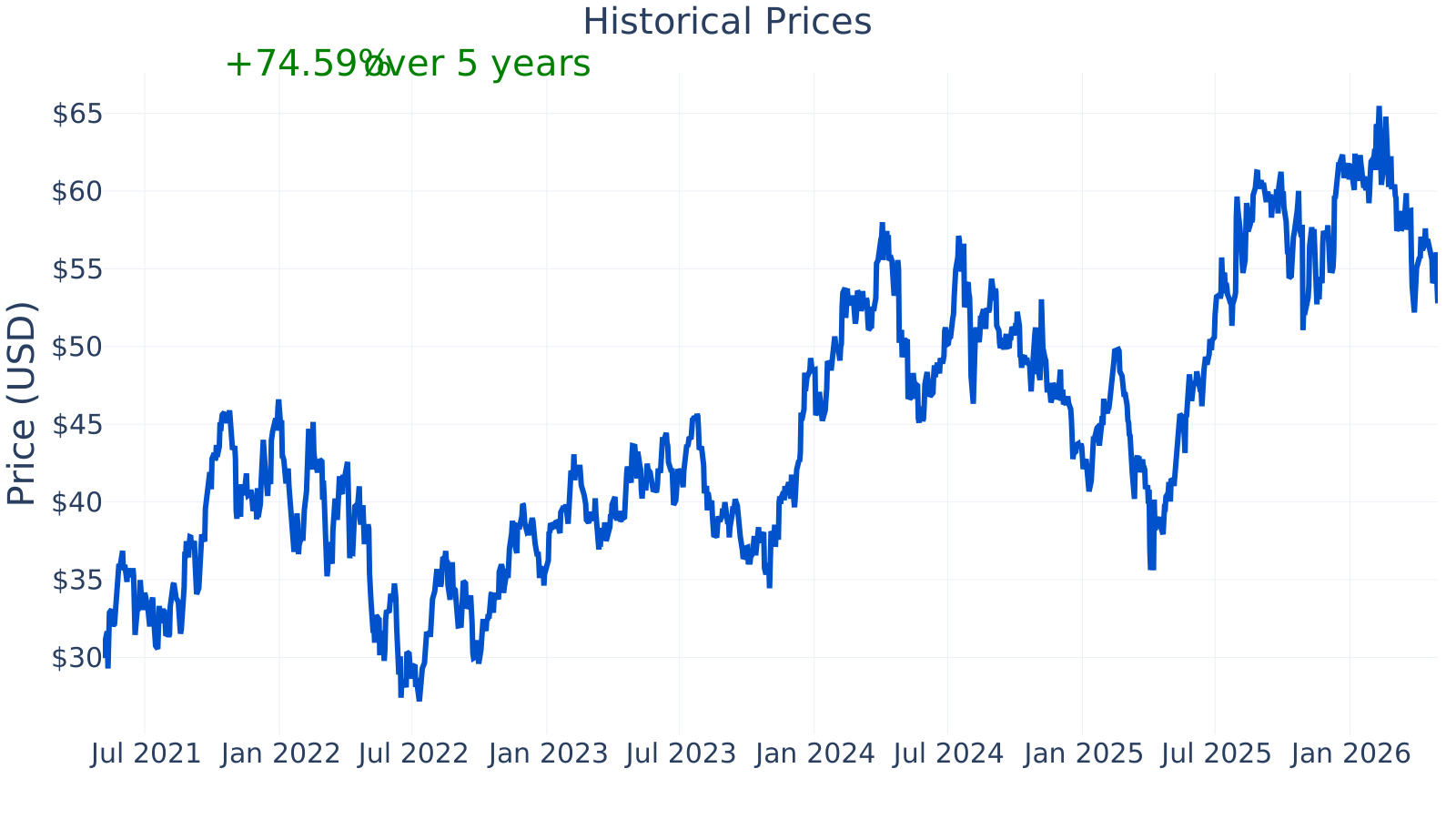
Overview
Red Rock Resorts Inc (RRR) is a U.S. casino and hospitality company focused on operating “locals” gaming and entertainment properties in the Las Vegas metropolitan area. Through its main operating subsidiary (Station Casinos), the company runs casino resorts that combine gaming with food & beverage, hotel rooms, and other entertainment offerings aimed primarily at residents rather than tourists.
In practice, this model is tied closely to the economic health, population trends, and consumer spending patterns of the Las Vegas region. The business is also capital-intensive: properties require ongoing maintenance and periodic reinvestment to stay competitive, and expansion typically involves large development projects.
Main revenue streams (from largest to smallest) typically include:
- Casino gaming (slot machines and table games)
- Food & beverage (restaurants, bars, and related venues)
- Hotel and other (hotel rooms, entertainment, and other on-site spending)
Business mix and profitability snapshot: Over recent years, total revenue rose from about $1.62B (2021) to about $2.01B (2025). Operating income stayed relatively steady (roughly in the mid-$500M range), while interest expense increased materially over the same period, which helps explain why net income did not rise in line with revenue.
From 2021 to 2025, revenue increased (about $1.62B → $2.01B), but interest expense also climbed (about $103M → $202M). This highlights a key feature of the business: operating performance can be solid, yet financing costs can meaningfully shape bottom-line results.
Key Figures
| Metric | Value | Industry ⓘ |
|---|---|---|
| Date | May 04, 2026 | |
| Context | ||
| Sector | Consumer Cyclical | |
| Industry | Resorts & Casinos | |
| Market Cap ⓘ | $5.35B | |
| Beta ⓘ | 1.35 | |
| Fundamental | ||
| P/E Ratio ⓘ | 17.03 | 19.89 |
| Profit Margin ⓘ | 9.21% | 4.08% |
| Revenue Growth ⓘ | 1.90% | 3.45% |
| Debt to Equity ⓘ | 27.93% | 370.23% |
| PEG ⓘ | 1.69 | |
| Free Cash Flow ⓘ | $609.51M | |
RRR’s market capitalization is about $5.35B, placing it among mid-sized publicly traded U.S. gaming companies. The stock’s beta of 1.35 suggests it has tended to be more volatile than the broader market.
On profitability, the company’s profit margin is about 9.21%, which is higher than the industry median shown here (about 4.09%). On growth, the most recent year-over-year revenue growth is about 1.9%, below the industry median in this comparison (about 3.45%).
Leverage, as captured by debt-to-equity of about 27.9%, appears far below the displayed industry median (about 370%). It is worth noting that debt-to-equity can swing significantly based on accounting equity levels, so it is best interpreted alongside other leverage and coverage measures from filings.
Free cash flow (TTM) is shown at about $609.5M, a meaningful figure for a business that must regularly reinvest in properties and can carry substantial debt obligations.
Growth (medium)
RRR operates in the resorts and casinos industry, which is generally driven by consumer discretionary spending. For a locals-focused operator, growth is less about destination tourism cycles and more about local employment, household income, housing trends, and population growth in its core market. That makes the Las Vegas metro area a central determinant of long-term demand.
Strategically, a locals model can support repeat visitation and loyalty-based marketing, and it can diversify revenue beyond gaming through restaurants, entertainment, and other amenities. However, growth often depends on continual property upgrades and well-timed capacity additions, which require disciplined capital spending.
The year-over-year revenue growth rate has fluctuated widely over time, including periods of very high growth (notably off a low base) and later normalization. More recently, growth has moderated to low single digits (around 1%–3% in the latest points shown), which suggests a maturing revenue base unless new capacity, market share gains, or stronger regional demand emerges.
Free cash flow has also been uneven. The timeline shown includes periods of negative free cash flow (for example around 2023–2024) followed by a return to positive levels (for example around 2025), consistent with a business where development and reinvestment cycles can temporarily depress cash generation. For long-term monitoring, the key is whether cash flow remains sufficient through cycles to fund reinvestment and meet financing obligations.
Risks (high)
The largest risk is economic sensitivity. Casino and hospitality spending typically weakens when consumers cut discretionary expenses, and locals-oriented properties are tied closely to the financial health of the surrounding community. A regional downturn in Las Vegas employment or housing activity could pressure visitation and on-site spending.
A second major risk is the capital structure and financing environment. Casinos are asset-heavy and often use debt. Higher interest rates or refinancing constraints can increase interest expense and reduce net income even when operations are stable.
The debt-to-equity trend shown is extremely volatile over time, moving from very high levels to a much lower recent level (about 27.9% at the latest point shown). This kind of movement can reflect changes in debt, changes in equity, or both. Because this ratio can be distorted when equity changes sharply, it is typically most informative when cross-checked with the company’s reported total debt, maturities, and interest coverage in SEC filings.
Competitive risk is also meaningful. The Las Vegas market includes many well-capitalized operators, and competition can show up through promotional intensity, new openings, or amenity upgrades. RRR’s advantage is its concentration and brand recognition in the locals segment, but it competes against other casino operators (including both locals-focused and Strip-adjacent companies) that can invest heavily in marketing, loyalty programs, and property improvements.
Profit margin has been consistently positive in the period shown and, at the latest point, stands at about 9.21% versus an industry median near 4.08%. While that relative positioning can be a strength, the trend also shows margin compression from earlier peaks. Margins can be pressured by labor costs, food and beverage inflation, utilities, insurance, and competitive reinvestment needs.
Valuation
RRR’s latest P/E ratio is about 17.0, below the industry median shown here (about 19.9). On this single measure, the stock’s earnings multiple appears lower than the median peer level in this comparison, though P/E ratios can be influenced by differences in leverage, accounting, and how cyclical earnings are at a given moment.
Historically, the P/E ratio shown has varied considerably, ranging from the low teens in parts of 2022 to the 30s more recently, with the latest point around the mid-30s on the chart. That pattern indicates the market’s earnings multiple for RRR has not been stable across time, which is common in cyclical industries where earnings and expectations change with the economic backdrop and financing conditions.
The provided PEG ratio of about 1.69 suggests the valuation is not only about today’s earnings but also about expected growth. With recent revenue growth in low single digits, the market’s long-term view may depend on how effectively the company can expand capacity, maintain visitation, and sustain cash flow after reinvestment and interest costs.
Conclusion
Red Rock Resorts is a Las Vegas locals-focused casino and hospitality operator, with revenue primarily driven by gaming and supported by non-gaming spending such as food, beverage, and hotel-related activity. Over the last several years, revenue has increased, and profitability metrics compare favorably to the industry median shown here, but net income has been influenced by rising interest expense and the realities of a capital-intensive business model.
The long-term picture depends heavily on (1) the strength of the Las Vegas regional economy, (2) the company’s ability to reinvest efficiently in its properties and pursue growth projects without undermining cash generation, and (3) the path of financing costs and refinancing access. Valuation metrics presented here show a current P/E below the industry median, alongside a history of meaningful multiple swings, which underlines how sensitive market pricing can be to the cycle and to expectations for earnings durability.
Sources:
- SEC EDGAR — Red Rock Resorts, Inc. filings (Form 10-K, Form 10-Q, Form 8-K)
- Red Rock Resorts — Investor Relations materials (press releases and filings)
- Wikipedia — “Red Rock Resorts” (basic company background)
This article is for informational purposes only and does not constitute financial advice. Some content is AI-generated. See Disclaimer


