Stock Analysis · Ralph Lauren Corp (RL)
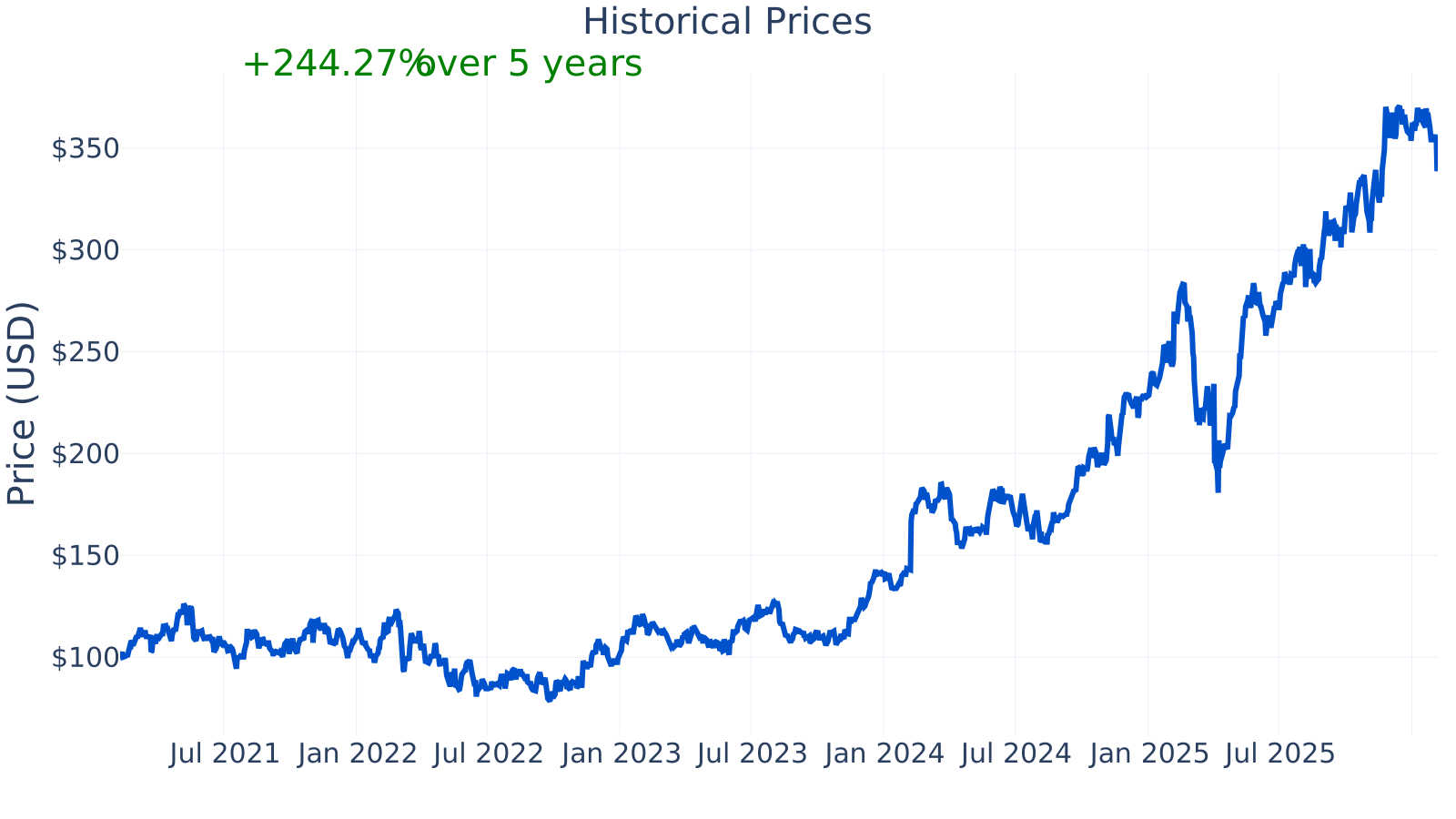
Overview
Ralph Lauren Corporation designs, markets, and sells premium lifestyle products under brands such as Ralph Lauren, Polo, and related labels. Its products span apparel (for men, women, and children), footwear, accessories, and home items. The company sells through a mix of directly operated channels (its own stores and e-commerce) and wholesale partners (such as department stores and specialty retailers), with a presence across North America, Europe, and Asia.
Revenue is generally generated from three main buckets, typically shown in company filings as:
- Wholesale (selling to retail partners)
- Direct-to-consumer (company-owned stores and e-commerce)
- Licensing (royalties from licensed products and brand use)
Percentages by channel and by geography vary by year and are detailed in the company’s annual report segment disclosures.
Over the last several fiscal years shown, total revenue rose from about $4.4B (FY2021) to about $7.1B (FY2025), while operating income moved from a small loss in FY2021 to roughly $995M in FY2025. This indicates not only a larger business, but also improved operating profitability relative to the earlier period.
Key Figures
| Metric | Value | Industry ⓘ |
|---|---|---|
| Date | Feb 07, 2026 | |
| Context | ||
| Sector | Consumer Cyclical | |
| Industry | Apparel Manufacturing | |
| Market Cap ⓘ | $20.79B | |
| Beta ⓘ | 1.49 | |
| Fundamental | ||
| P/E Ratio ⓘ | 23.31 | 22.80 |
| Profit Margin ⓘ | 11.73% | 4.94% |
| Revenue Growth ⓘ | 12.20% | 1.60% |
| Debt to Equity ⓘ | 98.26% | 99.72% |
| PEG ⓘ | 1.99 | |
| Free Cash Flow ⓘ | $694.50M | |
Ralph Lauren’s market capitalization is about $20.8B. The stock’s beta of ~1.49 suggests it has historically moved more than the overall market (higher volatility). The company’s P/E ratio is ~23.3, close to the industry median (~22.8). Profit margin is about 11.7%, which is notably above the industry median (~4.9%). Year-over-year revenue growth is about 12.2%, also above the industry median (~1.6%). Debt-to-equity is about 98%, roughly in line with the industry median (~100%). Trailing twelve-month free cash flow is about $695M, and the PEG ratio is about 2.0 (a valuation measure that relates P/E to expected growth).
Growth (Medium)
Ralph Lauren operates in global apparel and lifestyle goods—large, mature end markets where long-term growth often depends less on overall category expansion and more on brand strength, pricing power, product relevance, and channel execution (especially digital). In this kind of industry, companies can still grow over time by gaining market share, expanding internationally, and increasing direct-to-consumer penetration, even if the broader apparel market grows slowly.
The year-over-year revenue growth trend has varied meaningfully by quarter, including very strong growth rates earlier in the period shown and more moderate rates in other quarters. The most recent value shown is about 12.2%, which stands out versus the industry median in the table. For long-term context, it can be useful to focus on multi-year revenue progression rather than any single quarter, because apparel demand is cyclical and sensitive to consumer spending patterns.
Free cash flow (cash left after operating needs and capital spending) increased from about $273M (FY2021) to about $1.02B (FY2025), with a noticeable dip in FY2023 and a sharp rebound afterward. Sustained free cash flow matters because it can support reinvestment in the brand (marketing, stores, digital capabilities), balance sheet flexibility, and potential shareholder returns (for example, buybacks or dividends) without requiring additional borrowing.
Risks (Medium)
Ralph Lauren’s results are influenced by consumer demand for discretionary goods. When shoppers reduce spending (due to inflation, slower economic growth, or higher interest rates), apparel and premium goods can see lower unit volumes, more promotions, and margin pressure. The company also faces execution risks around merchandising (choosing the right styles and inventory levels), managing discounting, and maintaining brand positioning across wholesale partners and its own channels.
Debt-to-equity has generally trended down from higher levels earlier in the period shown (around 139% in FY2021) to about 98% most recently, which is near the industry median. Even when leverage is not extreme, apparel companies can face periods where inventory builds or demand slows, increasing the importance of liquidity and disciplined working-capital management.
Profit margin improved substantially versus the earlier period shown: from negative territory in FY2021 to about 11.7% most recently. It has also been consistently above the industry median in the later part of the timeline provided. This can reflect a mix of factors such as pricing, product mix, supply chain costs, and channel mix (for example, more direct-to-consumer often supports higher margins, though it can also raise operating expenses).
Competitive positioning in premium apparel depends on brand equity, distribution quality, and consistent product storytelling. Ralph Lauren has long-standing global brand recognition, which can be a durable advantage, but it competes in a crowded landscape where consumers have many alternatives and fashion preferences can shift quickly.
Main competitors typically include other global apparel and lifestyle companies across premium and accessible luxury positioning, such as:
- Tapestry (Coach, Kate Spade, Stuart Weitzman)
- PVH (Calvin Klein, Tommy Hilfiger)
- Capri Holdings (Michael Kors, Jimmy Choo, Versace)
- VF Corporation (multiple apparel and footwear brands)
- Luxury groups and strong niche brands competing for similar consumer spend in certain categories
Ralph Lauren is not the sole “leader” of the overall apparel market (which is highly fragmented), but it is a well-established brand owner in the premium lifestyle segment. Its differentiation is tied to brand identity, quality perception, and the ability to manage distribution in ways that protect brand value over time.
Valuation
The company’s current P/E ratio is about 23.3, which is close to the industry median (~22.8). Historically (based on the timeline shown), the P/E ratio has moved through a wide range—roughly from the low teens at some points to the mid‑20s more recently—often reflecting changes in profitability expectations, market sentiment toward consumer discretionary stocks, and the company’s own earnings trajectory.
In practical terms, a P/E near the industry median suggests the market is valuing Ralph Lauren similarly to peers on this single measure, while other fundamentals shown—such as above-median profit margin and above-median recent revenue growth—provide additional context. At the same time, apparel companies can see earnings and valuation multiples change quickly when demand weakens or promotions rise, so single-point valuation metrics are best read alongside longer-term profitability trends and cash generation.
Conclusion
Ralph Lauren is a global brand-driven consumer company with a business model built around wholesale distribution, direct-to-consumer sales, and licensing. Over the multi-year period shown, the company expanded revenue from roughly $4.4B to about $7.1B and improved profitability meaningfully, with profit margin rising to around 11.7% and free cash flow reaching about $695M (TTM) and about $1.02B in FY2025.
The main long-term questions are less about whether people will keep buying apparel in general (a mature category) and more about whether Ralph Lauren can continue protecting brand strength, managing distribution and discounting, and sustaining healthy margins through economic cycles. Valuation metrics presented here place the company near the industry median on P/E, while operating metrics like margin and recent growth are above the peer median, and leverage appears broadly in line with the industry.
Sources:
- SEC EDGAR — Ralph Lauren Corporation filings (Form 10-K, Form 10-Q)
- Ralph Lauren Investor Relations — Annual Report (Form 10-K) and financial/segment disclosures
- Wikipedia — “Ralph Lauren Corporation” (basic company background)
This article is for informational purposes only and does not constitute financial advice. Some content is AI-generated. See Disclaimer


