Stock Analysis · Rambus Inc (RMBS)
Overview
Rambus Inc. (RMBS) is a technology company focused on improving how data is moved, protected, and processed in electronic systems. In simple terms, it develops intellectual property (IP) and specialized chips that help data travel faster and more securely—especially in memory and high-speed connections used in data centers, AI-oriented computing, networking equipment, and other advanced electronics.
Unlike many semiconductor companies, Rambus is often “asset-light”: a large part of what it sells is licensed technology (its designs and inventions), not only physical products. That licensing model can lead to strong profitability when adoption is broad, but results can also be uneven depending on customer cycles and the timing of licenses.
Based on the company’s disclosures, Rambus’ revenue is primarily generated from a mix of licensing and product-related streams. The exact split can change by year and is best read directly in its annual report segment details, but the main sources generally include:
- Licensing revenue (fees paid to use Rambus IP)
- Royalties (ongoing payments tied to customer shipments that incorporate Rambus IP)
- Product revenue (sales of Rambus semiconductor products, such as security or interface-related chips, depending on the period)
- Contract and other revenue (varies; includes items disclosed in filings)
The company also invests heavily in research and development to create new memory interface and security technologies that can be licensed or embedded into products over time.
Over recent years, total revenue increased from about $328 million (2021) to about $708 million (2025). Operating income and net income were more volatile, including a loss in 2022, followed by significantly higher profitability in 2023–2025. R&D spending remained a major ongoing cost item, which is typical for IP-driven technology businesses.
Key Figures
| Metric | Value | Industry ⓘ |
|---|---|---|
| Date | May 01, 2026 | |
| Context | ||
| Sector | Technology | |
| Industry | Semiconductors | |
| Market Cap ⓘ | $12.45B | |
| Beta ⓘ | 1.63 | |
| Fundamental | ||
| P/E Ratio ⓘ | 55.08 | 54.64 |
| Profit Margin ⓘ | 31.90% | 7.71% |
| Revenue Growth ⓘ | 8.10% | 19.70% |
| Debt to Equity ⓘ | 1.68% | 20.71% |
| PEG ⓘ | 3.80 | |
| Free Cash Flow ⓘ | $335.21M | |
Rambus has a market capitalization of about $12.45 billion. The stock’s beta of ~1.63 indicates it has historically tended to move more than the broader market (higher volatility).
Profitability stands out versus the industry median: the latest profit margin is ~31.9% compared with an industry median around 7.7%. By contrast, the latest year-over-year revenue growth is ~8.1%, below the industry median shown (~19.7%), suggesting that at this point in the cycle the company is growing more slowly than the typical peer—while still producing comparatively high margins.
Balance-sheet leverage appears low: latest debt-to-equity is ~1.7% versus an industry median near 20.7%. Free cash flow over the trailing twelve months is about $335 million, which can matter for flexibility (funding R&D, acquisitions, or returning capital) without relying heavily on borrowing.
Growth (Medium)
Rambus operates in and around long-term growth areas within semiconductors: high-performance memory interfaces, faster data movement, and hardware-level security. These themes are tied to structural drivers like cloud data centers, AI training/inference workloads, and the continued demand for bandwidth inside servers and networking equipment. While end markets can be cyclical, the long-run direction of “more data, moved faster, with more security” supports ongoing demand for the kinds of technology Rambus develops.
The company’s strategy—building valuable IP, getting it adopted in industry standards and customer designs, and monetizing through licensing/royalties (along with selected products)—is designed to scale without requiring the same level of manufacturing investment as a pure chip manufacturer. If adoption expands, licensing and royalty streams can grow with customer volumes, potentially improving operating leverage.
Revenue growth has been uneven. It was very high in 2021–2022 (often above 30%–40% year over year), weakened in parts of 2023 (including slightly negative quarters), then re-accelerated through 2024–2025 before slowing to about 8.1% most recently. This pattern is consistent with a business exposed to semiconductor demand cycles and the timing of licensing activity.
Free cash flow increased over time in the period shown, rising from about $197 million (TTM as of 2022-03-31) to about $335 million (TTM as of 2026-03-31). That improvement can be important because it may help the company sustain R&D and pursue strategic initiatives even during softer demand periods.
Risks (Medium-High)
Rambus’ results can be sensitive to semiconductor cycles and customer spending patterns. Even if the long-term need for faster memory and interconnects is durable, short-term demand fluctuations in data centers, PCs, mobile devices, or networking equipment can impact how quickly customers adopt new designs and how many units ship that generate royalties.
Financial leverage appears modest relative to many peers. Debt-to-equity declined markedly over the period shown—from roughly 24% in mid-2021 to about 1.7% most recently—below the industry median levels shown throughout. Low leverage can reduce refinancing risk, but it does not remove business risks tied to demand, competition, or execution.
Profit margins have been volatile. The company posted negative margins across several quarters in 2021–2022, then shifted to very high positive margins through 2023–2025, with the latest near 31.9%—well above the industry median (roughly 7%–12% across much of the period shown). Such volatility can reflect the mix of licensing vs. product revenue, one-time items, and the timing of expenses and tax effects disclosed in financial statements.
Competition is another central risk. Rambus participates in markets where large, well-funded semiconductor and IP companies operate. Depending on the specific technology area (memory interfaces, PHYs, security IP, or security chips), competition can include:
- Major semiconductor vendors that develop in-house interface and security capabilities for their platforms
- Specialized IP providers offering interface or security IP used by chip designers
- Security chip and embedded security solution providers competing on certifications, performance, power, and integration
Rambus’ competitive position is supported by its patent portfolio, engineering expertise, and the switching costs that can exist once a customer’s design is built around a particular interface or security solution. However, leadership can vary by niche, and customers may dual-source or switch solutions when standards change or when competing offerings deliver better performance, cost, or integration.
As with many IP-centric companies, there is also ongoing exposure to intellectual property matters (such as enforcing patents, defending against challenges, or negotiating licenses). These situations can influence costs and the timing of revenue recognition, and they are typically discussed in risk-factor sections of annual and quarterly filings.
Valuation
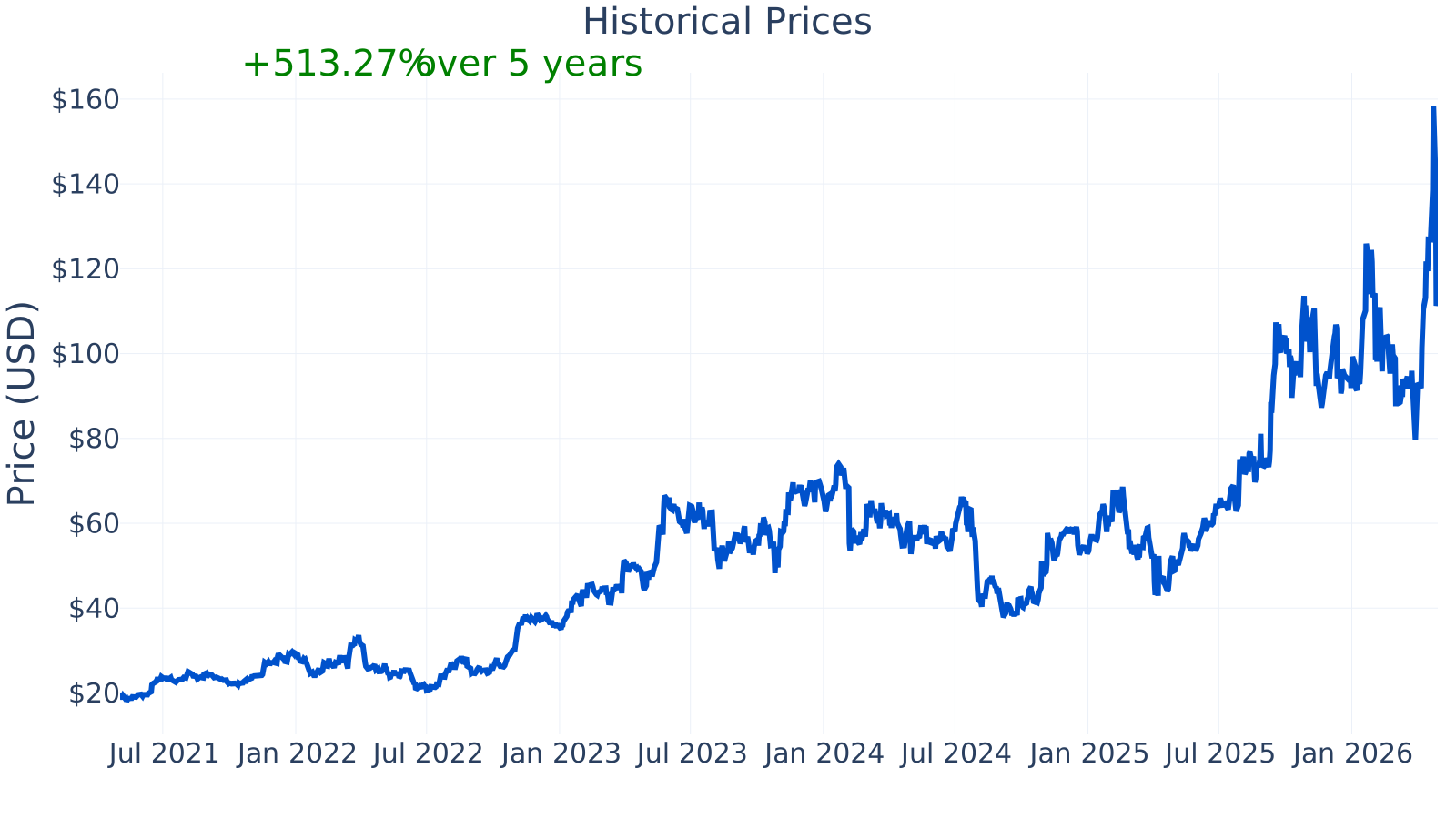
The company’s current P/E ratio is about 55.1, close to the industry median shown of about 54.6. Historically, the P/E has moved substantially over time, including periods where it was much lower (around the high teens to 20s in parts of 2024) and higher at other points (including values above 50 more recently). Large swings in the P/E can be driven by changes in the share price, changes in earnings, or both.
In practical terms, a P/E around the mid-50s generally implies that the market is assigning a relatively high value to each dollar of current earnings, which can be consistent with expectations for durable profitability, strong future growth, or both. At the same time, Rambus’ latest year-over-year revenue growth (~8.1%) is below the peer median shown, while margins are notably higher than peers. That combination can matter for how the valuation is interpreted: the price level appears to reflect profitability and cash generation more than near-term growth rate.
The PEG ratio shown (about 3.8) is one indicator that, when paired with typical interpretations of PEG, can suggest the valuation is high relative to expected growth assumptions embedded in that metric. However, PEG calculations are sensitive to how growth is estimated and can be less informative for businesses with cyclical earnings or unusually volatile margins.
Conclusion
Rambus is a semiconductor-related technology company with a business model that blends IP licensing/royalties and product sales. Over the last several years, revenue increased meaningfully, free cash flow expanded, and the balance sheet shows very low leverage relative to the industry median. Profitability in the most recent period is strong versus peers, but margins and growth have also been notably volatile across time, reflecting business mix and cycle exposure.
The long-term backdrop of data-center buildouts, AI-driven compute demand, higher memory bandwidth needs, and hardware security requirements aligns with the general problem set Rambus works on. The main uncertainties center on the pace of adoption, competitive pressure in specialized technology niches, and the inherent cyclicality of semiconductor end markets—along with the valuation level implied by a P/E in the mid-50s.
Sources:
- SEC EDGAR — Rambus Inc. Form 10-K (Annual Report)
- SEC EDGAR — Rambus Inc. Form 10-Q (Quarterly Reports)
- Rambus Inc. Investor Relations — SEC filings and investor materials (as published by the company)
- Wikipedia — “Rambus” (general company background)
This article is for informational purposes only and does not constitute financial advice. Some content is AI-generated. See Disclaimer


