Stock Analysis · Rambus Inc (RMBS)
Overview
Rambus Inc. is a technology company in the semiconductor ecosystem. Rather than manufacturing chips at scale like a typical semiconductor producer, Rambus primarily develops intellectual property (IP) and specialized semiconductor products. Its IP is used in areas such as memory interfaces and security technologies, and it also sells certain chips that support data movement and security in computing systems.
In simple terms, the business model combines (1) licensing technology to other companies and (2) selling selected semiconductor products. This can create a mix of recurring-style revenue from licenses and more volume-driven revenue from product shipments, depending on the period and customer demand.
Main sources of revenue are typically presented by the company as business segments (exact mix can change over time):
- Licensing (royalties and license fees tied to Rambus IP used by customers)
- Product (sales of Rambus-branded semiconductor solutions)
- Contract and other (smaller, more variable items depending on the year)
The chart below summarizes how revenue flows through costs and major operating expenses over time, which helps illustrate how much of each revenue dollar is left after key spending categories such as research and development.
Across the years shown, total revenue trends upward overall (from about $328M in 2021 to about $708M in 2025). Research and development spending also rises over time, reflecting an ongoing emphasis on creating and maintaining IP and product roadmaps.
Key Figures
| Metric | Value | Industry ⓘ |
|---|---|---|
| Date | Feb 13, 2026 | |
| Context | ||
| Sector | Technology | |
| Industry | Semiconductors | |
| Market Cap ⓘ | $10.31B | |
| Beta ⓘ | 1.52 | |
| Fundamental | ||
| P/E Ratio ⓘ | 47.19 | 45.89 |
| Profit Margin ⓘ | 32.57% | 9.42% |
| Revenue Growth ⓘ | 18.10% | 12.95% |
| Debt to Equity ⓘ | 3.20% | 25.62% |
| PEG ⓘ | 3.80 | |
| Free Cash Flow ⓘ | $292.37M | |
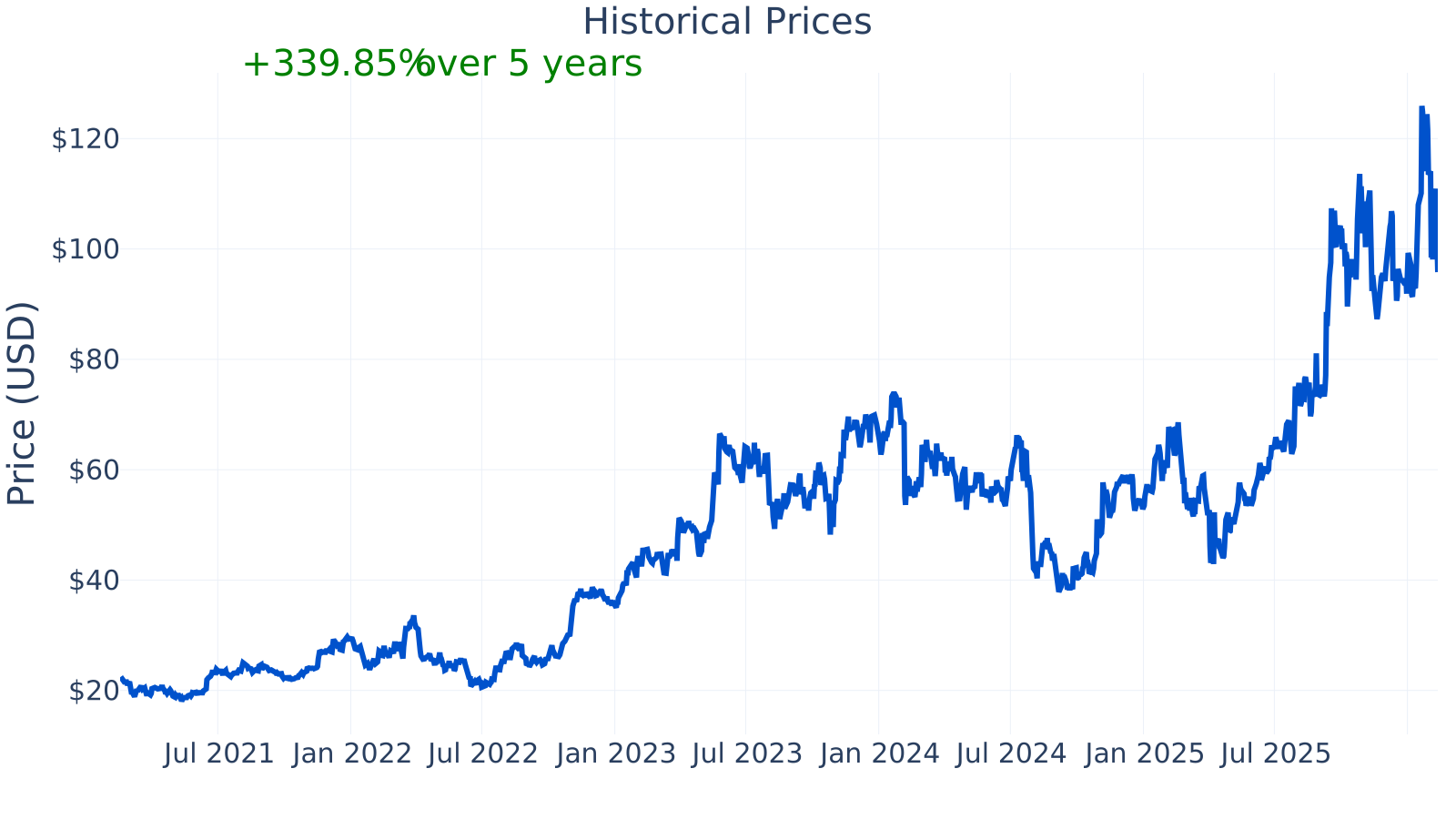
Rambus has a market capitalization of about $10.3B and a beta of ~1.52, which indicates the stock has tended to move more than the broader market. The P/E ratio is ~47.2, close to the semiconductor industry median shown (~45.9). Reported profit margin is ~32.6%, well above the industry median shown (~9.4%), while year-over-year revenue growth is ~18.1% versus an industry median of ~13.0%. The balance sheet looks lightly levered with debt-to-equity of ~3.2% compared with an industry median of ~25.6%. Trailing twelve-month free cash flow is about $292M, and the PEG ratio is ~3.8 (a figure often interpreted as relating valuation to growth expectations, though it can be sensitive to how growth is estimated).
Growth (Medium)
Rambus operates in the broader semiconductor and computing infrastructure landscape, where long-run demand is influenced by data center expansion, AI and accelerated computing workloads, and the ongoing need for higher-speed memory and secure data movement. In that context, a company focused on memory-interface IP and related enabling technologies can be positioned to benefit when customers invest in new computing platforms.
A key part of the growth logic is that IP-centric models can scale differently than manufacturing-heavy chip companies: successful technology that becomes widely adopted can generate royalties or license revenue across multiple customers and product cycles. At the same time, Rambus also has product revenue, which can add growth when product adoption rises, but may also introduce more typical semiconductor demand variability.
The year-over-year revenue growth shown is variable: it is very strong in parts of 2021–2022, turns slightly negative around mid-to-late 2023, and then re-accelerates through 2024–2025. The most recent value shown is about 18.1%, which is higher than the industry median displayed (~13.0%), suggesting recent momentum has been better than the typical peer in the comparison set.
Free cash flow in the periods shown is positive and generally trends upward over the longer arc (approximately $156M in 2021 to about $233M by 2025 in the series, with the latest trailing twelve-month level at about $292M in the table). Consistent free cash flow matters for long-term durability because it can help fund research and development, support the balance sheet, and provide flexibility across industry cycles.
Risks (High)
This article is for informational purposes only and does not constitute financial advice. Some content is AI-generated. See Disclaimer


