Stock Analysis · RH (RH)
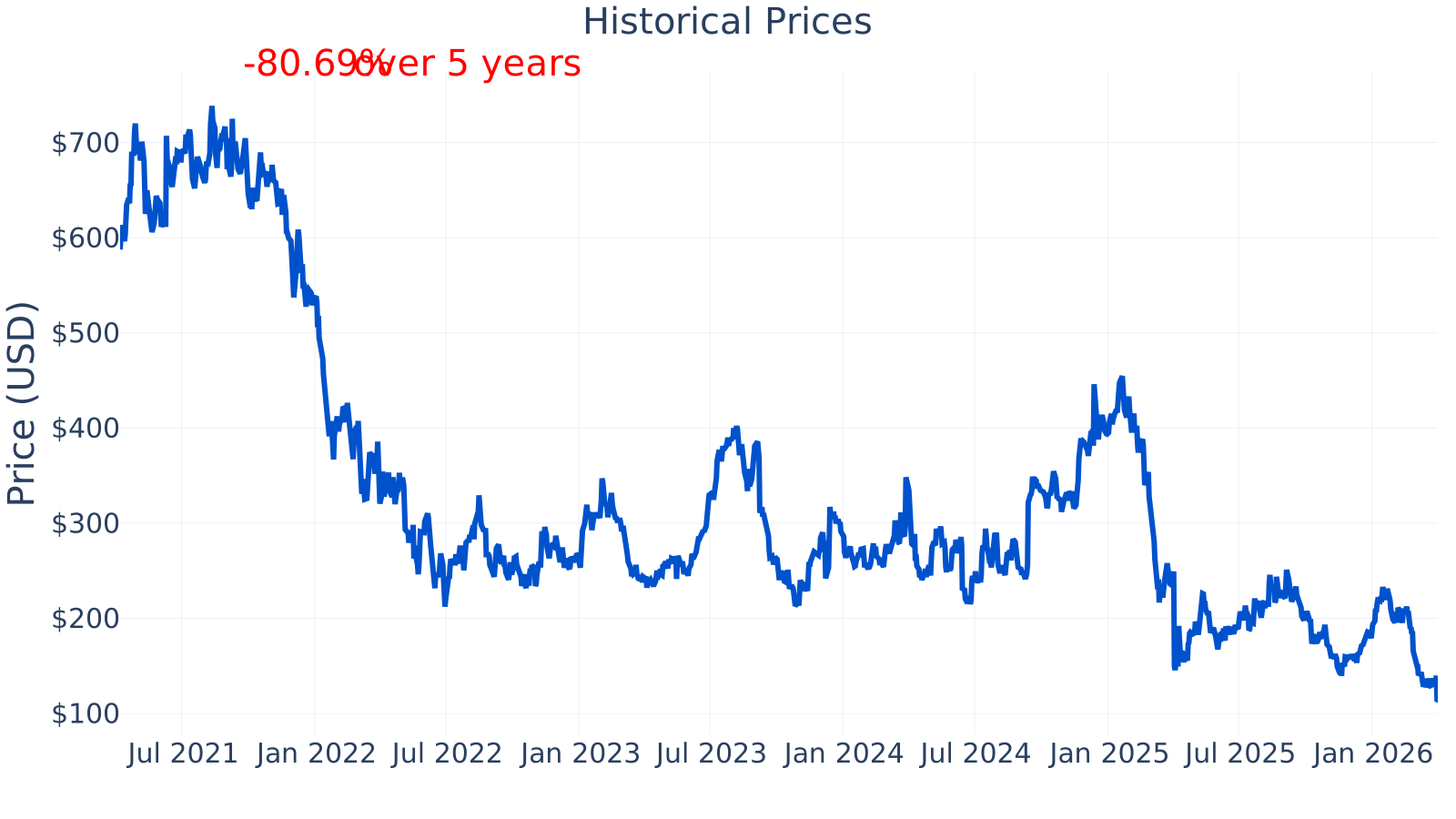
Overview
RH (formerly Restoration Hardware) is a luxury home furnishings retailer and brand. It sells high-end furniture, lighting, textiles, rugs, décor, and related products, and it also offers interior design services. The company markets its collections through a mix of large-format “galleries” (showrooms), direct-to-consumer channels (including websites and catalogs), and trade/business-to-business relationships.
RH describes its business as operating a curated luxury brand with an integrated platform: products, design services, and immersive physical locations that act both as marketing and sales venues. As a specialty retailer tied to home furnishing demand, RH’s results tend to move with household formation, housing turnover, consumer confidence, and high-income discretionary spending.
In public filings, RH reports revenue primarily as Net revenues and does not always provide a simple consumer-facing breakdown by product category in a single standardized percentage split. In general terms, its main revenue streams typically include:
- Product sales (home furnishings and related merchandise sold through galleries and direct channels)
- Membership-related revenue (RH has a membership model that provides preferred pricing and benefits)
- Design services and other revenue (including services tied to projects and trade relationships)
The income structure in recent years shows how profitability has been pressured and then partially stabilized: revenue declined from FY2022 to FY2024, then improved into FY2026, while selling, general, and administrative expenses remained a large portion of the cost base and interest expense increased compared with earlier years.
From FY2022 to FY2026, total revenue moved from about $3.76B to $3.44B (after a low point around $3.03B in FY2024). Over the same period, interest expense rose meaningfully (about $67M in FY2022 vs. about $225M in FY2026), which can weigh on net income even when operating performance improves.
Key Figures
| Metric | Value | Industry ⓘ |
|---|---|---|
| Date | Apr 06, 2026 | |
| Context | ||
| Sector | Consumer Cyclical | |
| Industry | Specialty Retail | |
| Market Cap ⓘ | $2.13B | |
| Beta ⓘ | 2.10 | |
| Fundamental | ||
| P/E Ratio ⓘ | 17.98 | 20.59 |
| Profit Margin ⓘ | 3.63% | 4.93% |
| Revenue Growth ⓘ | 3.70% | 3.70% |
| Debt to Equity ⓘ | 6550.03% | 92.65% |
| PEG ⓘ | 0.37 | |
| Free Cash Flow ⓘ | $249.63M | |
RH’s market capitalization is about $2.13B, and the stock has shown relatively high sensitivity to market moves (beta about 2.11). The latest profit margin is about 3.63% versus an industry median near 4.93%, while year-over-year revenue growth is about 3.7%, in line with the industry median shown. One of the most notable items is leverage: debt-to-equity is shown around 6,550% versus an industry median near 93%; this metric can become extreme or unstable when equity is very small or negative, so it should be interpreted alongside the balance sheet details in filings. Free cash flow over the trailing twelve months is about $250M, which is a meaningful swing from negative levels seen in parts of the prior period.
Growth (Medium)
RH operates in the premium/luxury segment of home furnishings, which is not a fast “structural growth” industry in the way software or healthcare can be; demand is often cyclical and influenced by housing activity and discretionary spending. That said, premium brands can grow over time if they strengthen brand positioning, expand their addressable market, and execute well on merchandising and customer experience.
RH’s strategy centers on brand elevation (positioning as a luxury lifestyle brand), large experiential retail locations, and a membership model intended to deepen customer relationships and improve repeat purchasing. If the company can sustain brand relevance and improve execution, potential catalysts for growth can include: improving housing-related demand, successful rollout of new galleries/format expansions, and better conversion through its integrated online/offline model. In addition, improving cash generation can create flexibility to invest in the platform or strengthen the balance sheet over time.
Revenue growth was very strong in FY2021, then decelerated and turned negative through much of FY2023–FY2024. More recently, growth turned positive again (reaching roughly high-single-digit to low-double-digit in parts of FY2025), but the latest point shows about 3.7% year-over-year growth, suggesting a return to modest expansion rather than a rapid rebound.
Free cash flow shows a notable swing over the period: positive around $477M (FY2022), down to negative in FY2024–FY2025, and then back to approximately $250M most recently. For a retailer, sustained positive free cash flow can matter because it supports inventory management, store investment, and debt servicing without relying as much on external financing.
Risks (High)
RH’s core risk is cyclicality: high-end home furnishings demand can weaken quickly when housing turnover slows or affluent consumers pull back on big-ticket discretionary purchases. This can pressure revenue, force promotions, and reduce operating leverage (fixed costs spread over fewer sales).
Another key risk is financial structure. Interest expense has been elevated compared with earlier years, and leverage metrics appear unusually high. This can increase sensitivity to changes in sales trends, interest rates on variable or refinanced debt, and overall credit conditions.
The debt-to-equity series is unusually volatile, including negative readings in several periods and a very high latest value (about 6,550%) versus an industry median under 100%. Such patterns often occur when reported equity becomes very small or negative (for example, from accumulated buybacks, losses, or accounting effects), making the ratio less intuitive. Even so, the broad message is that RH’s balance-sheet leverage and financing costs can be a meaningful constraint during weaker demand periods.
Operationally, execution risk is also material. RH’s brand depends on consistent product quality, on-time delivery, and a premium experience; supply chain disruptions, inventory missteps, or shifts in consumer preferences can hurt results. Large-format galleries may require significant capital and long lead times, and returns depend on sustained traffic and conversion.
Profitability has compressed substantially versus earlier years. Net profit margin peaked around the high teens in FY2021–FY2022 (well above the industry median at the time) and later fell to low single digits. The latest net margin is about 3.63%, still below the industry median (about 4.9%). This suggests the company has not fully returned to its earlier margin structure, leaving less buffer if demand softens again.
Competition is another ongoing risk. RH competes across premium furniture and home furnishings with a mix of specialty retailers and higher-end design-oriented brands. Competitors can include companies such as Williams-Sonoma (including Pottery Barn and West Elm), Arhaus, and other upscale furniture retailers, along with a fragmented set of local and online sellers. RH’s competitive advantages typically relate to brand positioning, curated product assortment, and its gallery concept; however, these advantages are harder to protect than patented technology, and the category remains competitive on product design, service, delivery performance, and perceived value.
Valuation
On a price-to-earnings (P/E) basis, the latest P/E is about 18.0, below the industry median shown (about 20.6). Historically, RH’s P/E has moved widely—rising above the industry median in several periods and reaching very elevated levels at points—reflecting how changes in earnings and market expectations can dramatically affect the multiple for a cyclical retailer.
Interpreting valuation for RH requires context beyond a single ratio. The current multiple sits in a range that looks closer to the broader industry median than some prior peaks, but the business also faces above-average balance-sheet and earnings volatility risks (including higher interest expense and compressed margins versus its historical highs). In other words, the multiple and the fundamentals need to be read together: modest revenue growth, recovering (but still relatively low) net margins, and leverage-related sensitivity can all influence how the market prices the company over time.
Conclusion
RH is a luxury home furnishings brand operating in a cyclical consumer category. The business model relies on brand strength, high-end product curation, and an immersive retail approach, with results that can improve meaningfully when demand is strong. Recent trends show revenue returning to modest growth and free cash flow rebounding to positive territory, which can be an important stabilizing factor for a retailer.
At the same time, the profile includes significant risks: margins are well below earlier peaks, interest expense has increased compared with prior years, and leverage indicators are unusually high and volatile. Compared with peers, RH’s valuation multiple is not far from the industry median, but the company’s sensitivity to the economic cycle and financing conditions remains a central factor in how the stock can behave over long periods.
Sources:
- SEC EDGAR — RH, Inc. filings (Form 10-K and Form 10-Q)
- RH Investor Relations — SEC filings and shareholder communications (company-hosted)
- Wikipedia — “RH (company)” (basic background information)
This article is for informational purposes only and does not constitute financial advice. Some content is AI-generated. See Disclaimer


