Stock Analysis · RH (RH)
Overview
RH (formerly Restoration Hardware) is a luxury home furnishings company. It designs and sells furniture, lighting, textiles, bathware, décor, and related products, and it also operates hospitality concepts connected to its physical “galleries” (large-format showrooms). RH positions itself at the higher end of the home category, aiming to sell curated collections with premium pricing and a strong brand identity rather than competing mainly on volume.
Revenue is primarily generated from the sale of home furnishings products through a mix of channels (physical locations, direct-to-consumer ordering, and trade/business relationships). RH’s filings typically describe revenue in broad categories rather than providing a simple consumer-style breakdown by product line, and the mix can shift depending on housing activity and consumer demand for discretionary home goods.
Main revenue sources (high-level):
- Home furnishings product sales (the core of revenue)
- Channel mix including physical galleries and direct-to-consumer ordering
- Other (including hospitality-related revenue and services where applicable)
From a business model perspective, RH’s strategy relies heavily on brand, merchandising, and an immersive retail experience. This approach can support pricing power when demand is healthy, but it can also make results more sensitive to changes in high-end consumer spending.
Across recent fiscal years, total revenue declined from about $3.76B (FY2022) to about $3.18B (FY2025). Over the same period, net income fell sharply (about $689M to about $72M), while interest expense rose materially (about $67M to about $235M), highlighting how financing costs have become a much larger drag on bottom-line results.
Key Figures
| Metric | Value | Industry ⓘ |
|---|---|---|
| Date | Feb 08, 2026 | |
| Context | ||
| Sector | Consumer Cyclical | |
| Industry | Specialty Retail | |
| Market Cap ⓘ | $3.97B | |
| Beta ⓘ | 2.12 | |
| Fundamental | ||
| P/E Ratio ⓘ | 38.18 | 23.78 |
| Profit Margin ⓘ | 3.22% | 6.27% |
| Revenue Growth ⓘ | 8.90% | 5.20% |
| Debt to Equity ⓘ | 118679.59% | 103.28% |
| PEG ⓘ | 0.66 | |
| Free Cash Flow ⓘ | $128.12M | |
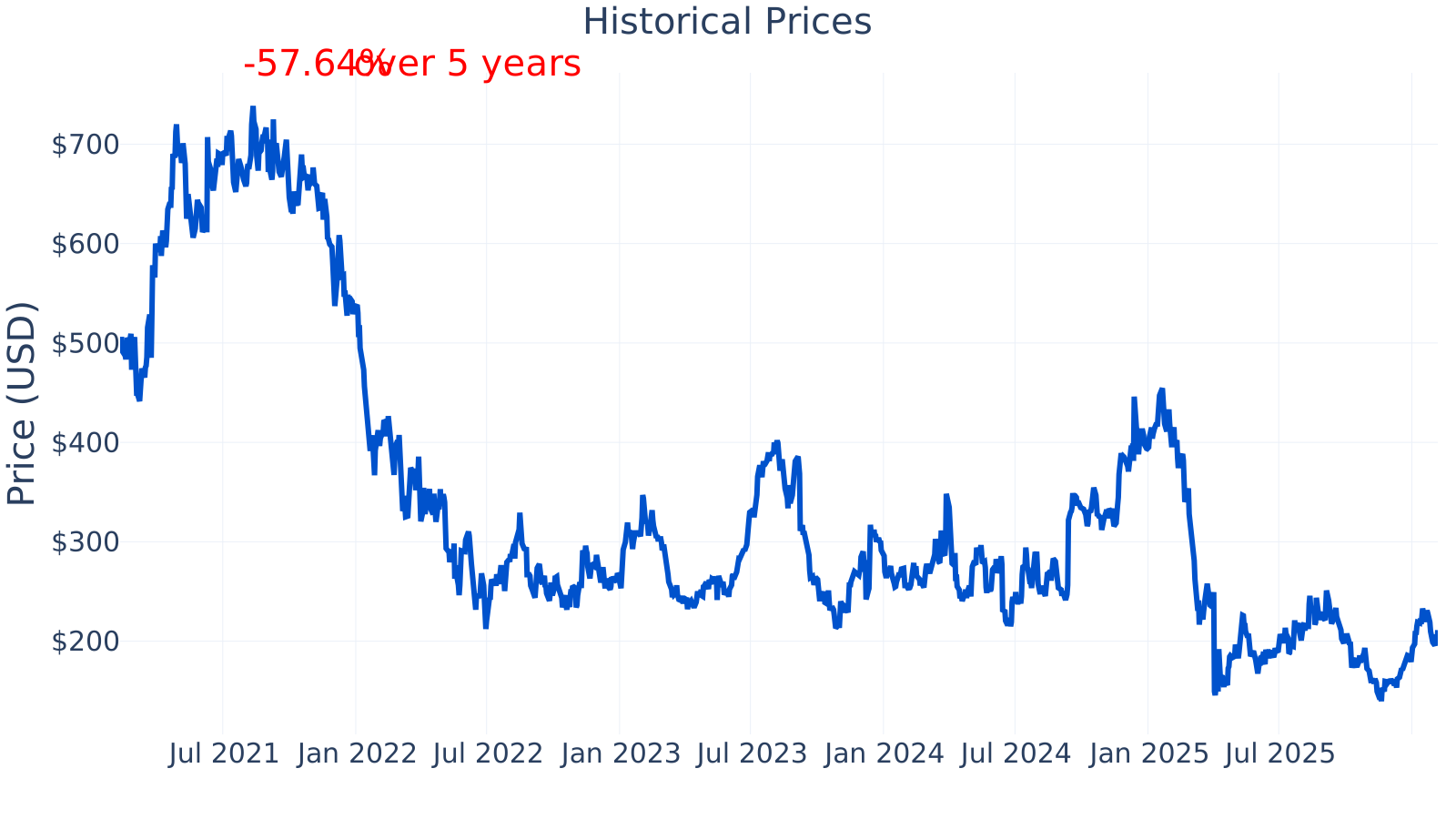
RH’s market capitalization is about $4.0B. The stock has a high beta (~2.12), which commonly indicates larger price swings than the broader market. The P/E ratio is ~38.2 versus an industry median of ~23.8, meaning the shares are priced at a higher multiple than many peers on this metric. Profitability is currently thinner than the industry median, with a net profit margin of ~3.2% versus ~6.3% for the industry median. Recent year-over-year revenue growth is ~8.9%, above the industry median of ~5.2%. RH shows positive trailing twelve-month free cash flow of about $128M. The debt-to-equity figure is extremely elevated versus the industry median, which can happen when equity is very small or negative, making the ratio difficult to interpret in a simple way and often signaling a more leveraged capital structure than typical specialty retail peers.
Growth (Medium)
RH operates in home furnishings and specialty retail—areas that are influenced by housing turnover, renovation activity, interest rates, and consumer confidence. This is not a “steady, always-up” type of industry; demand can be strong in some periods and weak in others, particularly for higher-ticket discretionary purchases.
RH’s strategy for growth has historically emphasized elevating the brand, expanding and evolving large-format galleries, and using curated assortments to support premium pricing. Conceptually, this can work well if the company maintains brand relevance and if higher-end consumers keep spending on the home category.
The year-over-year revenue trend shows a clear pattern: very strong growth in 2021, followed by a slowdown and then negative growth through much of 2023 and early 2024, with a return to positive growth more recently (reaching about 8.9% year-over-year in the latest period shown). That re-acceleration can be a constructive sign operationally, but the broader pattern also illustrates cyclicality.
Free cash flow has also been volatile. It moved from strongly positive levels (about $477M in early 2022) down to negative territory (about -$67M in early 2024 and about -$214M in early 2025). The latest summary metric shows positive trailing free cash flow (about $128M), suggesting some improvement, but the swing over time indicates cash generation may vary substantially depending on demand, margins, and working capital needs (like inventory).
Risks (High)
This article is for informational purposes only and does not constitute financial advice. Some content is AI-generated. See Disclaimer


