Stock Analysis · Quantum Computing Inc (QUBT)
Overview
Quantum Computing Inc. (QUBT) is a small technology company focused on making quantum computing more usable for real-world organizations. In simple terms, the company’s goal is to offer software and services that help customers explore and run quantum-style optimization and computation workflows, including approaches that can also run on classical hardware. Because quantum computing is still early-stage, the business today is less about selling large volumes of finished “quantum computers” and more about building tools, prototypes, and customer relationships that could matter if adoption increases over time.
Based on the company’s financial statements, QUBT’s reported revenue has been very small in absolute dollars in recent years (well under $1 million annually in the figures shown later in this article). That typically means the company is still in a development and commercialization phase rather than operating at scale.
Main sources of revenue can shift from year to year for early-stage companies. When a company is this small, revenue is often driven by a limited number of customer arrangements, which may include items such as prototypes, services, licensing, and similar commercial activity. Specific line-item percentages by revenue type are not provided in the information available here.
The income and expense breakdown highlights a common pattern for early-stage technology companies: operating costs are far larger than revenue. The figures shown also indicate negative gross profit in multiple years, meaning the company’s direct costs associated with revenue have exceeded the revenue itself during those periods.
Key Figures
| Metric | Value | Industry ⓘ |
|---|---|---|
| Date | Feb 08, 2026 | |
| Context | ||
| Sector | Technology | |
| Industry | Computer Hardware | |
| Market Cap ⓘ | $2.11B | |
| Beta ⓘ | 3.48 | |
| Fundamental | ||
| P/E Ratio ⓘ | N/A | 25.91 |
| Profit Margin ⓘ | N/A | 3.74% |
| Revenue Growth ⓘ | 280.20% | 21.50% |
| Debt to Equity ⓘ | 0.29% | 4.92% |
| PEG ⓘ | N/A | |
| Free Cash Flow ⓘ | -$31.45M | |
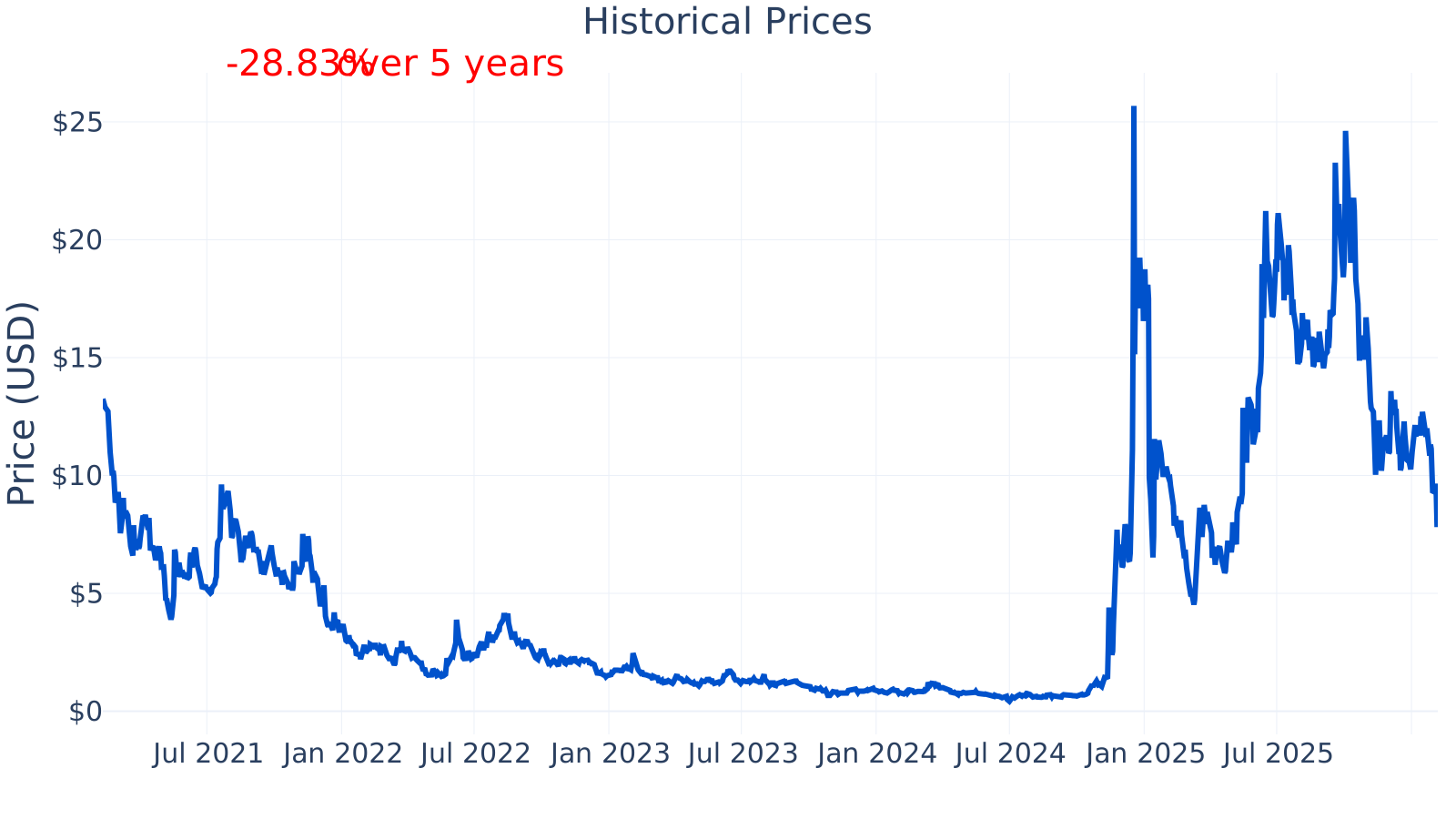
QUBT’s market capitalization is about $2.11B, while its beta of 3.485 indicates the stock has historically been much more volatile than the overall market. Profitability metrics point to losses (profit margin shown as 0% in the table, with the detailed margin trend displayed later). Revenue growth can look extremely high in percentage terms (for example, about 280% YoY most recently), but that can happen when the starting revenue level is very small. Debt-to-equity is near 0.29% versus an industry median near 4.92%, suggesting limited reliance on debt financing. Free cash flow over the trailing twelve months is about -$31.45M, which implies the business has continued to consume cash.
Growth (Medium)
Quantum computing is widely described in company disclosures as an emerging area with potential long-term applications (for example, optimization problems, materials science, and complex simulations). From an industry standpoint, that places QUBT in a space that could expand substantially if quantum-capable tools become more practical and if customers adopt them at scale. However, the timing is uncertain: commercialization cycles can be long, and many projects remain experimental.
From a strategy perspective, QUBT’s approach of offering software and solutions designed to work with quantum methods (and potentially bridge to today’s classical computing) is consistent with an “adoption-first” path: focus on tools and customer use cases while hardware and ecosystems mature. In practice, the key question for long-term progress is whether this approach translates into repeatable, material revenue growth rather than isolated or one-off projects.
Year-over-year revenue growth has been highly volatile, ranging from large declines to extremely large increases. The most recent point shows about 280% growth YoY, but earlier periods include sizable negative readings (for example, roughly -67% in one quarter). This kind of swing is common when revenue is small, because a single contract or delayed project can significantly change the percentage.
Free cash flow has remained negative across the periods shown (roughly -$9.5M to -$23.0M, reaching about -$31.5M most recently). For long-term viability, a typical milestone would be either a clear upward trend toward breakeven or evidence that spending is creating a scalable revenue base.
Potential catalysts (in a purely factual sense) typically include: signing larger commercial agreements, converting pilots into recurring revenue, product milestones disclosed in filings, or broader ecosystem adoption that increases customer budgets for quantum-related solutions. Whether and when these occur is uncertain and should be weighed against the company’s current scale.
Risks (Very High)
This article is for informational purposes only and does not constitute financial advice. Some content is AI-generated. See Disclaimer