Stock Analysis · Qualcomm Incorporated (QCOM)
Overview
Qualcomm Incorporated (QCOM) is a semiconductor and wireless technology company best known for designing chips and software used in smartphones and other connected devices. A large part of its business is tied to mobile connectivity standards (such as 4G and 5G), where Qualcomm both sells chipsets and licenses its intellectual property (patents) to device makers. In practical terms, the company earns money in two main ways: (1) selling products (chips and related software) and (2) collecting licensing fees for the use of its patented technologies.
Qualcomm reports results using two primary segments. Based on the company’s reporting in its annual filings, the main revenue sources are:
- QCT (Qualcomm CDMA Technologies): chipsets and related system software for phones, automotive, and Internet of Things (IoT) devices (typically the largest share of revenue).
- QTL (Qualcomm Technology Licensing): licensing revenue tied to Qualcomm’s patent portfolio (generally a smaller share of revenue, but historically high-margin).
From a “where the money goes” perspective, the company’s financial structure shows meaningful ongoing investment in research and development, which is typical for advanced chip design businesses.
Across the periods shown, research and development remains a large and recurring cost (roughly $7.2B to $9.0B in the years displayed), reflecting the need to keep pace in modem, wireless, and compute technologies. Total revenue rises from about $33.6B (FY2021) to about $44.3B (FY2025), while net income is more volatile (notably lower in FY2025 in the figures shown), highlighting that profitability can swing even when revenue is resilient.
Key Figures
| Metric | Value | Industry ⓘ |
|---|---|---|
| Date | Feb 07, 2026 | |
| Context | ||
| Sector | Technology | |
| Industry | Semiconductors | |
| Market Cap ⓘ | $146.69B | |
| Beta ⓘ | 1.24 | |
| Fundamental | ||
| P/E Ratio ⓘ | 27.47 | 45.89 |
| Profit Margin ⓘ | 11.96% | 9.42% |
| Revenue Growth ⓘ | 5.00% | 13.10% |
| Debt to Equity ⓘ | 64.22% | 25.62% |
| PEG ⓘ | 0.46 | |
| Free Cash Flow ⓘ | $12.93B | |
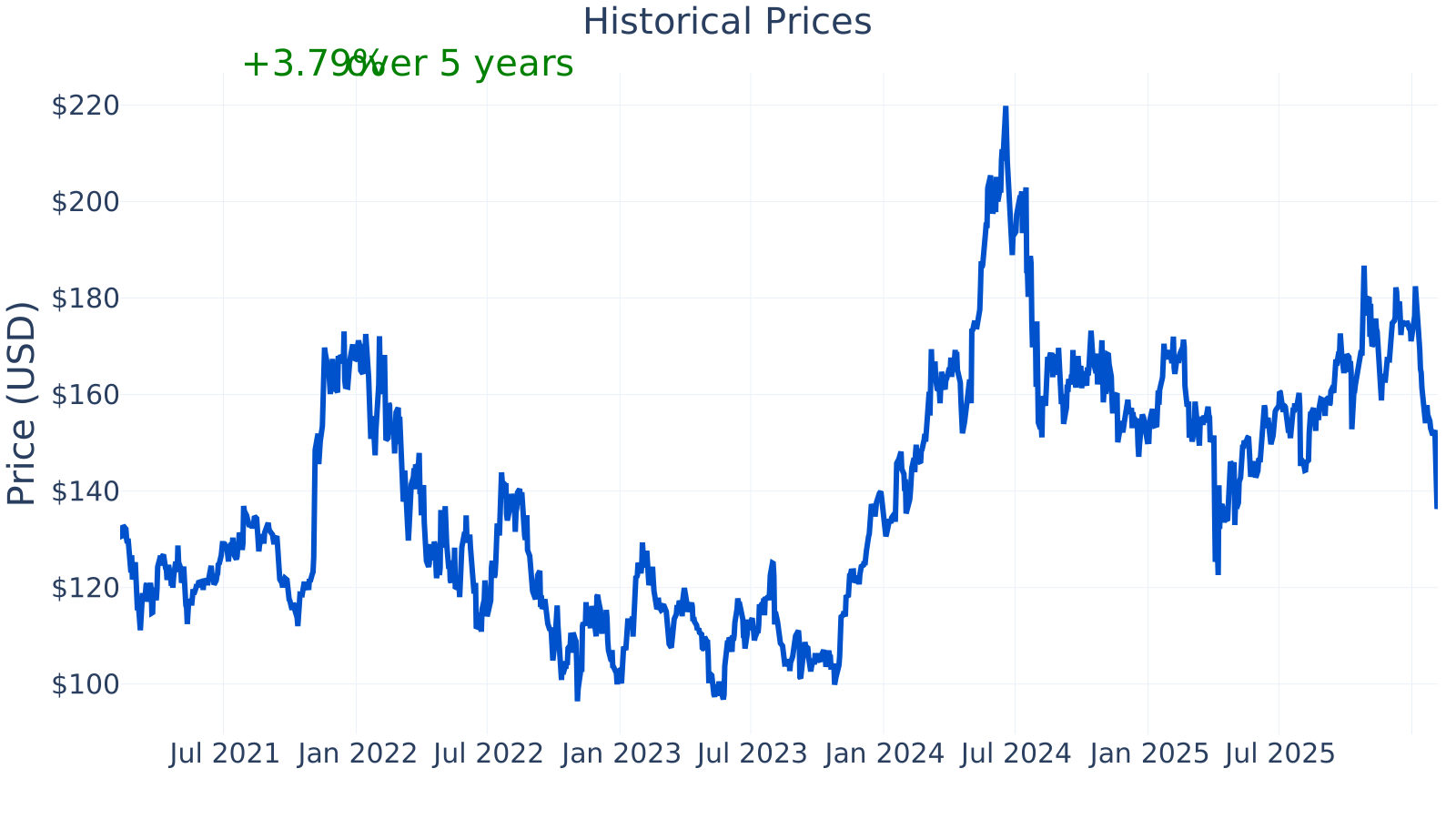
Qualcomm’s market capitalization is about $146.7B. The stock’s beta of ~1.24 suggests it has tended to move more than the broader market. The company’s P/E ratio is ~27.5, below the semiconductor industry median (~45.9) in the provided comparison set. Its profit margin is ~12.0%, above the industry median (~9.4%). Recent year-over-year revenue growth is ~5.0%, below the industry median (~13.1%). Debt-to-equity is ~64%, above the industry median (~26%). Trailing twelve-month free cash flow is ~$12.9B, which indicates substantial cash generation after operating needs and capital spending.
Growth (medium)
Qualcomm operates in markets with long-term demand drivers: global connectivity (4G/5G and future standards), continued smartphone upgrades, and the spread of connected computing into cars and industrial devices. The semiconductor industry also tends to benefit from long-run increases in compute needs, although it is cyclical—periods of strong demand can be followed by slowdowns.
A key part of Qualcomm’s strategy is to extend beyond smartphones by growing in areas such as automotive (connected cars, digital cockpit, telematics) and IoT (industrial connectivity, networking, consumer devices). This matters because handset demand can be volatile, and diversification can reduce reliance on any single product cycle. In addition, the licensing model can provide a stream of revenue tied to broad adoption of cellular standards, although it comes with regulatory and customer-concentration considerations discussed later.
The revenue growth pattern shown is cyclical. Growth was very strong in 2021–2022, turned negative through much of 2023, and then returned to positive territory in 2024 and 2025. The latest year-over-year figure shown is about 5%, indicating a more moderate pace recently compared with earlier peaks.
Free cash flow has increased meaningfully versus earlier years shown: from roughly $8.0B (2021) and $6.9B (2023) to about $12.3B (2024) and $11.7B (2025), with the latest trailing figure around $12.9B. For a chip designer, sustained free cash flow can support ongoing R&D investment and financial flexibility across industry cycles.
Risks (high)
Qualcomm faces several structural risks that are typical for large semiconductor and communications-technology companies. First, the business is exposed to smartphone demand cycles and inventory corrections across the supply chain. Even when long-term demand is intact, yearly results can be uneven.
Second, Qualcomm’s licensing segment depends on the strength and enforceability of its patent portfolio and on the outcomes of negotiations with device manufacturers. This brings legal, regulatory, and contract-renewal risk. Changes in how licensing is interpreted or enforced, or disputes with major customers, can affect profitability.
Third, competition is intense in both mobile and adjacent markets. In premium smartphone chips, Qualcomm competes with other chip designers (for example MediaTek) and with in-house silicon efforts by large device makers. In connectivity and compute-adjacent areas, it overlaps with broad semiconductor competitors (for example Intel, AMD, and others depending on the specific end market), and it also faces specialized players in automotive and IoT. Competitive pressure can show up as pricing pressure, lost design wins, or higher R&D requirements.
On competitive advantages, Qualcomm’s positioning is often associated with: (1) long-standing expertise in cellular modems and RF systems, (2) scale in Android flagship smartphone platforms, and (3) a large patent portfolio tied to cellular standards. These factors can support product performance and licensing leverage, but they do not remove the cyclical and regulatory elements of the business.
Debt-to-equity has improved significantly versus earlier years shown (from well above 100% in 2021 to around 64% most recently). Even after that improvement, it remains higher than the industry median (~26%) in the comparison set, which can matter in downturns when earnings and cash flows may be under pressure.
Profitability has been strong for much of the timeline shown (often above the industry median), but the most recent value shown is about 12%, down sharply from the mid-20% range seen in prior periods. A drop like this can reflect a combination of weaker mix, pricing, higher costs, or one-time items; it highlights that margins in semiconductors and platform businesses can change meaningfully across cycles.
Valuation
Valuation is commonly discussed using the price-to-earnings (P/E) ratio, which compares the stock price to earnings per share. This measure moves with both the stock price and changes in earnings, so it can look “cheap” or “expensive” simply because earnings are temporarily high or low.
The latest P/E shown is about 27.5, below the semiconductor industry median shown in the table (about 45.9). Historically in the series displayed, Qualcomm’s P/E often sits below the industry median, with a notable jump to the mid-30s in the most recent point shown. Interpreting this requires context: if earnings are temporarily depressed (as the recent profit margin decline may suggest), the P/E can rise even without a large price move. Conversely, if earnings normalize upward, the same stock price could translate into a lower P/E.
Overall, the valuation picture in the figures shown looks like a company priced below the industry’s median P/E while operating with above-median profitability (based on the latest margin versus industry median), but with slower recent growth and higher leverage than the median. Those trade-offs are central to how the current price level is typically assessed.
Conclusion
Qualcomm is a large, established semiconductor company with two reinforcing business engines: selling connectivity-focused chips and licensing a deep wireless patent portfolio. The long-term industry backdrop includes continued demand for connectivity across phones, cars, and connected devices, while near-term results can be shaped by cycles in handset demand and competitive dynamics.
The figures shown point to strong cash generation and profitability that remains above the industry median, alongside moderate recent revenue growth and a balance sheet that has improved over time but still carries more leverage than the industry median. The main uncertainties center on the pace of end-market growth (especially smartphones), the intensity of competition (including in-house chips), and licensing-related legal and regulatory outcomes.
Sources:
- U.S. Securities and Exchange Commission (SEC EDGAR) — Qualcomm Incorporated Form 10-K (Annual Report)
- Qualcomm Investor Relations — Annual Report / Form 10-K materials
- Qualcomm Investor Relations — Quarterly Reports (Form 10-Q)
- Wikipedia — “Qualcomm” (general company background)
This article is for informational purposes only and does not constitute financial advice. Some content is AI-generated. See Disclaimer