Stock Analysis · Qorvo Inc (QRVO)
Overview
Qorvo Inc. is a semiconductor company that designs and sells radio-frequency (RF) and power-related chips. In simple terms, its components help devices connect and communicate wirelessly (like smartphones and Wi‑Fi equipment) and help manage power in electronics (for example, in infrastructure, industrial, and automotive applications). Qorvo’s products are typically sold to device makers and equipment manufacturers, and they are used inside finished products rather than sold directly to consumers.
In its SEC filings, Qorvo generally describes its business around two main reporting segments: products tied to mobile devices and products serving broader markets (such as connectivity, infrastructure, and industrial uses). Revenue is primarily generated from selling semiconductor devices (and related modules) into these end markets. Percentage splits by source can change meaningfully over time and are best read directly from the most recent annual report segment disclosures.
- Mobile products (RF solutions used in smartphones and other mobile devices)
- High Performance Analog products (RF, connectivity, and power solutions used in markets such as Wi‑Fi/networking, infrastructure, industrial, defense/aerospace, and automotive)
Business mix in recent years: results show that total revenue has moved with demand cycles in mobile and broader semiconductor markets, while operating expenses (especially research and development) have remained a substantial and recurring investment.
Across the fiscal years shown, total revenue moved from about $4.65B (FY2022) down to roughly $3.57B (FY2023), then stabilized around $3.77B (FY2024) and $3.72B (FY2025). Over the same period, annual R&D spending rose (about $570M to about $748M), highlighting continued product investment even when revenue softened. Net income also became more volatile, including a loss in FY2024 followed by a return to positive net income in FY2025.
Key Figures
| Metric | Value | Industry ⓘ |
|---|---|---|
| Date | Feb 08, 2026 | |
| Context | ||
| Sector | Technology | |
| Industry | Semiconductors | |
| Market Cap ⓘ | $7.76B | |
| Beta ⓘ | 1.37 | |
| Fundamental | ||
| P/E Ratio ⓘ | 23.06 | 45.89 |
| Profit Margin ⓘ | 9.11% | 9.42% |
| Revenue Growth ⓘ | 8.40% | 12.95% |
| Debt to Equity ⓘ | 41.89% | 25.62% |
| PEG ⓘ | 0.20 | |
| Free Cash Flow ⓘ | $595.20M | |
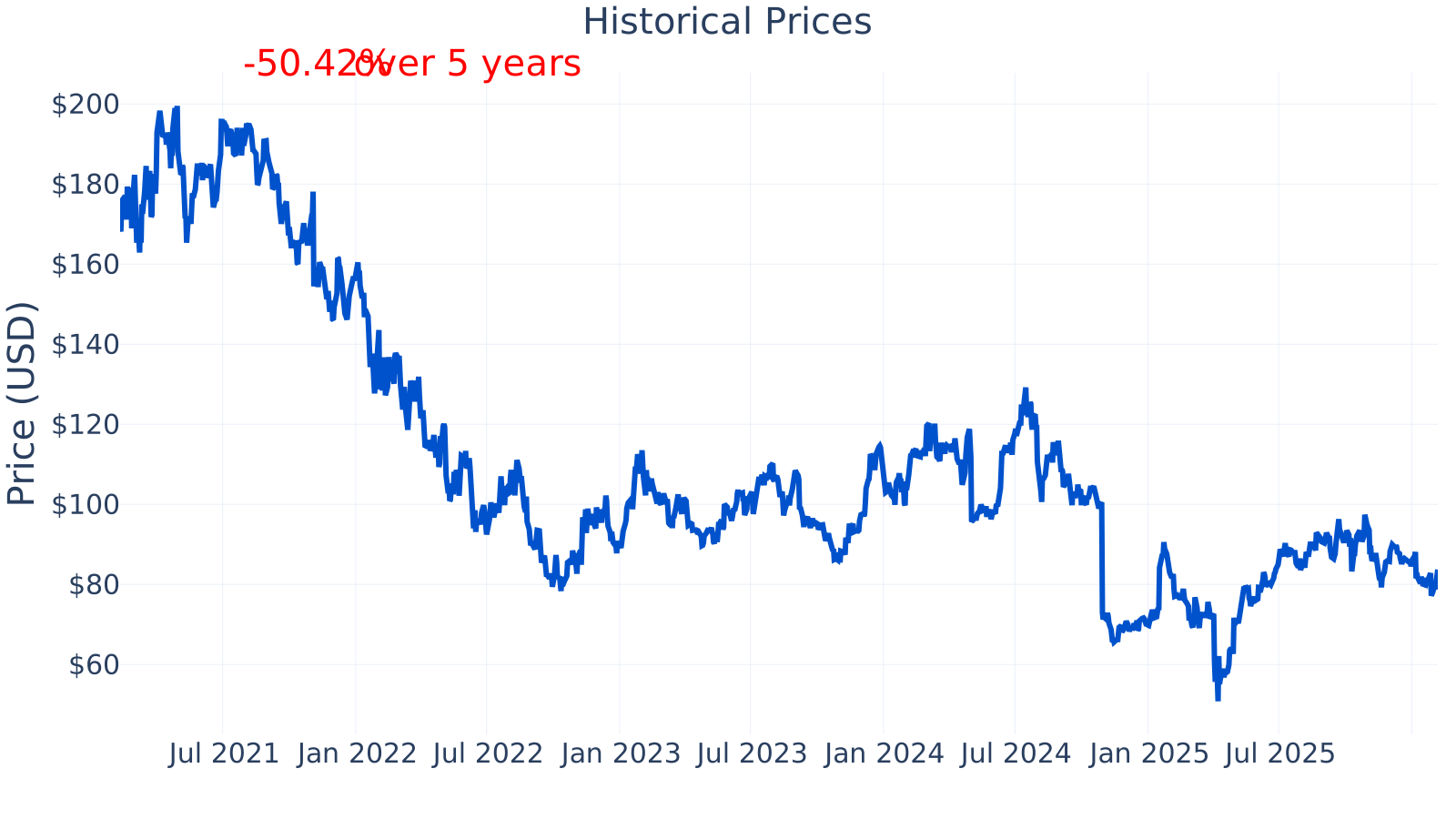
Qorvo’s market capitalization is about $7.76B, and its beta (1.37) indicates the stock has historically fluctuated more than the overall market. The company’s P/E ratio is ~23.1, which is below the semiconductor industry median (~45.9) in the provided peer set. Profitability is currently close to the peer median, with a profit margin of ~9.11% versus an industry median of ~9.42%. Growth is positive but below the peer median: year-over-year revenue growth ~8.4% versus an industry median ~13.0%. Leverage is higher than typical for the peer set, with debt-to-equity ~41.9% versus a median ~25.6%. Trailing twelve-month free cash flow is about $595M, showing the business is still producing cash after operating needs and capital spending.
Growth (medium)
Qorvo operates in semiconductors, an industry supported over the long run by continued growth in wireless data usage, more connected devices, and increasing RF complexity (more frequency bands, more antennas, and more demanding performance requirements). Beyond phones, many end markets also require better connectivity and power efficiency, including Wi‑Fi/networking equipment, industrial systems, and automotive electronics. That said, the industry is cyclical: demand can rise and fall based on consumer device upgrades, inventory corrections, and broader economic conditions.
Strategically, Qorvo’s two-segment structure reflects a balance between mobile exposure (often large volume but cyclical and customer-concentrated) and diversification into other end markets (often longer product lifecycles, but different competitive dynamics). The company’s sustained R&D intensity in recent years suggests it is positioning products for future design wins rather than purely optimizing for short-term profitability.
Revenue growth has been volatile over the last several years, swinging from strong growth in parts of 2021 to sharp declines during 2022–2023, then returning to positive territory more recently. The latest point shown is about +8.4% year-over-year, which indicates recovery, but at a pace below the peer median in the provided industry set.
Free cash flow has remained positive but has generally trended lower across the period shown (from roughly $1.11B in 2021 to about $485M in 2025, with the latest trailing figure around $595M). For long-term business durability, consistently positive free cash flow can matter because it can support R&D investment, balance sheet flexibility, and resilience during downcycles.
Risks (high)
This article is for informational purposes only and does not constitute financial advice. Some content is AI-generated. See Disclaimer