Stock Analysis · PulteGroup Inc (PHM)
Overview
PulteGroup Inc is a U.S. homebuilder that designs, builds, and sells single-family homes, townhomes, and (in some communities) condominium homes. The company operates through well-known brands (including Pulte Homes, Centex, Del Webb, DiVosta, and John Wieland Homes and Neighborhoods) and typically buys or controls land, develops communities, constructs homes, and sells them to homebuyers.
In simple terms, PulteGroup earns most of its money by selling newly built homes. It also earns smaller amounts from related activities tied to those home sales, such as providing financing support through its financial services operations (for example, mortgage-related and title-related services provided to buyers of its homes). The company’s results tend to move with U.S. housing demand, affordability (especially mortgage rates), and construction and land costs.
Main revenue sources (typical structure for the business):
- Home sale revenue (majority): sales of newly built homes across its brands and U.S. markets.
- Financial services (smaller portion): services supporting home transactions (e.g., mortgage-related and title-related activities tied to its buyers).
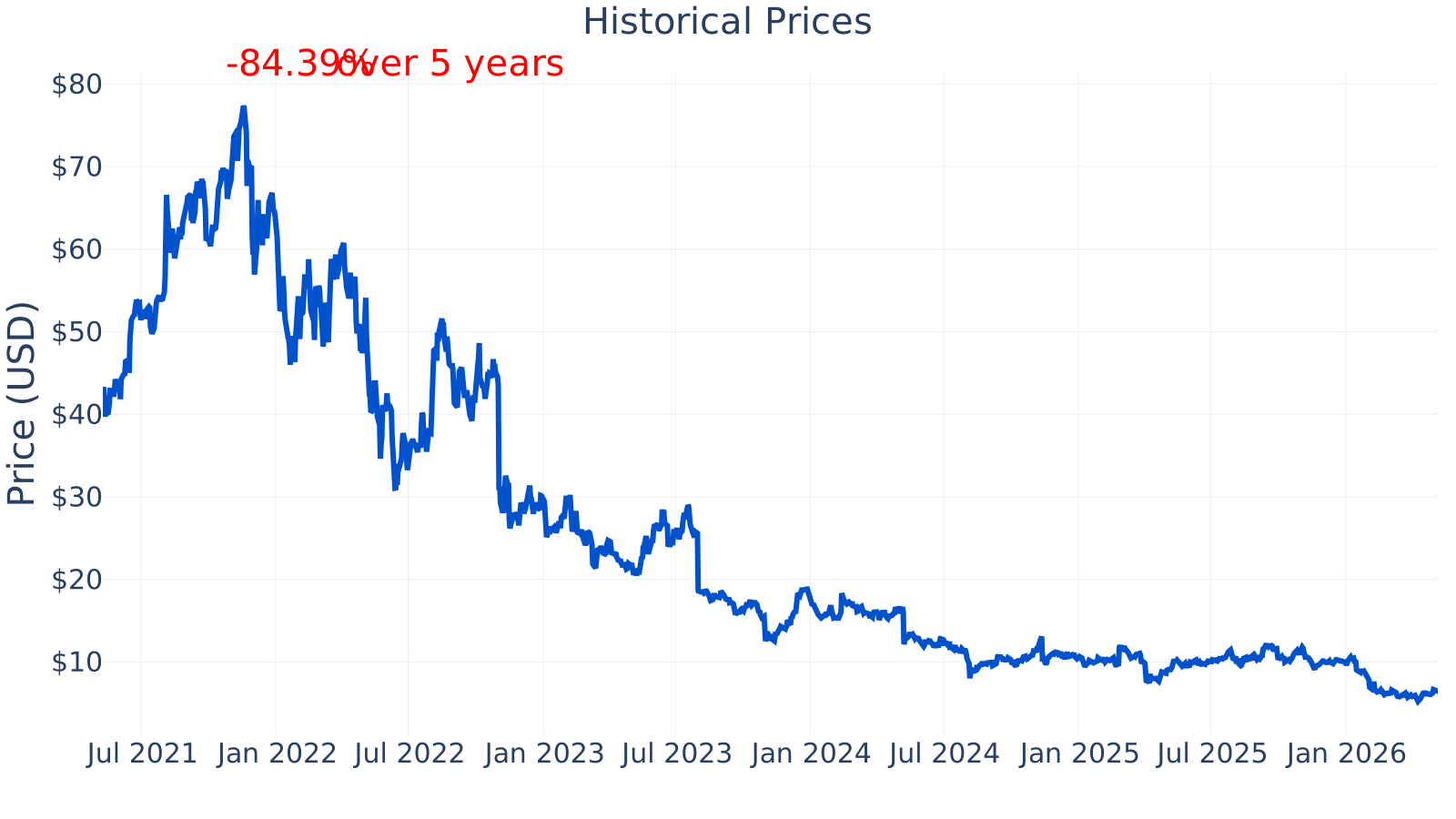
Across recent years, total revenue has remained in a similar overall range while profitability has moved more noticeably. Net income rose to about $3.1B in 2024 and then declined to about $2.2B in 2025, illustrating how homebuilding profits can swing as pricing, incentives, volume, and cost conditions change.
Key Figures
| Metric | Value | Industry ⓘ |
|---|---|---|
| Date | Apr 27, 2026 | |
| Context | ||
| Sector | Consumer Cyclical | |
| Industry | Residential Construction | |
| Market Cap ⓘ | $24.30B | |
| Beta ⓘ | 1.34 | |
| Fundamental | ||
| P/E Ratio ⓘ | 12.32 | 13.07 |
| Profit Margin ⓘ | 12.14% | 8.30% |
| Revenue Growth ⓘ | -12.40% | -12.85% |
| Debt to Equity ⓘ | 17.57% | 31.99% |
| PEG ⓘ | 1.14 | |
| Free Cash Flow ⓘ | $1.64B | |
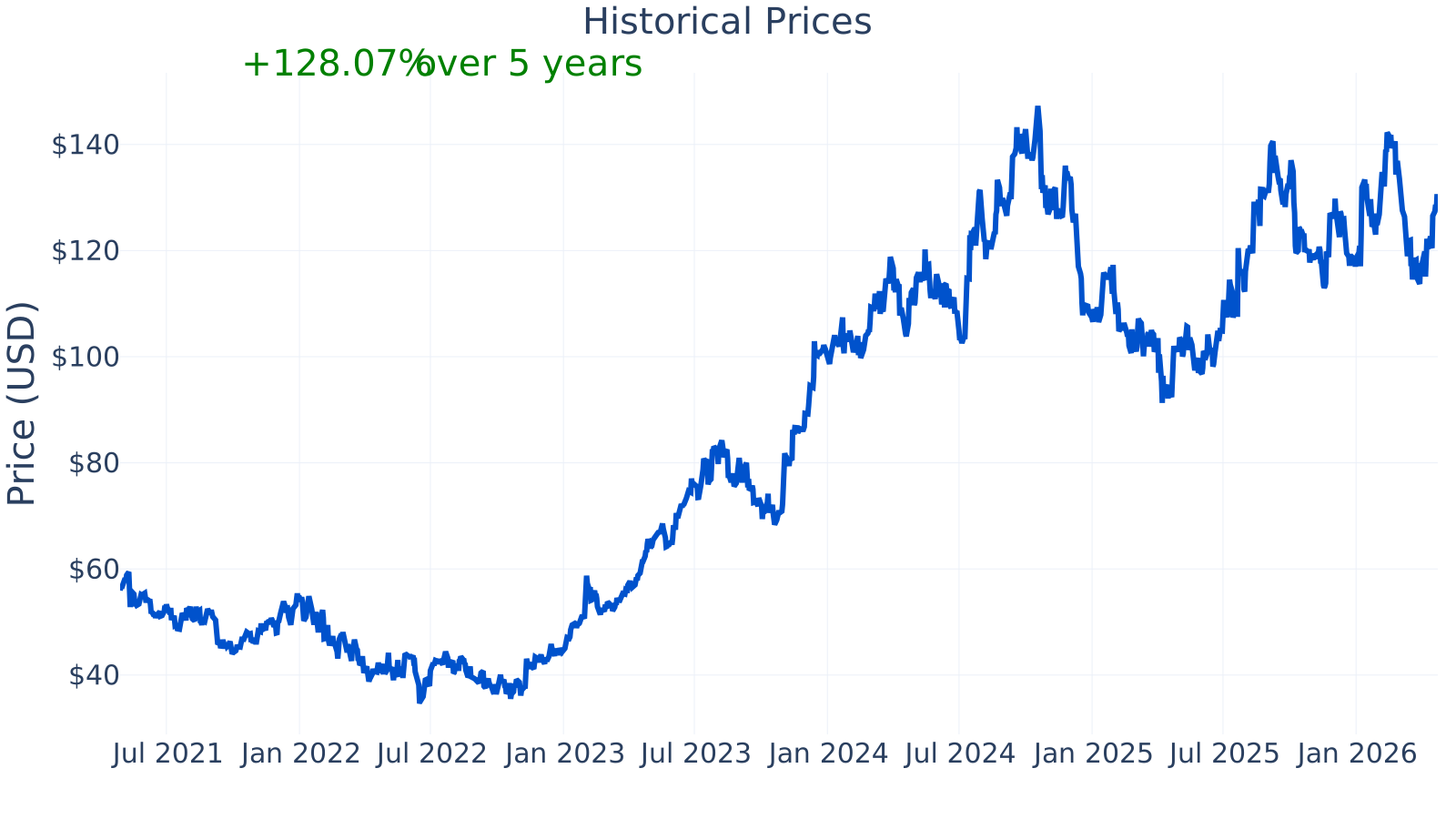
PulteGroup’s market capitalization is about $24.3B. The stock’s beta of ~1.34 suggests it has tended to move more than the overall market (higher volatility than a broad index). On profitability, the company’s profit margin is ~12.1%, which is higher than the industry median shown here (~8.3%). Recent year-over-year revenue growth is about -12.4%, close to the industry median decline (~-12.9%), reflecting a softer period for topline growth. Balance-sheet leverage appears lower than many peers with debt-to-equity of ~17.6% versus an industry median of ~32.0%. The company also generated about $1.64B in trailing twelve-month free cash flow.
Growth (Medium)
PulteGroup operates in the U.S. residential construction industry, which is cyclical (it expands and contracts over time) but also supported by long-term needs such as household formation and the ongoing requirement to replace and add housing stock. Over long periods, homebuilders that manage land, costs, and cycle timing well can grow by expanding into markets, adding communities, and improving product and customer mix (for example, entry-level versus move-up versus active adult communities).
The recent revenue growth pattern shows meaningful variability. After strong growth earlier in the period shown, growth turned negative more recently (about -12.4% year-over-year in the latest point). For homebuilders, this kind of swing is common and often reflects changes in closings volume, sales pace, pricing, and incentives—factors heavily influenced by mortgage-rate affordability and local supply/demand conditions.
Free cash flow has stayed substantial over the period shown, landing around $1.64B on a trailing twelve-month basis. For a homebuilder, free cash flow matters because the business regularly uses cash to buy/prepare land and build homes, and then recoups cash when homes close. Stronger free cash flow can provide flexibility for land investment through the cycle, debt reduction, and returns of capital to shareholders (when management chooses to do so).
Potential catalysts for future growth (in general business terms) typically include an easing in financing conditions that improves affordability, sustained demand in key local markets, and execution on land/community pipeline management. Because the company sells big-ticket items (homes), shifts in consumer confidence and borrowing costs can translate into rapid changes in sales pace and margins.
Risks (High)
Homebuilding has several structural risks that can be significant. Demand can change quickly when mortgage rates rise, when affordability worsens, or when economic conditions weaken. On the supply side, profitability can be pressured by labor availability, materials pricing, land costs, and build-cycle timing. The business also faces regulatory and permitting complexities that vary by state and municipality.
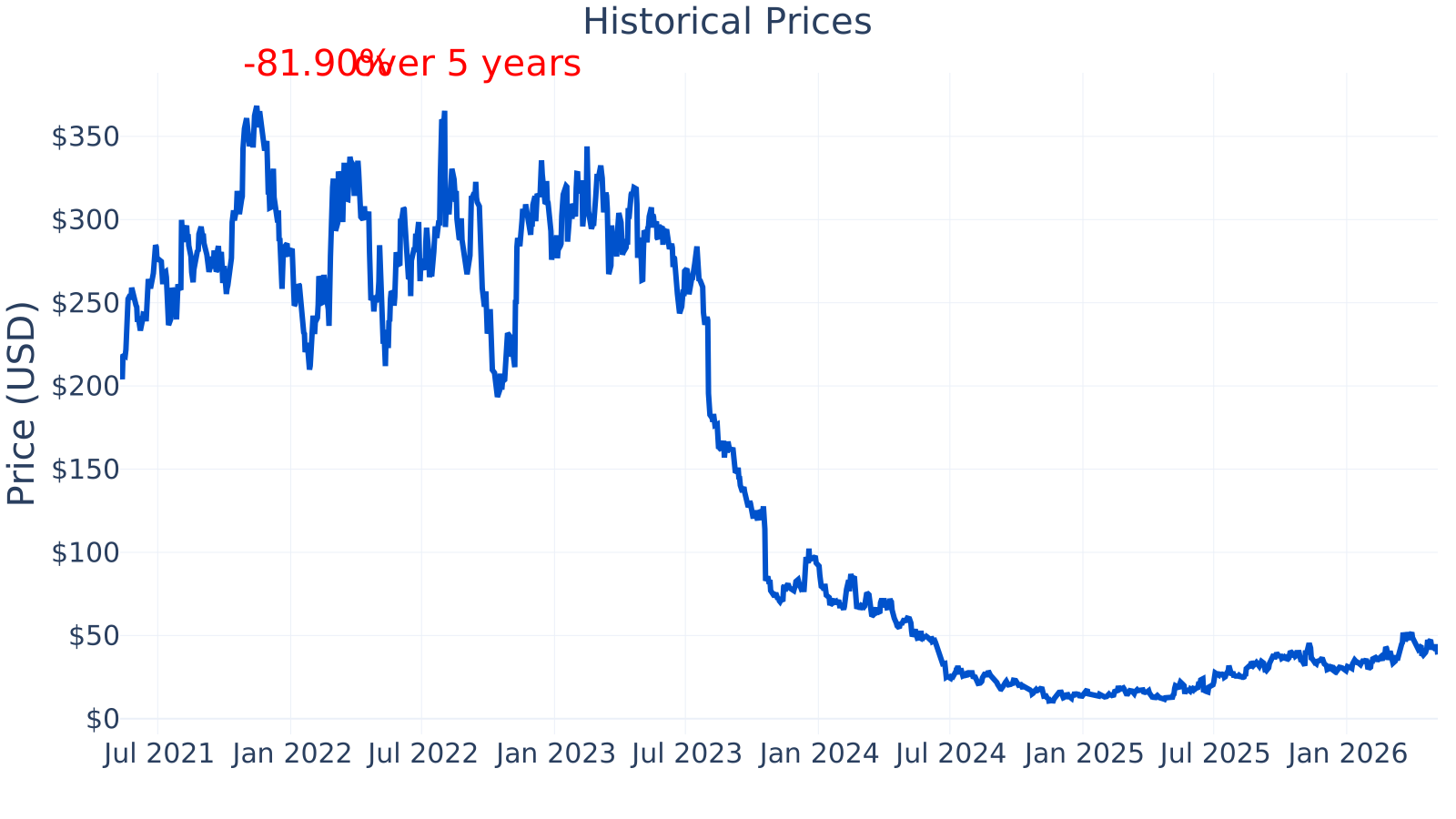
PulteGroup’s debt-to-equity has trended down over the period shown and sits around 17.6% in the latest point, below the industry median shown (about 32.0%). Lower leverage can reduce financial stress during housing downturns, although it does not remove the underlying cyclicality of demand and pricing.
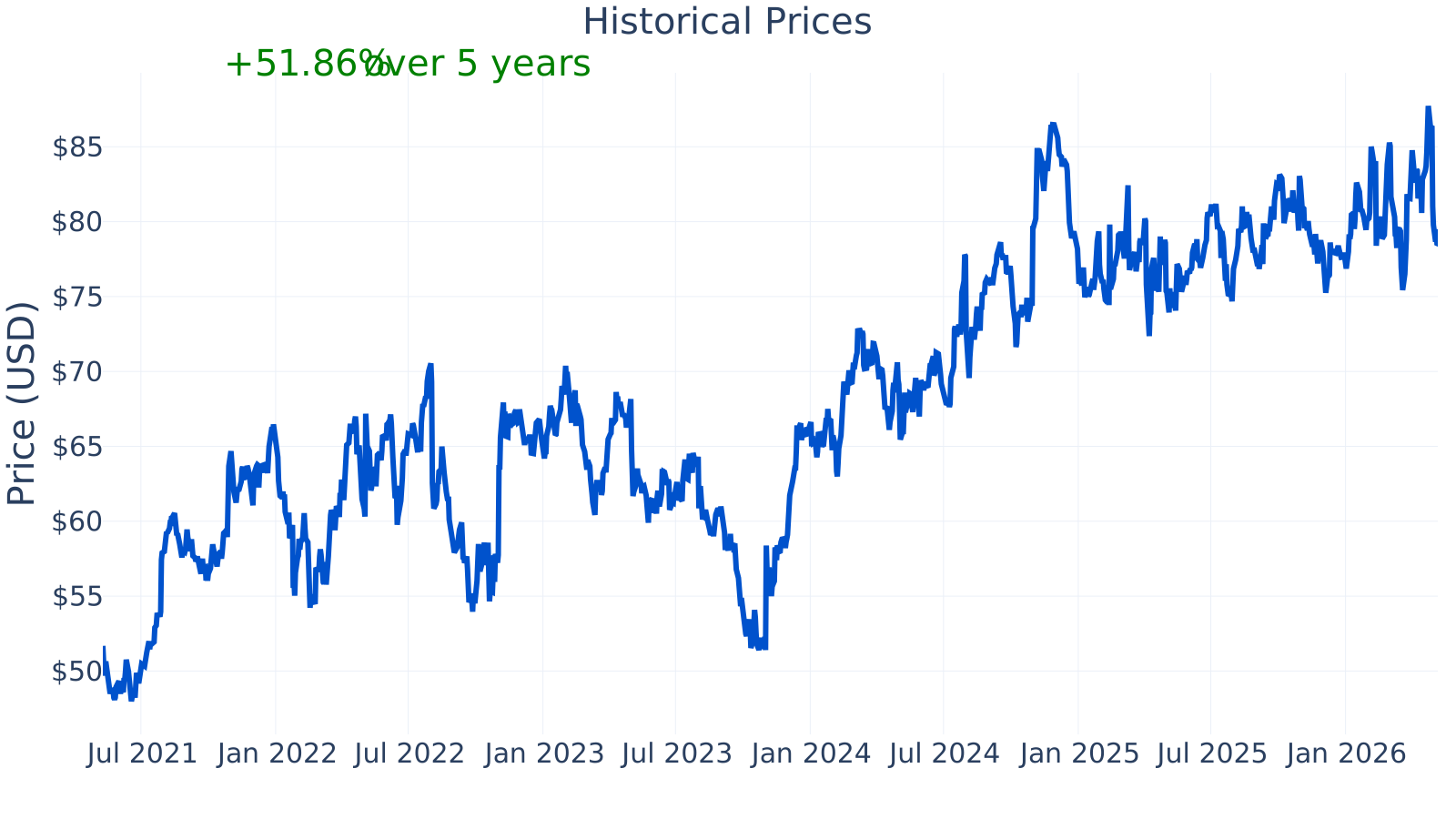
Profit margins have been stronger than the industry median throughout the period shown, but they have also declined from earlier highs. The latest margin is about 12.1% versus an industry median of roughly 8.3%. This suggests the company has recently converted revenue into profit more efficiently than many peers, while still experiencing the normal margin compression that can occur when incentives rise, pricing moderates, or costs increase.
Competitive positioning in homebuilding is usually defined by scale in purchasing and operations, access to desirable land positions, brand strength in specific buyer segments, and disciplined capital allocation. PulteGroup is one of the larger U.S. homebuilders, but it competes with multiple well-capitalized peers. Key publicly listed competitors typically include D.R. Horton, Lennar, NVR, Toll Brothers, and Taylor Morrison, among others. Compared with these firms, PulteGroup’s competitive advantages are generally associated with its multi-brand strategy across buyer types and geographies and its operating scale, while competitive pressures remain high because many large builders can adjust incentives, product, and community pace quickly.
Valuation
The company’s current price-to-earnings (P/E) ratio is about 12.3, compared with an industry median of roughly 13.1 in the latest snapshot. Over the period shown, PulteGroup’s P/E has generally remained in a mid-single-digit to low-double-digit range, and it has often been near (or below) the industry median. In practical terms, that means the market has typically valued the company like a cyclical homebuilder rather than assigning a consistently higher multiple.
Interpreting valuation for a homebuilder requires context: earnings can be unusually high near favorable parts of the housing cycle and can fall meaningfully during weaker periods. As a result, a “low” P/E can sometimes reflect expectations of normalizing profits, while a “higher” P/E can appear when earnings are temporarily depressed. Looking alongside valuation, the company’s relatively higher margin versus peers and lower leverage are supportive business characteristics, while the recent negative revenue growth highlights that near-term conditions can still be challenging.
Conclusion
PulteGroup is a large U.S. homebuilder whose results are primarily driven by new home sales, with a smaller contribution from transaction-related financial services. The business shows characteristics that can matter over a full housing cycle—most notably, profitability above the industry median in the period shown and lower leverage than many peers.
At the same time, the company operates in a highly cyclical industry where demand, revenue growth, and margins can shift quickly as affordability changes and costs move. The recent negative year-over-year revenue growth and the decline in margins from prior highs fit that cyclical pattern. The valuation metrics shown place the company close to the industry median, which is consistent with how markets often price homebuilders given the uncertainty of future earnings through the cycle.
Sources:
- U.S. Securities and Exchange Commission (SEC) EDGAR — PulteGroup Inc filings (Form 10-K, Form 10-Q)
- PulteGroup Investor Relations — SEC filings and investor materials (company-hosted)
- Wikipedia — “PulteGroup” (basic company background)
This article is for informational purposes only and does not constitute financial advice. Some content is AI-generated. See Disclaimer