Stock Analysis · PulteGroup Inc (PHM)
Overview
PulteGroup Inc is a U.S. homebuilder that designs, builds, and sells single-family homes, townhomes, and condominiums. It operates through well-known brands such as Pulte Homes, Centex, Del Webb (focused on active-adult communities), and John Wieland Homes and Neighborhoods. In practical terms, the company earns most of its money by developing communities (buying or controlling land, building homes on it, and selling those homes to customers) across multiple U.S. markets.
In its SEC filings, PulteGroup describes its business as primarily homebuilding, with a smaller financial services operation that supports homebuyers (for example, mortgage-related services, depending on the customer and transaction). The company’s results are therefore closely tied to U.S. housing demand, affordability (including mortgage rates), and the cost and availability of land, labor, and building materials.
Main revenue sources (from largest to smaller, based on how homebuilders typically report segments in filings):
- Home sale revenue (Homebuilding segment) — the sale of newly built homes (the primary driver of revenue)
- Financial services revenue — services connected to home purchases (a smaller, supporting activity)
Across recent years, total revenue appears to fluctuate with the housing cycle, while costs of revenue remain the largest outflow (typical for homebuilders). Net income is meaningful relative to revenue in most years shown, but it can vary notably year to year, reflecting the cyclical nature of housing demand and construction costs.
Key Figures
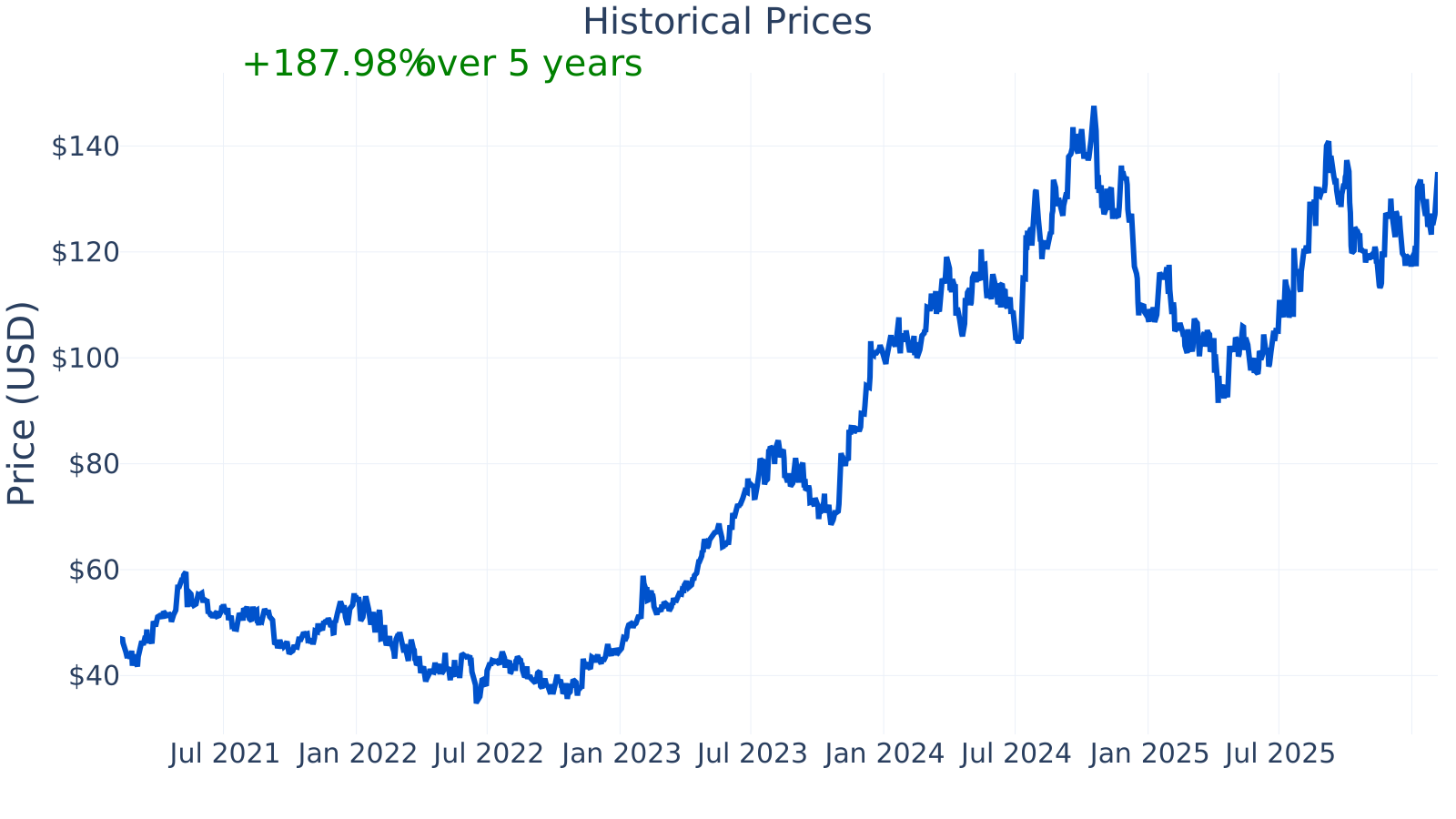
The share price history shows large swings over time, which is common for homebuilders. This pattern often reflects changing expectations around mortgage rates, housing demand, and the broader economy.
| Metric | Value | Industry ⓘ |
|---|---|---|
| Date | Feb 07, 2026 | |
| Context | ||
| Sector | Consumer Cyclical | |
| Industry | Residential Construction | |
| Market Cap ⓘ | $26.33B | |
| Beta ⓘ | 1.34 | |
| Fundamental | ||
| P/E Ratio ⓘ | 12.05 | 12.00 |
| Profit Margin ⓘ | 12.82% | 8.48% |
| Revenue Growth ⓘ | -6.30% | -4.90% |
| Debt to Equity ⓘ | 16.66% | 34.53% |
| PEG ⓘ | 1.19 | |
| Free Cash Flow ⓘ | $1.70B | |
PulteGroup’s market capitalization is about $26.3B. The stock’s beta of ~1.34 suggests it has tended to move more than the overall market. The P/E ratio is ~12.05, close to the residential construction industry median (~12.00). Profit margin is about 12.82%, above the industry median (~8.49%). Year-over-year revenue growth is currently -6.3% (industry median ~-4.9%), indicating a recent slowdown. Debt-to-equity is about 16.66%, below the industry median (~34.53%), and trailing twelve-month free cash flow is about $1.70B.
Growth (Medium)
Homebuilding is generally a long-term demand industry because it is tied to population growth, household formation, and housing replacement needs. However, it is also strongly cyclical: activity can slow quickly when affordability weakens (often due to higher mortgage rates) or when consumer confidence declines.
For PulteGroup, the growth strategy described in company filings typically centers on operating across multiple buyer segments (first-time, move-up, and active-adult), maintaining a pipeline of lots/communities, and managing construction and selling costs. This type of approach can support results through different market environments, but it does not eliminate the industry’s ups and downs.
The pattern shows strong growth in several earlier periods, followed by slowing and more recent declines. That shift is consistent with a cooling phase of the housing cycle, where demand and/or pricing power can soften.
Free cash flow remains positive in the periods shown, and it has been sizable (roughly in the $0.95B to $1.70B range across the dates displayed). For a homebuilder, sustained positive free cash flow can matter because the business requires ongoing investment in land and development; cash generation helps fund operations and maintain flexibility during weaker demand periods.
Risks (High)
This article is for informational purposes only and does not constitute financial advice. Some content is AI-generated. See Disclaimer


