Stock Analysis · Progress Software Corporation (PRGS)
Overview
Progress Software Corporation is a software company that sells tools used by organizations to build, integrate, manage, and secure business applications. Its products are generally aimed at IT teams and software developers who need to connect different systems, move data reliably, and keep critical applications running.
A key part of Progress’ model is recurring software revenue: customers typically pay for time-based licenses and maintenance/support, often renewed annually. The company has also used acquisitions over time to add new software products and expand its customer base, which can change the mix of what it sells from one period to another.
Progress reports revenue in product categories in its SEC filings. In general terms, the main revenue sources are:
- Software licenses and subscriptions (recurring licenses and cloud/subscription arrangements)
- Maintenance and support (renewals, updates, and technical support tied to products)
- Professional services (implementation and consulting, typically smaller than software-related revenue)
From its annual financial results, total revenue has increased from about $531 million (FY2021) to about $978 million (FY2025), indicating a larger business today than a few years ago.
Across the periods shown, revenue and gross profit rise over time, while operating expenses (including R&D and selling/general/administrative costs) also increase. Interest expense becomes notably higher by FY2025, which matters because it can reduce net income when borrowing costs are elevated.
Key Figures
| Metric | Value | Industry ⓘ |
|---|---|---|
| Date | Apr 06, 2026 | |
| Context | ||
| Sector | Technology | |
| Industry | Software - Infrastructure | |
| Market Cap ⓘ | $1.08B | |
| Beta ⓘ | 0.76 | |
| Fundamental | ||
| P/E Ratio ⓘ | 13.21 | 26.23 |
| Profit Margin ⓘ | 8.61% | 6.71% |
| Revenue Growth ⓘ | 4.10% | 14.80% |
| Debt to Equity ⓘ | 167.51% | 25.35% |
| PEG ⓘ | 0.86 | |
| Free Cash Flow ⓘ | $257.75M | |
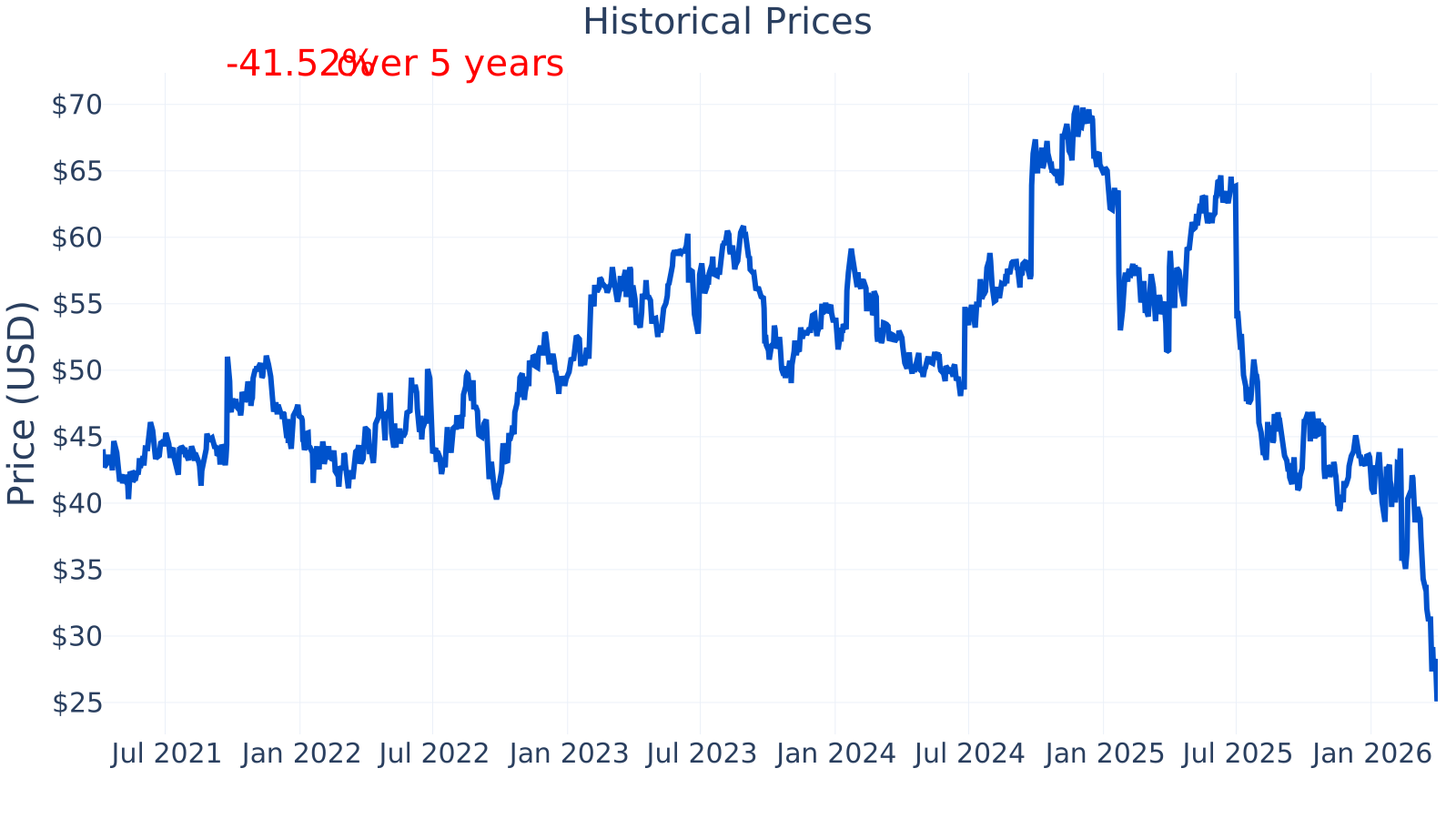
Progress has a market capitalization of about $1.08 billion and a beta of ~0.76, which indicates the stock has historically moved less than the broader U.S. market on average (though it can still be volatile).
Profitability (net profit margin) is about 8.61%, above the listed industry median of about 6.71%. Recent year-over-year revenue growth is about 4.11%, below the listed industry median of about 14.8%, suggesting Progress is currently growing more slowly than many peers in the same broad industry grouping.
Leverage stands out: debt-to-equity is about 167.5%, much higher than the listed industry median of about 25.4%. Free cash flow over the trailing twelve months is about $258 million, which is meaningful relative to the company’s size and can help fund debt service, acquisitions, or internal investment.
Growth (Medium)
Progress operates in software infrastructure—an area supported by long-term trends such as ongoing application modernization, more integration between cloud and on-premise systems, and rising security and reliability requirements. These trends can provide a durable need for the types of tools Progress sells, even if individual products face competition.
The company’s strategy has historically combined (1) expanding recurring revenue from established products and (2) adding product lines through acquisitions. For long-term business expansion, this approach can work when Progress is able to keep customer renewals strong and integrate acquired products efficiently, but it can also create periods where reported growth depends heavily on deal timing.
Revenue growth has been uneven: it was often in the double digits in earlier periods shown, but the most recent value is about 4.1%. This pattern can indicate a transition from acquisition-driven step-ups and stronger periods into a slower growth phase, or timing effects after larger changes in the product portfolio.
Free cash flow trends upward from about $174 million (FY2022 trailing period) to about $258 million (FY2026 trailing period). For a software company, sustained free cash flow can be an important internal source of funding—especially if the firm is managing higher debt levels.
Potential catalysts (in a neutral, factual sense) typically include successful cross-selling across the product suite, higher renewal rates, improved operating efficiency, and disciplined capital allocation (including how the company uses cash flow to reduce debt or pursue acquisitions). The durability of recurring revenue is often central to how software infrastructure companies maintain steady performance over time.
Risks (High)
A main risk for Progress is financial leverage. Higher debt can amplify outcomes: it may support acquisitions and expansion, but it also increases required interest payments and reduces flexibility if business conditions weaken.
The debt-to-equity ratio is consistently far above the industry median in the periods shown, reaching very elevated levels in late 2024 and 2025 before declining to about 167.5% most recently. Even after the decline, leverage remains high compared with peers, so interest costs and refinancing conditions can materially affect results.
Another risk is competitive pressure. Software infrastructure markets include large, well-resourced vendors and specialized players. Customers may consolidate vendors, switch to alternative platforms, or negotiate pricing more aggressively—especially when products overlap with broader suites offered by larger companies.
Progress’ competitive advantages are often tied to established products, switching costs in mission-critical deployments, and long-standing customer relationships supported by maintenance and support renewals. However, it is not typically positioned as the category-defining platform across all of infrastructure software; instead, it competes in several niches and sub-markets.
Key competitors vary by product area and can include large platform companies and integration-focused vendors. Depending on the specific use case, alternatives may include offerings from firms such as Microsoft, IBM, Oracle, and other infrastructure and integration software providers. In many customer environments, the choice is influenced by existing IT standards and vendor ecosystems, which can favor larger suites.
Profit margin has trended down from the mid-teens earlier in the series to a more recent level around 8.6%. While the latest value is slightly above the industry median shown, the downward path suggests pressure from costs (including operating expenses and, indirectly, interest expense) and highlights the importance of execution and cost discipline.
Valuation
The latest P/E ratio shown is about 13.2, below the industry median of about 26.2. Over the historical period displayed, Progress’ P/E moved from the mid-20s to peaks above 40, and more recently fell back to the mid-20s range by early 2026. Relative valuation can reflect many factors at once, including growth expectations, leverage, risk perception, and the stability of earnings.
In context, a lower P/E versus the industry median can be consistent with the combination of (1) slower recent revenue growth versus peers and (2) higher financial leverage. At the same time, the company’s meaningful free cash flow generation and positive profit margin can support earnings durability, which also matters when interpreting valuation multiples.
Conclusion
Progress Software is a mid-sized infrastructure software company built around recurring revenue from established products, supplemented by acquisitions. Over the last several years, total revenue has increased materially, and the business has generated substantial free cash flow.
The main trade-offs visible in the fundamentals are a slower recent growth rate relative to the industry median and higher leverage than peers, alongside positive profitability and strong cash generation. For a long-term, business-focused review, the key items to monitor over time are revenue and renewal momentum, the path of operating margins, and whether debt levels and interest costs trend toward a more conservative range.
Sources:
- SEC EDGAR — Progress Software Corporation Forms 10-K, 10-Q, and 8-K
- Progress Software — Investor Relations materials (including annual report/filings and press releases)
- Wikipedia — “Progress Software” (basic company background)
This article is for informational purposes only and does not constitute financial advice. Some content is AI-generated. See Disclaimer


