Stock Analysis · Progress Software Corporation (PRGS)
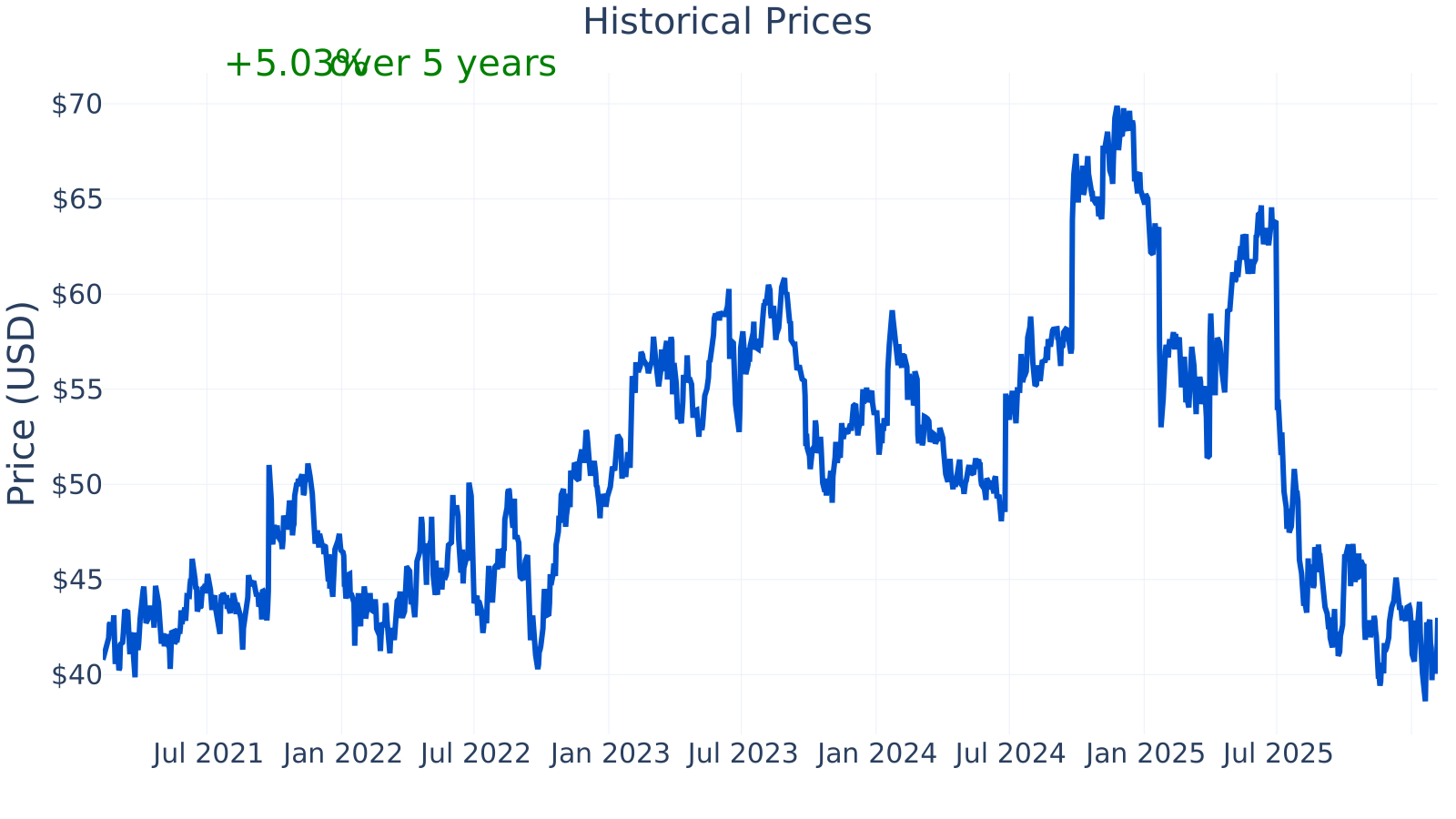
Overview
Progress Software Corporation (PRGS) is a software company that sells tools businesses use to build, run, connect, and secure applications. In plain terms, it provides “behind-the-scenes” software that helps companies create digital products, move data between systems, and keep those systems working reliably. Its products are typically used by IT teams and software developers inside other organizations rather than by consumers directly.
Progress generally makes money by licensing software and providing ongoing support and updates. Like many mature software vendors, it tends to focus on long-lived products that can stay installed for years, with customers paying recurring fees for maintenance, subscriptions, and related services. The company has also used acquisitions over time to add products and expand its customer base (details and exact mix vary by reporting period and are described in its SEC filings).
Main revenue sources are typically described in company filings as combinations of software licenses/subscriptions and maintenance/support (and sometimes professional services). Exact percentages can change year to year and depend on how the company groups and reports revenue in its filings.
Across the period shown, total revenue rises meaningfully (from about $531M to about $978M). Gross profit also increases, but operating expenses grow as well, and interest expense becomes notably larger in the most recent period, which is consistent with a bigger debt load and/or higher interest rates.
Key Figures
| Metric | Value | Industry ⓘ |
|---|---|---|
| Date | Feb 08, 2026 | |
| Context | ||
| Sector | Technology | |
| Industry | Software - Infrastructure | |
| Market Cap ⓘ | $1.84B | |
| Beta ⓘ | 0.58 | |
| Fundamental | ||
| P/E Ratio ⓘ | 25.90 | 25.67 |
| Profit Margin ⓘ | 7.48% | 6.91% |
| Revenue Growth ⓘ | 17.50% | 15.20% |
| Debt to Equity ⓘ | 177.90% | 19.82% |
| PEG ⓘ | 1.48 | |
| Free Cash Flow ⓘ | $229.49M | |
Progress Software is a mid-sized public company (market cap about $1.84B) with a relatively low beta (about 0.58), meaning the stock has tended to move less than the broader market. The latest P/E ratio is about 25.9, close to the industry median (~25.7). Profit margin is about 7.5%, slightly above the industry median (~6.9%), and the latest year-over-year revenue growth shown is about 17.5% (above the industry median ~15.2%). A standout difference is leverage: debt-to-equity is about 178% versus an industry median near 20%, indicating Progress uses substantially more debt than many peers. Trailing twelve-month free cash flow is about $229M, which can be an important support for debt service and ongoing investment.
Growth (Medium)
Progress operates in “software infrastructure,” a broad category that generally benefits from long-term trends such as cloud adoption, ongoing application modernization, and the need to integrate data across many systems. These needs are persistent: even when IT budgets tighten, many organizations still spend to keep critical applications running and secure.
A common strategy for companies like Progress is to focus on durable, business-critical products with recurring revenue, then expand the portfolio through acquisitions and cross-selling to an installed base. This approach can produce steady growth when execution is strong, but it also depends on keeping products competitive and integrating acquired businesses effectively.
Revenue growth is uneven across the timeline, including at least one slightly negative period, followed by stronger recent readings (mid-to-high teens and higher in some periods). That pattern often fits an acquisition-and-integration model: reported growth can jump after deals and normalize later, while comparisons can be volatile depending on timing.
Free cash flow trends upward over the multi-year period shown (from roughly $150M to above $200M, with the latest table showing about $229M TTM). For a software company, sustained free cash flow can matter because it helps fund product development, potential acquisitions, share repurchases (if any), and debt repayment without relying solely on new borrowing or issuing stock.
Risks (High)
This article is for informational purposes only and does not constitute financial advice. Some content is AI-generated. See Disclaimer


