Stock Analysis · Procore Technologies Inc (PCOR)
Overview
Procore Technologies Inc (PCOR) is a software company focused on the construction industry. Its platform is designed to help construction owners, general contractors, and specialty contractors manage projects in one place—covering areas such as project management workflows, coordination, financial management, and analytics. In simple terms, Procore sells cloud software meant to reduce paperwork and improve visibility across complex construction projects.
Procore primarily generates revenue by selling subscriptions to its software platform and by providing related services. In its filings, the company generally describes revenue in two main buckets:
- Subscription revenue (typically the largest portion): recurring fees customers pay to access the platform.
- Professional services and other revenue: onboarding, implementation, training, and other services tied to customer adoption.
In practice, subscriptions tend to matter most because they are recurring and scale as customers expand usage across more projects, users, or modules.
Over the 2021–2025 period, total revenue increased from about $515M (2021) to about $1.32B (2025). Gross profit also rose (about $417M to about $1.04B), showing that the core software delivery economics expanded with scale. At the same time, operating income remained negative each year in this view, reflecting continued high spending—especially in areas like product development and go-to-market—relative to current revenue.
Key Figures
| Metric | Value | Industry ⓘ |
|---|---|---|
| Date | Feb 16, 2026 | |
| Context | ||
| Sector | Technology | |
| Industry | Software - Application | |
| Market Cap ⓘ | $8.14B | |
| Beta ⓘ | 0.90 | |
| Fundamental | ||
| P/E Ratio ⓘ | N/A | 27.48 |
| Profit Margin ⓘ | -7.62% | 7.66% |
| Revenue Growth ⓘ | 15.60% | 15.80% |
| Debt to Equity ⓘ | 9.37% | 24.71% |
| PEG ⓘ | N/A | |
| Free Cash Flow ⓘ | $263.01M | |
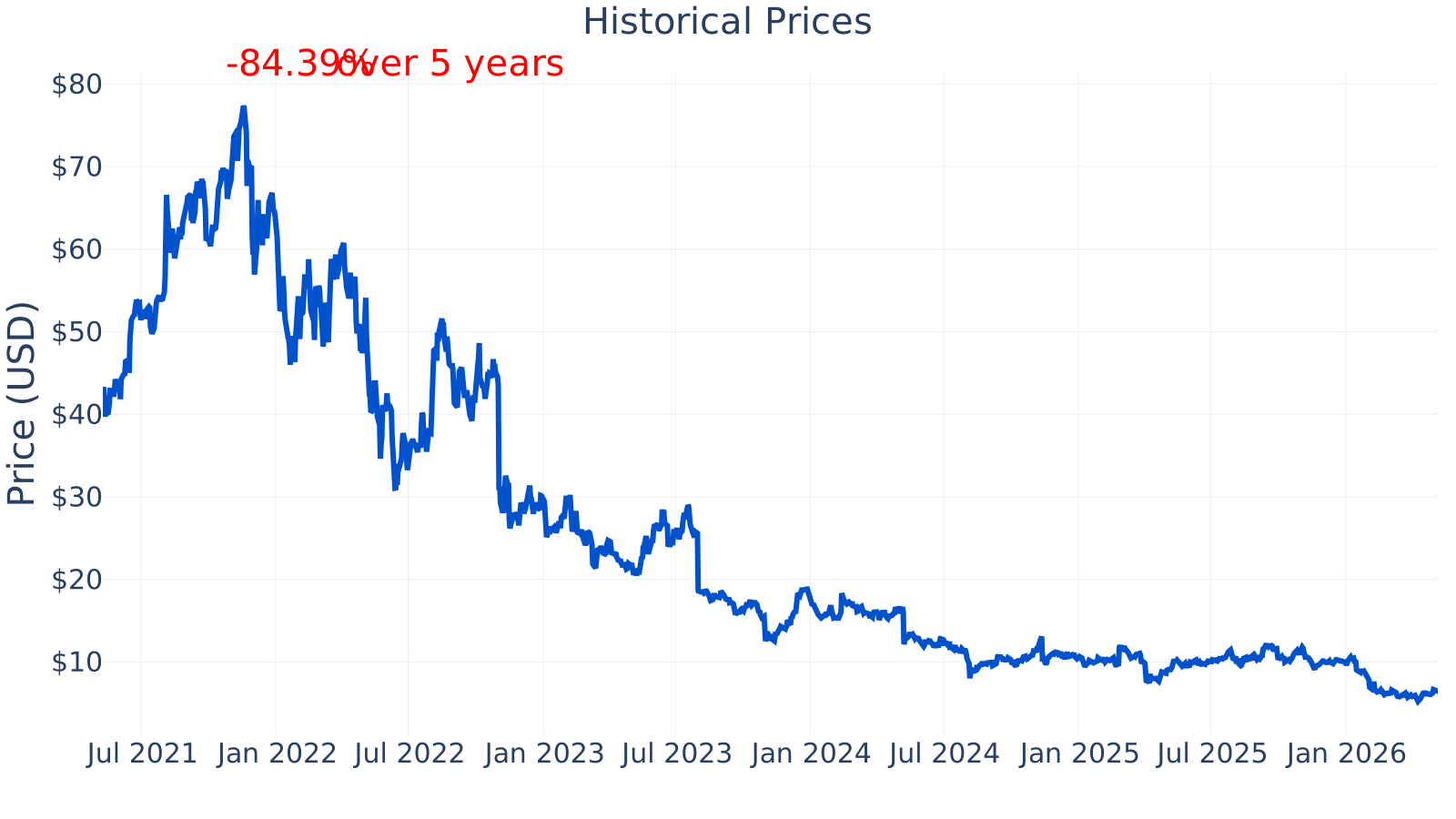
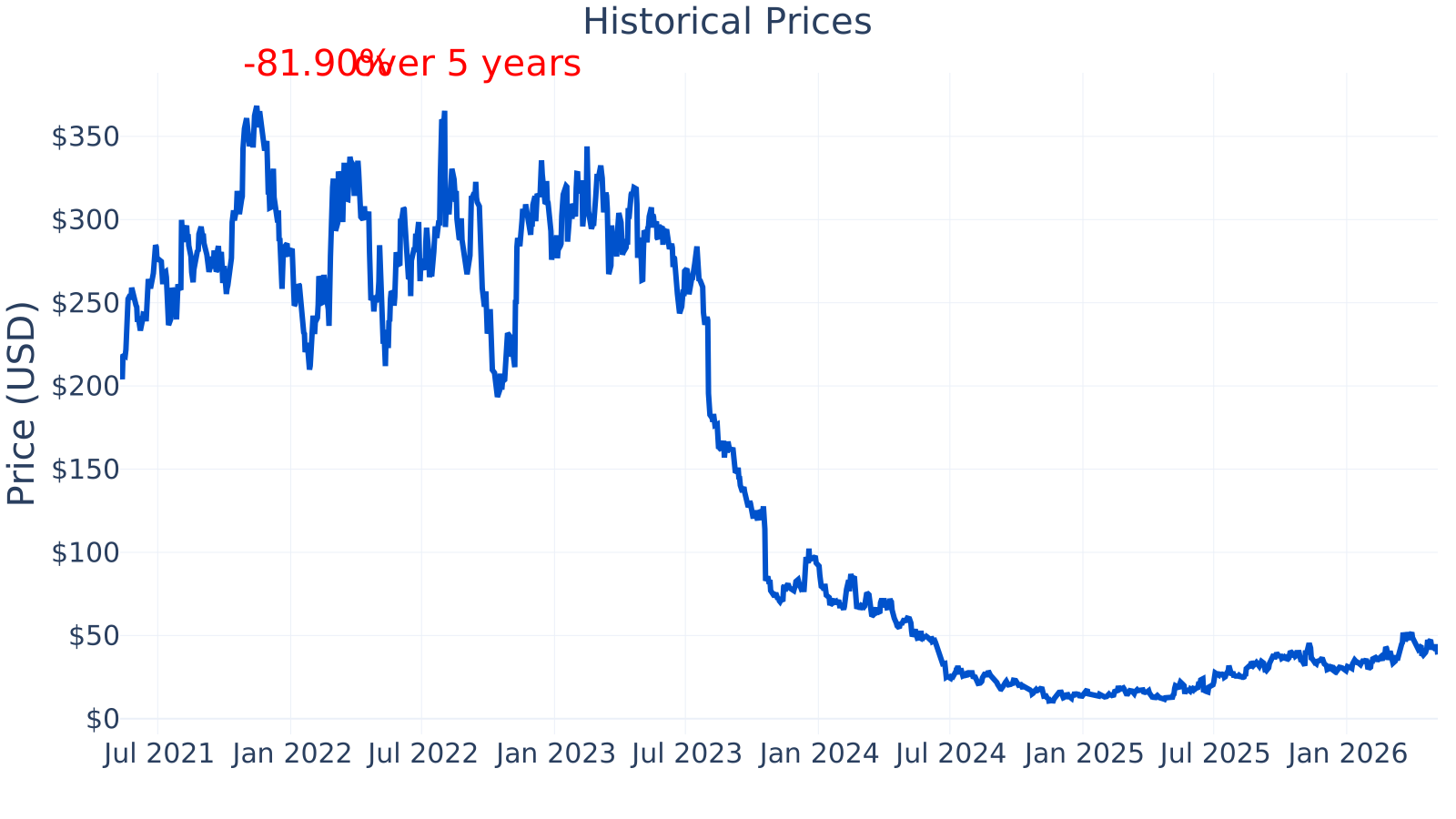
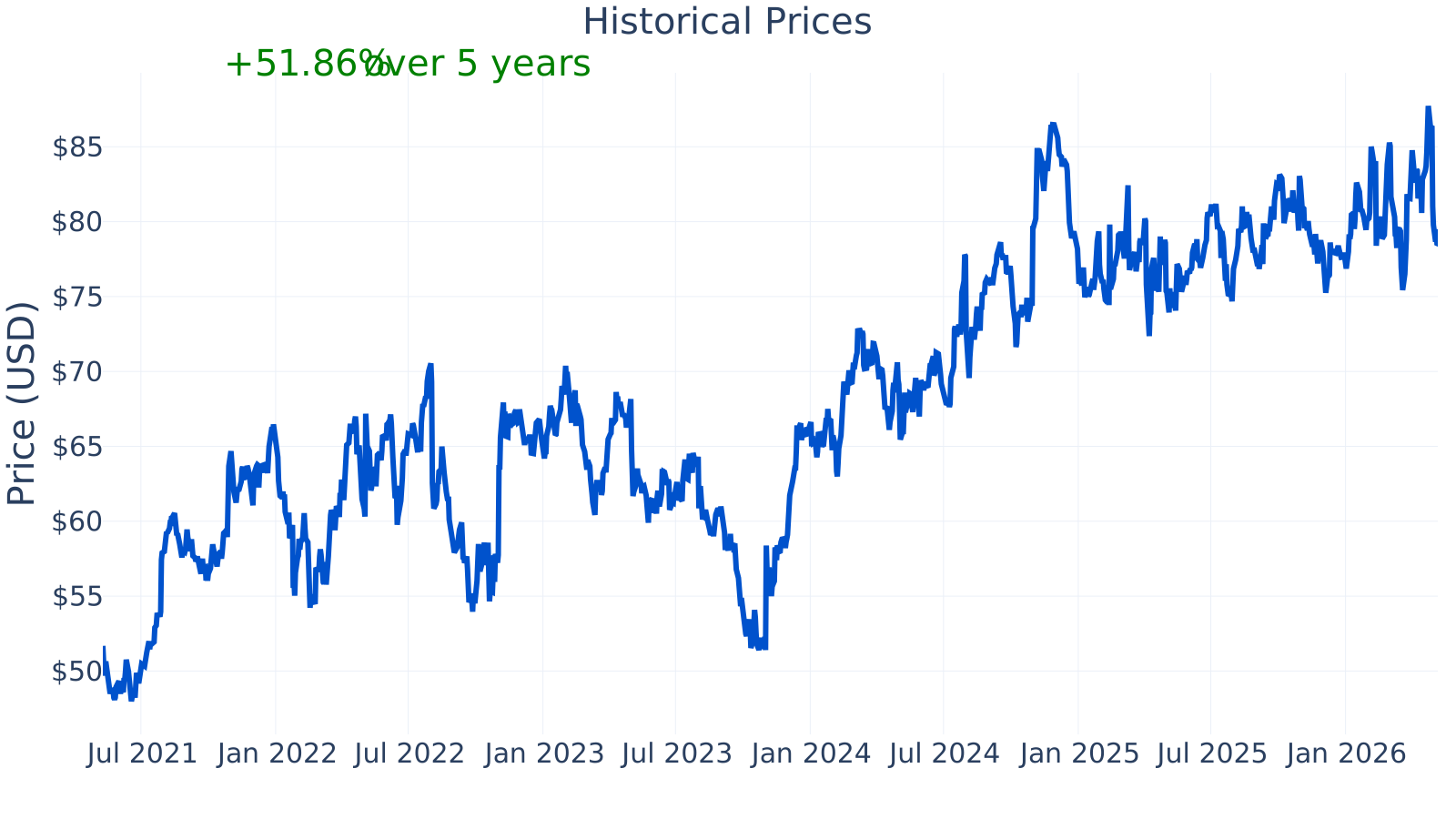
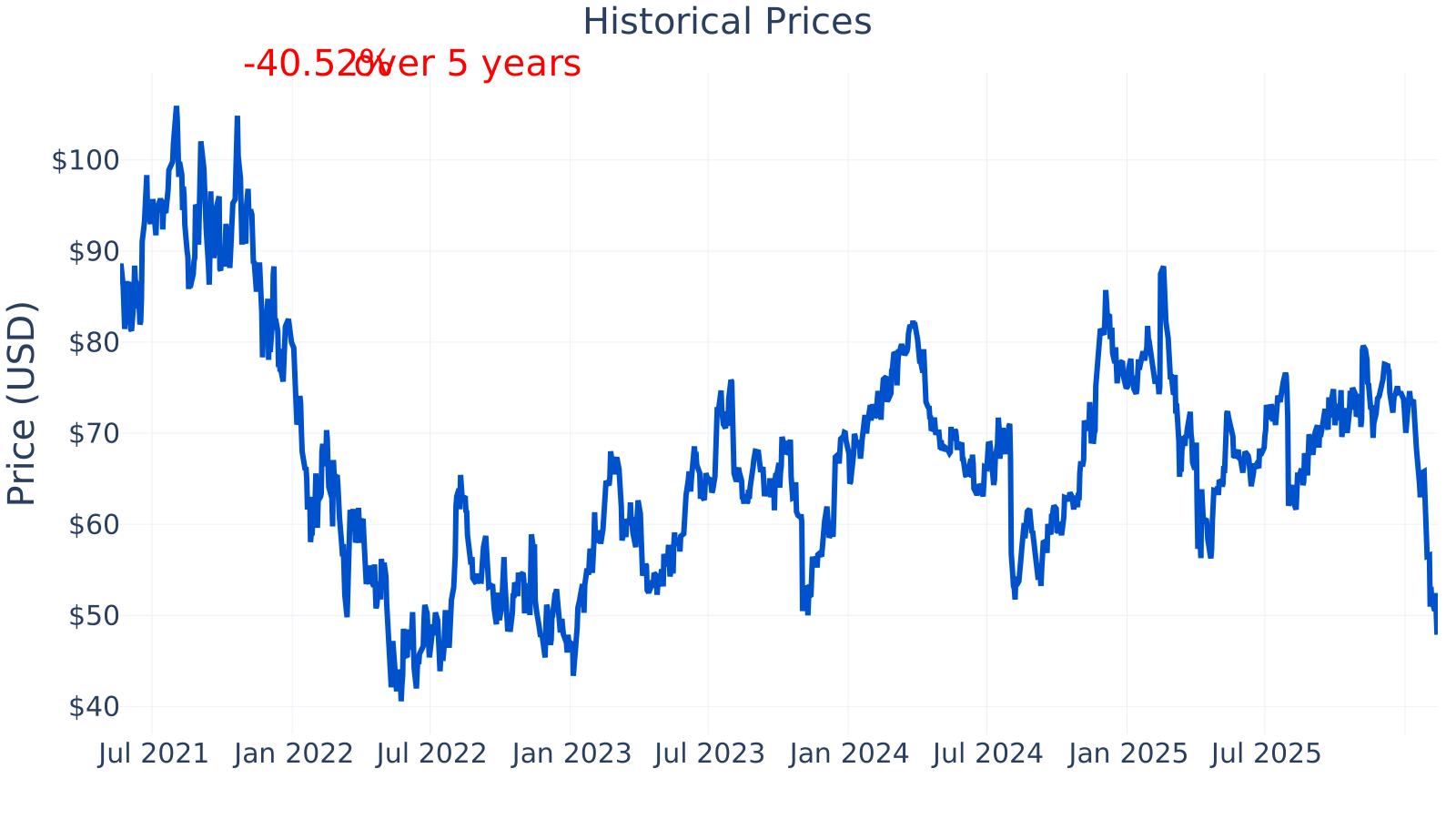
Procore’s market capitalization is about $8.14B, and the stock’s beta is about 0.90, which indicates it has historically moved somewhat less than the broader market on average (though this can change over time). The company’s profit margin is -7.62%, compared with an industry median around +7.66%, meaning profitability is still a key gap versus many peers. On growth, revenue growth year-over-year is ~15.6%, roughly in line with the industry median (~15.8%). Balance-sheet leverage appears relatively low, with debt-to-equity ~9.37% versus an industry median around 24.7%. Free cash flow (TTM) is about $263.0M, which is notable given the company’s net losses.
Growth (medium)
Procore operates in construction software, a segment tied to a very large global construction market that has historically been slower to digitize than many other industries. This creates a long runway for modern cloud tools that standardize workflows, connect participants (owners, contractors, subcontractors), and improve cost control. Procore’s strategy—building a broad platform used across multiple construction roles—fits this “system of record” approach, where adoption can deepen over time as customers expand usage to more teams and projects.
The year-over-year growth trend shows a meaningful slowdown from very high growth rates earlier (above 30–40% during parts of 2021–2022) toward the mid-teens more recently (around 15–16% by late 2024–2025). This pattern can be consistent with a business scaling to a larger revenue base, but it also raises the importance of execution: sustaining mid-teens growth in a large customer base typically depends on expansion within existing customers, new customer wins, and continued product relevance.
Free cash flow improved materially over time—from near breakeven/negative periods (including negative values in 2022–2023) to positive levels, reaching about $132.0M by March 2025 and about $263.0M on a trailing-twelve-month basis in the latest table. For a software company, sustained positive free cash flow can increase flexibility (for example, investing in product, supporting customers, or absorbing demand swings), even if accounting earnings remain negative.
Potential catalysts described in company materials often relate to continued platform expansion (new modules and integrations), increasing adoption of cloud-based collaboration across construction stakeholders, and larger customers standardizing on fewer software systems. Another practical catalyst is operating leverage: if revenue continues to grow while expense growth moderates, profitability can improve even without a return to very high revenue growth rates.
Risks (high)
A central risk is that Procore is still not consistently profitable on a net income basis. While losses have narrowed versus earlier years, the company continues to spend heavily on product development and sales efforts. If revenue growth slows further or customer acquisition/expansion becomes more expensive, the path to durable profitability may take longer.
Financial leverage looks relatively conservative versus many software peers. Debt-to-equity has generally stayed low (roughly mid-single digits to high-single digits for much of the period shown, ending around 9.37%), while the industry median is higher. Lower leverage can reduce financial risk, but it does not eliminate operational risks tied to execution, competition, and end-market conditions.
Profitability remains a key watch area. The profit margin improved dramatically from very negative levels earlier (around -50%+ in 2021) to closer to breakeven more recently, but it is still negative (about -7.62% in the latest table). Meanwhile, the industry median is positive. This gap suggests Procore may still be in a “scale and efficiency” transition where the pace of expense growth and customer economics matter as much as top-line growth.
Another major risk comes from Procore’s customer base being tied to construction activity. Construction spending can be cyclical and influenced by interest rates, financing availability, and overall economic confidence. Even if software is mission-critical, new project starts and staffing levels can affect seat growth, add-on purchases, and renewal dynamics.
Competition is also meaningful. Procore competes with a mix of:
- Large horizontal software platforms that extend into construction workflows (broad suites with financials, procurement, or project tools).
- Construction-focused software providers offering project management, estimating, scheduling, or document control.
- Point solutions and in-house tools (spreadsheets, email, shared drives, and niche apps), which can slow consolidation onto a single platform.
Procore’s competitive advantages described in company materials generally center on its construction-specific focus, broad product footprint, and ecosystem approach (integrations and partners). Whether it is “the” category leader can depend on the specific subsegment and geography, but Procore is widely positioned as a major dedicated platform provider in construction management software. The risk is that platform markets can shift if a rival offers better economics, deeper financial workflow integration, or if large enterprise buyers standardize on alternative suites.
Valuation
Traditional P/E ratio analysis is difficult here because Procore has been reporting net losses, which can make the P/E not meaningful or not shown (as reflected by the company P/E appearing as 0 in the chart). In these situations, valuation discussions often lean more on revenue scale, revenue growth durability, free cash flow generation, and the credibility of a long-term profitability model rather than current earnings.
For context, the industry median P/E displayed trends down over time (from higher levels earlier to roughly the mid-30s by early 2026 on the chart). Even without a usable P/E for Procore, the key question for “expensive vs. not” becomes whether the current price level reflects (1) sustained mid-teens growth, (2) improving margins toward profitability, and (3) continued positive free cash flow. If growth decelerates faster than expected or margin improvement stalls, valuation multiples based on forward expectations can compress quickly—especially in software businesses where sentiment can swing with growth rates.
Conclusion
Procore is a construction-focused cloud software provider that has grown revenue substantially over the last several years and improved free cash flow meaningfully. The business appears to be operating in a long-duration digitization theme within construction, with a platform strategy that can support expansion across customers and workflows.
At the same time, the company’s financial profile still shows an important tradeoff: improving economics and cash generation alongside a profit margin that remains negative. Long-term outcomes depend heavily on whether Procore can sustain growth while continuing to narrow losses and prove a durable profitability model in a competitive environment that includes both construction specialists and broad software suites. The balance sheet leverage looks comparatively modest, which can reduce one category of risk, but execution and end-market cyclicality remain central factors.
Sources:
- U.S. Securities and Exchange Commission (SEC) EDGAR — Procore Technologies, Inc. filings (Form 10-K, Form 10-Q)
- Procore Technologies, Inc. Investor Relations — SEC filings and shareholder materials (company-hosted)
- Wikipedia — “Procore Technologies” (basic company background)
This article is for informational purposes only and does not constitute financial advice. Some content is AI-generated. See Disclaimer