Stock Analysis · Power Integrations Inc (POWI)
Overview
Power Integrations Inc. is a semiconductor company focused on power-conversion chips. In simple terms, its products help convert and manage electricity inside everyday electronics so devices can run safely, efficiently, and with less wasted energy and heat. These components are commonly used in things like chargers and adapters, appliances, industrial power supplies, and some automotive and energy-related applications.
The company’s revenue mainly comes from selling its power-conversion integrated circuits (ICs) and related products to electronics manufacturers. In its filings, Power Integrations generally describes revenue as coming from semiconductor product sales (rather than separate “service” lines). Over time, results tend to move with customer demand cycles in electronics, including inventory build-ups and corrections.
From the company’s recent financial profile, operating expenses show a sustained commitment to product development, with research and development remaining a large cost item relative to selling and administrative expenses. This is typical for a chip designer where ongoing innovation and new product families can determine long-term competitiveness.
Over the past few years, revenue has been below the 2021–2022 level, and profits have compressed meaningfully. Research and development spending stayed relatively high while revenue and operating income declined, which suggests the company continued investing through a softer demand environment rather than sharply cutting back.
Key Figures
| Metric | Value | Industry ⓘ |
|---|---|---|
| Date | Feb 08, 2026 | |
| Context | ||
| Sector | Technology | |
| Industry | Semiconductors | |
| Market Cap ⓘ | $2.66B | |
| Beta ⓘ | 1.35 | |
| Fundamental | ||
| P/E Ratio ⓘ | 121.38 | 45.89 |
| Profit Margin ⓘ | 4.98% | 9.42% |
| Revenue Growth ⓘ | -1.90% | 12.95% |
| Debt to Equity ⓘ | N/A | 25.62% |
| PEG ⓘ | 1.70 | |
| Free Cash Flow ⓘ | $87.12M | |
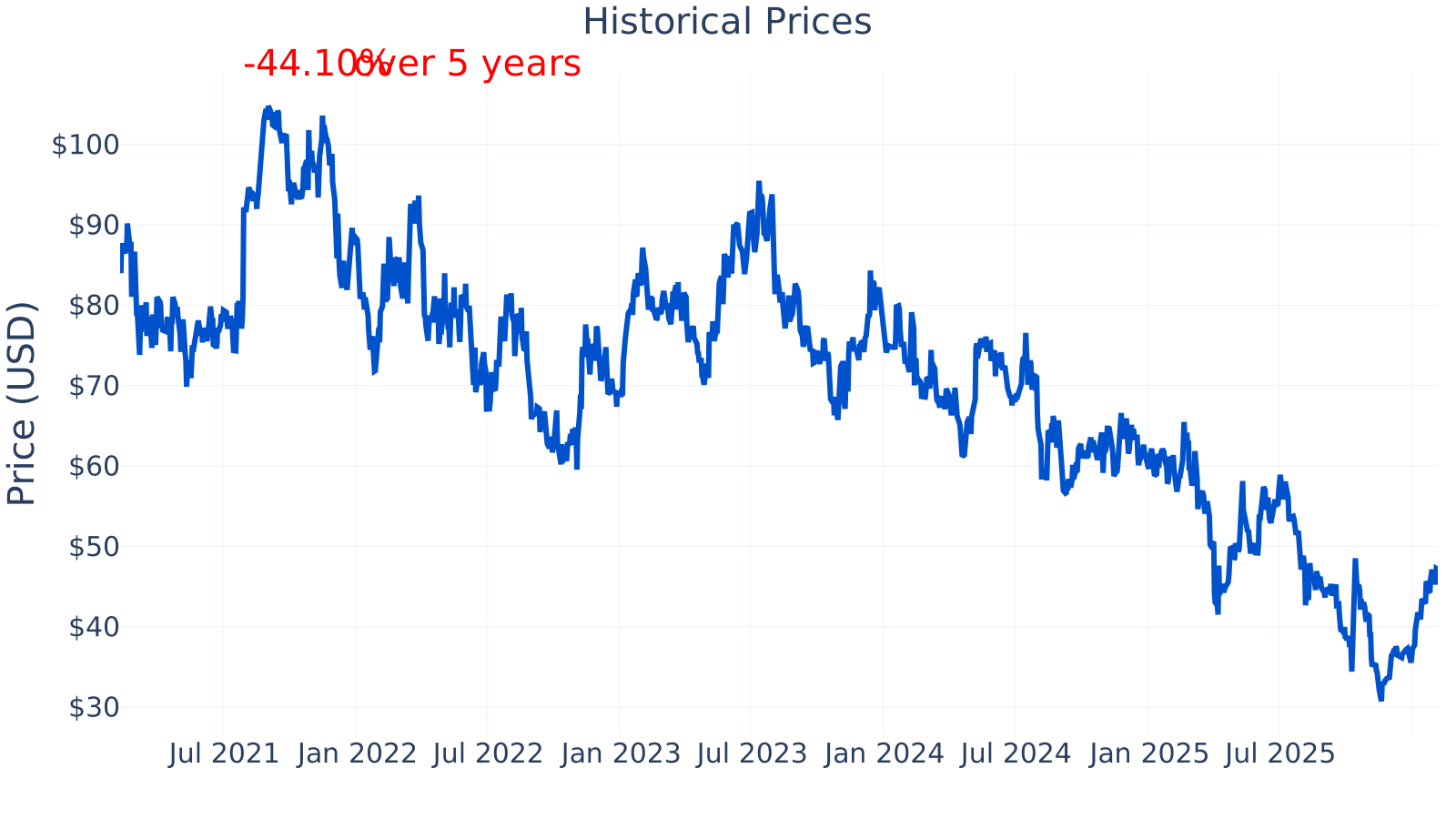
Power Integrations has a market capitalization of about $2.66B and a beta of 1.35, which indicates the stock has historically moved more than the overall market. The latest P/E ratio is ~121 versus an industry median near 46, while the latest profit margin is ~5.0% versus an industry median near 9.4%. Year-over-year revenue growth is slightly negative at about -1.9% compared with an industry median around +13.0%. Free cash flow over the last twelve months is about $87.1M. The company’s PEG ratio is shown at 1.7, a metric that attempts to relate valuation to growth expectations.
Growth (Medium)
Power Integrations operates in the broader semiconductor industry, with a focus area tied to energy efficiency: converting power efficiently matters across consumer electronics, industrial equipment, and many “electrify everything” trends. In general, regulations, customer preferences for efficient devices, and the long-term growth of electronics all support ongoing demand for better power-management solutions.
That said, the company’s recent revenue pattern reflects a downcycle and then a partial recovery rather than steady expansion. The year-over-year revenue growth chart shows very high growth in 2021, followed by a long stretch of negative comparisons through 2022–2024, then improvement during 2024–2025, ending most recently near flat to slightly negative.
A practical way to judge resilience is cash generation. Free cash flow remained positive across the period shown, but it has been meaningfully lower than the peak levels earlier in the cycle. That combination—still generating cash, but with reduced levels—fits a business navigating weaker demand while continuing to fund product development.
Potential long-term catalysts (in a general, non-predictive sense) often include: broader recovery in electronics demand after inventory corrections, new product ramps that win designs at large customers, and continued emphasis on energy-efficient power supplies. The company’s continued research and development spending could support future product competitiveness, but the timing and magnitude of payoffs can vary.
Risks (High)
This article is for informational purposes only and does not constitute financial advice. Some content is AI-generated. See Disclaimer