Stock Analysis · Polaris Industries Inc (PII)
Overview
Polaris Industries Inc. designs, manufactures, and sells powersports vehicles and related products. Its lineup includes off-road vehicles (such as side-by-sides and ATVs), snowmobiles, motorcycles, and marine products, supported by parts, garments, and accessories. Polaris primarily sells through a network of independent dealers, with additional sales through other channels depending on the product line. Because many Polaris products are discretionary purchases, the business tends to be sensitive to consumer confidence, interest rates, and dealer inventory levels.
In its annual reporting, Polaris groups revenue by business segments. The major revenue streams typically include:
- Off Road (side-by-sides and ATVs, plus related PG&A)
- On Road (motorcycles and related products)
- Marine (boats and related products)
- Aftermarket / PG&A (parts, garments, and accessories, reported within segments and/or as a key component of segment sales)
For exact segment percentages in the most recent fiscal year, the company’s latest Form 10-K segment note is the reference point, since Polaris reports segment sales there and the mix can shift meaningfully year to year.
Across 2021–2025, total revenue moved from about $7.44B (2021) up to $8.93B (2023), then down to about $7.18B (2024) and roughly $7.15B (2025). Over the same period, operating income fell from positive levels (for example, about $665M in 2021) to a loss of roughly -$400M in 2025, highlighting how quickly profitability can change in a cyclical manufacturer when volumes, pricing, and costs move in the wrong direction.
Key Figures
| Metric | Value | Industry ⓘ |
|---|---|---|
| Date | Feb 08, 2026 | |
| Context | ||
| Sector | Consumer Cyclical | |
| Industry | Recreational Vehicles | |
| Market Cap ⓘ | $3.90B | |
| Beta ⓘ | 1.19 | |
| Fundamental | ||
| P/E Ratio ⓘ | N/A | 27.33 |
| Profit Margin ⓘ | -6.43% | 2.07% |
| Revenue Growth ⓘ | 9.00% | 12.75% |
| Debt to Equity ⓘ | 185.84% | 113.36% |
| PEG ⓘ | 3.42 | |
| Free Cash Flow ⓘ | $558.10M | |
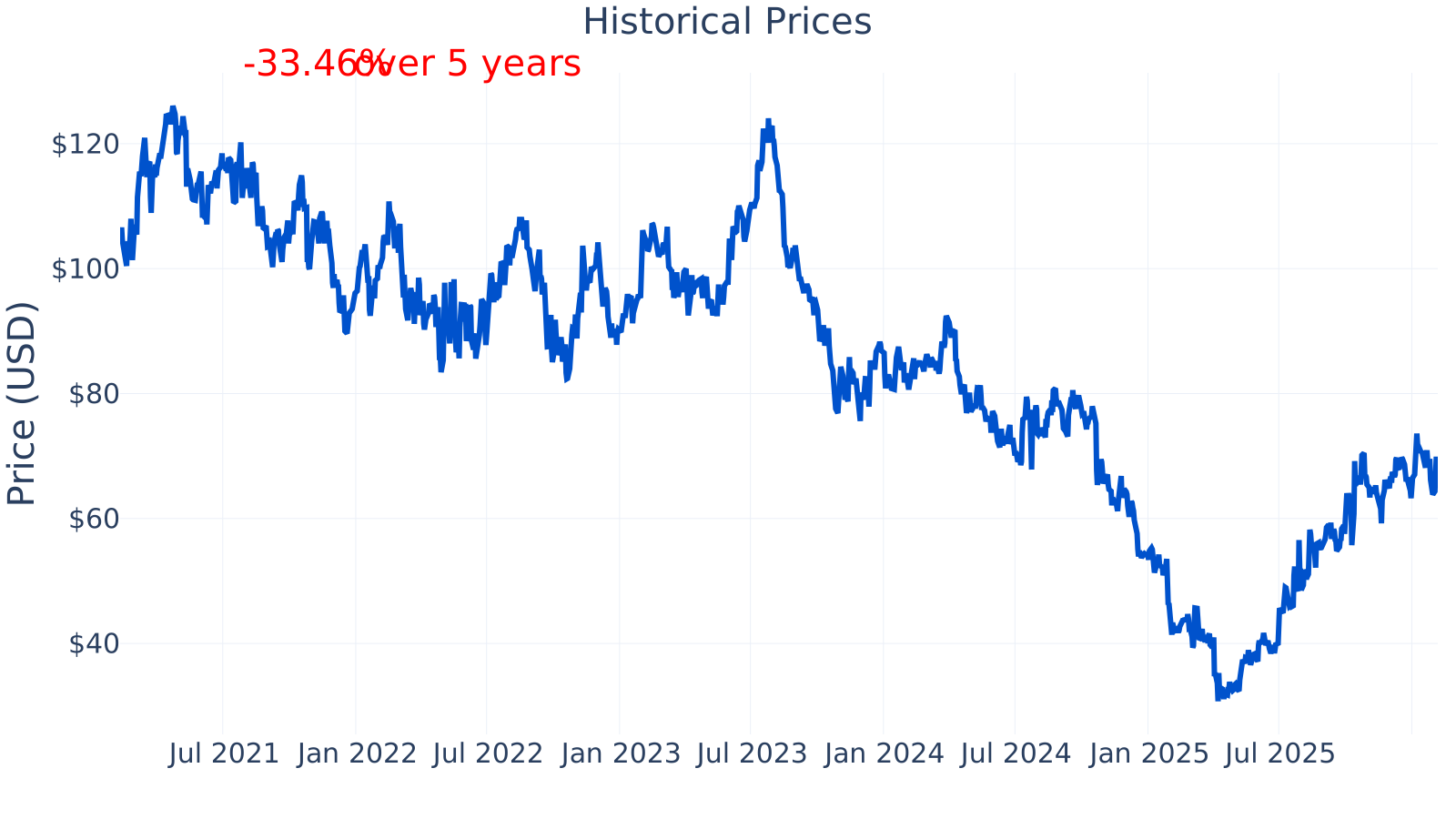
Polaris has a market capitalization of about $3.9B and a beta of 1.19, which is a sign the shares have tended to swing more than the overall market. The latest profit margin is -6.43% versus an industry median of about 2.07%, indicating recent earnings pressure relative to peers. Year-over-year revenue growth is about 9.0% versus an industry median of about 12.75%. Leverage is higher than the peer median: debt-to-equity ~185.84% versus an industry median of about 113.36%. Despite weaker reported profitability, trailing twelve-month free cash flow is about $558.1M, which can happen when working capital (like inventories and receivables) moves favorably or when non-cash charges and timing differences are meaningful.
Growth (Medium)
Polaris operates in the recreational vehicles and powersports market, which is generally driven by long-term outdoor recreation participation, product innovation, and brand strength—but it is also notably cyclical. Demand can surge when consumers feel confident and financing is easy, and it can cool when interest rates rise or when dealers carry elevated inventory. This creates a backdrop where long-term growth potential exists, but year-to-year results may vary widely.
The year-over-year revenue pattern illustrates this cycle. Polaris posted strong growth periods earlier in the timeline (for example, above 20%–30% in several quarters), followed by a pronounced decline through much of 2024 (several quarters around -11% to -23%). More recently, growth turned positive again (about +6.9% and +9.5% in late 2025), which may signal stabilization after a downcycle—though one or two quarters alone do not confirm a sustained trend.
Free cash flow has also been uneven over time: about $933.5M (TTM) in early 2021, down to roughly -$110M in early 2022, then back to positive territory (around $336.7M in early 2023 and $342.9M in early 2024). By early 2025 it was lower (around $168.9M), while the latest TTM figure shown in the table is higher (about $558.1M). For long-term business durability, the key question is whether Polaris can produce positive free cash flow through full cycles while funding product development and managing dealer inventory swings.
Potential catalysts for improved results in a manufacturer like Polaris usually come from a combination of (1) dealer inventory normalization, (2) new product cycles and refreshed platforms, (3) cost and efficiency initiatives, and (4) improved retail financing conditions. In Polaris’s case, the company’s sustained R&D spending (hundreds of millions annually in the figures shown) indicates continued investment in product development, which is important in a category where innovation and model updates matter.
Risks (High)
This article is for informational purposes only and does not constitute financial advice. Some content is AI-generated. See Disclaimer