Stock Analysis · Plexus Corp (PLXS)
Overview
Plexus Corp (PLXS) is a U.S.-based electronics manufacturing services (EMS) company. In simple terms, it helps other companies design, build, test, and support electronic products. Plexus typically focuses on complex products and regulated or high-reliability environments, where customers value manufacturing quality, traceability, and long product life cycles.
Revenue mainly comes from providing manufacturing and related services for customer products. Plexus generally describes its business by end markets (rather than “products” sold under its own brand), which commonly include areas such as healthcare/life sciences, industrial, communications, and aerospace/defense. Exact revenue percentages by end market can vary by year and are disclosed in company filings.
Main sources of revenue (high-level)
- Product manufacturing and assembly services (the core of revenue)
- Engineering/design and new product introduction services (typically smaller than manufacturing revenue)
- Aftermarket services such as repair, sustaining support, and supply chain-related services (varies by program)
At a high level, this is a “build for others” model: Plexus earns revenue when customers place orders for their electronic products, and Plexus manufactures and delivers them under agreed program terms.
Looking at the cost and profit breakdown over time, Plexus generates a relatively modest gross profit compared with total revenue (typical for contract manufacturing), so operating discipline and program execution matter. Net income shows noticeable year-to-year variation, which can happen in this industry due to changes in customer demand, product mix, and factory utilization.
Key Figures
| Metric | Value | Industry ⓘ |
|---|---|---|
| Date | Feb 08, 2026 | |
| Context | ||
| Sector | Technology | |
| Industry | Electronic Components | |
| Market Cap ⓘ | $5.52B | |
| Beta ⓘ | 0.80 | |
| Fundamental | ||
| P/E Ratio ⓘ | 32.07 | 41.23 |
| Profit Margin ⓘ | 4.28% | 6.11% |
| Revenue Growth ⓘ | 9.60% | 12.20% |
| Debt to Equity ⓘ | 14.89% | 39.00% |
| PEG ⓘ | 1.61 | |
| Free Cash Flow ⓘ | $111.48M | |
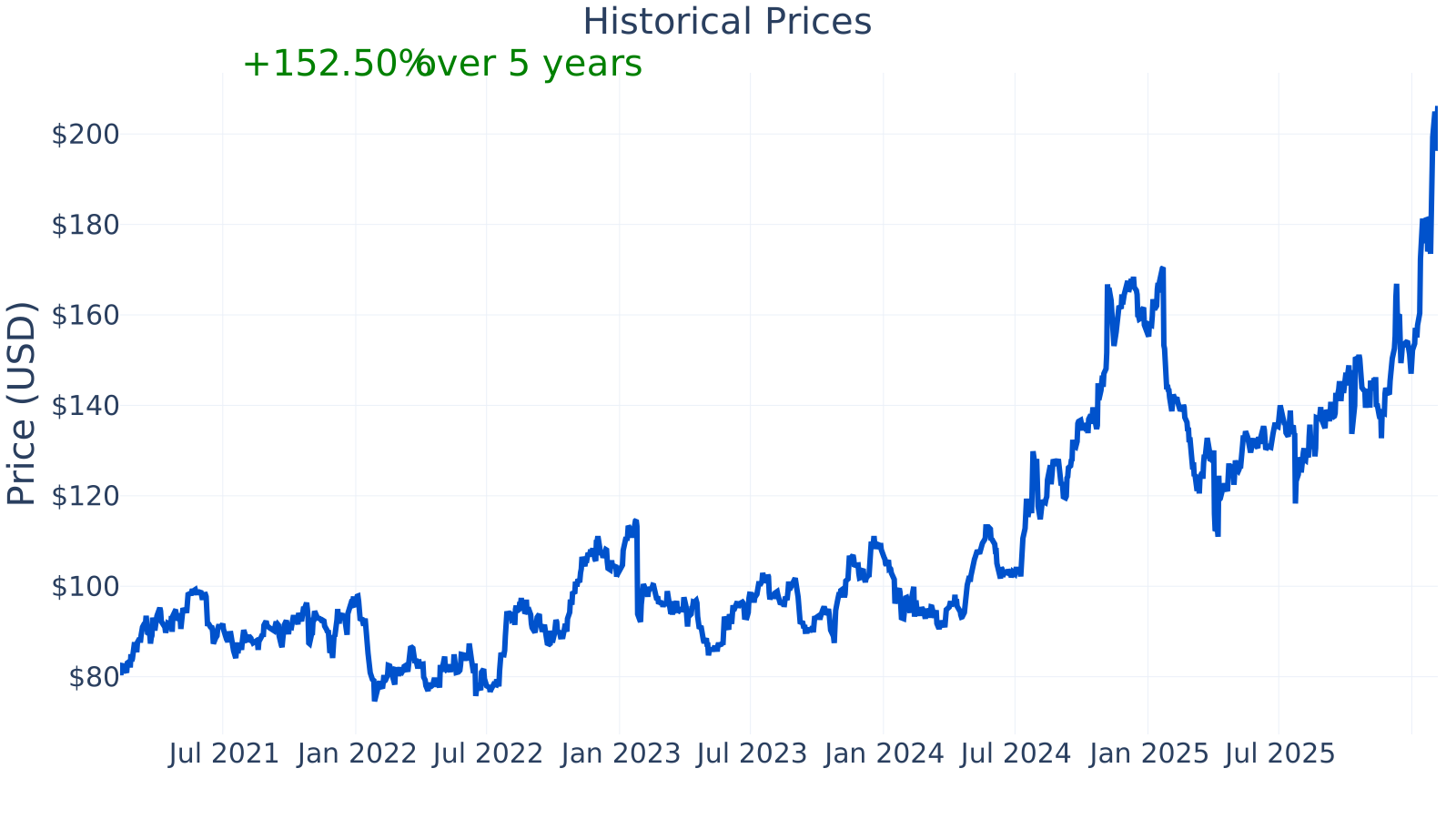
Plexus has a market capitalization of about $5.5B and a beta of ~0.80, which indicates the stock has historically moved less than the overall market on average (though this can change over time).
On profitability, the latest profit margin is ~4.28%, below the industry median shown here (~6.11%). For an EMS company, margins are often structurally lower than many other technology businesses because a large share of revenue flows through as component and manufacturing costs.
Growth-wise, the latest year-over-year revenue growth is ~9.6%, also below the industry median in the table (~12.2%). This suggests Plexus is growing, though not necessarily leading the peer group on topline expansion at this point.
Balance-sheet leverage appears conservative: debt-to-equity is ~14.9%, well below the industry median shown (~39.0%). Lower leverage can reduce financial stress in cyclical demand environments.
Growth (Medium)
Plexus operates in electronics manufacturing services, which benefits over the long run from ongoing demand for electronic systems across healthcare devices, industrial automation, networking infrastructure, and defense-related electronics. That said, the industry can be cyclical: customer order patterns may rise and fall with inventory cycles and broader economic conditions.
A key strategic lever for Plexus is focusing on complex, higher-reliability programs rather than competing purely on the lowest cost for very high-volume consumer products. In practice, this approach can support longer customer relationships and higher switching costs (because quality systems, certifications, and process validation matter more), though it does not remove cyclical demand risk.
The revenue growth trend shows meaningful swings over the period, including negative year-over-year phases and subsequent recovery. The most recent point (about 9.6% YoY) indicates renewed expansion, but the pattern also highlights that growth has not been steady quarter-to-quarter.
Free cash flow (cash left after operating needs and capital spending) has also been volatile. It moved from negative territory in parts of 2022–2023 to a strong positive level more recently, with the latest trailing twelve months around $111.5M. For long-term business strength, sustained positive free cash flow can matter because it supports reinvestment capacity and financial flexibility even during weaker demand periods.
Risks (Medium)
This article is for informational purposes only and does not constitute financial advice. Some content is AI-generated. See Disclaimer