Stock Analysis · Planet Fitness Inc (PLNT)
Overview
Planet Fitness, Inc. (PLNT) operates and franchises fitness clubs under the “Planet Fitness” brand. The business is built around a value-focused gym membership offering, with most locations owned and operated by franchisees rather than the company itself. This “asset-light” approach generally means Planet Fitness can expand its footprint with less direct spending on building and operating every club, while still earning recurring fees tied to membership activity and club economics.
The company’s revenue is primarily generated from a mix of franchise-related fees and company-owned club operations. Based on its segment reporting in SEC filings, the main revenue sources are typically organized as:
- Franchise segment: ongoing royalties and fees paid by franchisees, plus other franchise-related revenue streams tied to the system
- Equipment segment: revenue connected to selling fitness equipment to franchisees (often tied to new club openings and refresh cycles)
- Corporate-owned stores segment: membership dues and in-club sales from clubs the company operates directly
Because Planet Fitness’ system is largely franchised, the company’s economics depend heavily on (1) franchisee health and new club development, (2) member retention and membership growth across the network, and (3) equipment purchasing cycles.
From 2021 to 2025, total revenue increased materially (about $587M in 2021 to about $1.32B in 2025). Over the same span, operating income and net income also increased, while interest expense remained a meaningful recurring cost, reflecting the importance of leverage and interest rates in the overall profit picture.
Key Figures
| Metric | Value | Industry ⓘ |
|---|---|---|
| Date | Mar 02, 2026 | |
| Context | ||
| Sector | Consumer Cyclical | |
| Industry | Leisure | |
| Market Cap ⓘ | $6.84B | |
| Beta ⓘ | 1.24 | |
| Fundamental | ||
| P/E Ratio ⓘ | 31.36 | 27.73 |
| Profit Margin ⓘ | 17.71% | 7.37% |
| Revenue Growth ⓘ | 10.70% | 7.30% |
| Debt to Equity ⓘ | -91.65% | 42.62% |
| PEG ⓘ | 1.34 | |
| Free Cash Flow ⓘ | $254.75M | |
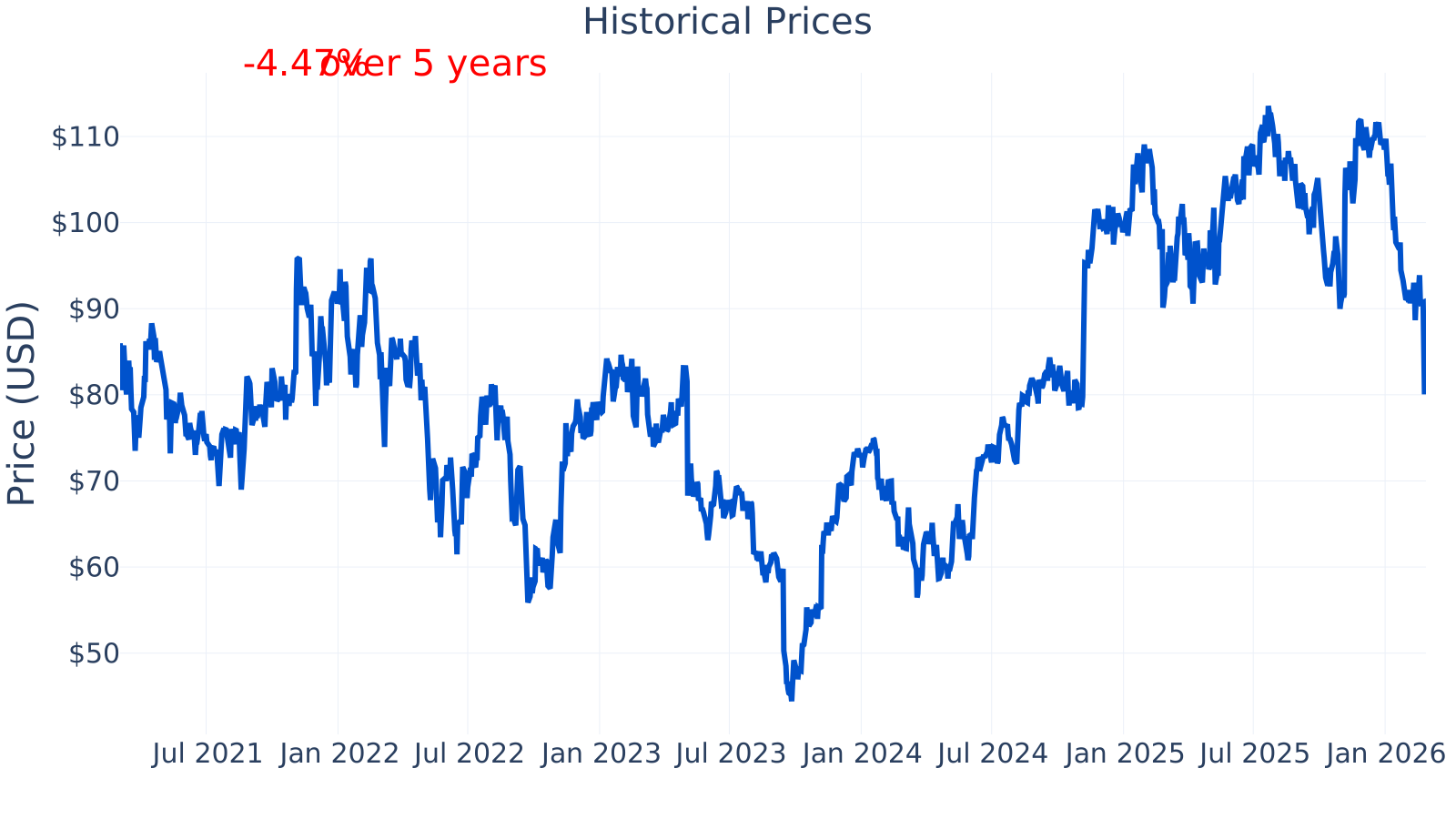
Planet Fitness’ market capitalization is about $6.8B, and the stock’s beta of 1.24 suggests it has tended to move more than the broader market. The company shows a profit margin of ~17.7%, higher than the industry median shown here (~7.4%), alongside year-over-year revenue growth of ~10.7% versus an industry median of ~7.3%. The current P/E ratio is ~31.4, somewhat above the industry median (~27.7). Free cash flow over the trailing twelve months is about $255M. The reported debt-to-equity is negative, which commonly occurs when a company has negative book equity (for example, due to accumulated share repurchases and/or accounting effects), making this specific ratio less intuitive to compare across companies.
Growth (Medium)
Planet Fitness participates in the broad fitness and health-and-wellness market, where long-term demand is influenced by consumer interest in healthy lifestyles, weight management, and convenient access to exercise. Within that landscape, Planet Fitness is positioned as a low-cost, high-volume gym concept. This positioning can support growth when consumers are budget-conscious, though it can also face pressure if competitors match pricing or if consumers shift toward alternatives like boutique studios or at-home fitness.
A key part of the company’s growth logic is its franchise model: adding locations is mainly driven by franchisee investment rather than corporate capital spending. When franchisees are willing and able to open new clubs, the company can expand its system and increase recurring royalty streams. Another potential growth driver is same-store performance (member counts, retention, and pricing), which can lift royalties and strengthen franchisee economics, supporting more development.
The year-over-year revenue growth rate was extremely elevated during the post-2020 recovery period (reflecting reopening effects), and later normalized. More recently, growth appears to have stabilized in a mid-single to low-double-digit range (around 10.5% year-over-year at the latest point shown), which is closer to what many mature consumer-facing chains exhibit outside of rebound periods.
Free cash flow turned positive after 2021 and has trended upward over time, reaching about $235M–$255M in the most recent periods shown. In plain terms, that suggests the business has been generating cash after covering day-to-day operating costs and capital spending, which can help fund debt service, reinvestment, and shareholder returns (depending on management decisions and financing needs).
Risks (Medium to High)
Planet Fitness’ results depend on consumer behavior: memberships can be sensitive to household budgets, motivation/usage trends, and competition. Gyms also face ongoing churn (members canceling), and retention matters because recurring monthly dues are central to the model. If churn rises materially, franchisee unit economics can weaken, potentially slowing new club openings and affecting franchise fee streams.
Competition is another structural risk. Planet Fitness competes with other low-cost gyms, full-service health clubs, boutique fitness studios, and at-home/digital fitness options. Competitors can pressure pricing, increase marketing intensity, or secure premium real estate. In addition, some consumers prefer specialized offerings (classes, personal training, premium amenities) that differ from Planet Fitness’ value-oriented positioning.
Leverage and financing conditions are also important. Interest expense is a recurring cost visible in the company’s income flow over multiple years, meaning higher rates and refinancing terms can affect net income and cash flow available for other uses.
The debt-to-equity ratio shown is negative across the period and ends near -92% (with the industry median around 43%). A negative value often indicates negative shareholders’ equity, which can happen for reasons such as significant share repurchases over time. This makes the ratio less straightforward as a “leverage comparison” metric versus peers; investors typically need to rely on additional debt measures disclosed in filings (such as net leverage and maturity schedules) to understand balance sheet risk.
Planet Fitness does have competitive strengths that can help offset these risks. Its brand is widely recognized in the value gym category, and the franchised model can scale the club base without requiring the company to operate every location. Recurring royalties can be a stabilizing feature when the system is healthy. Still, leadership in “value gyms” is not the same as being insulated from competition; price matching and local market saturation can limit advantages.
Profit margins improved from low-single-digit levels in 2021 to the mid-teens more recently (ending near 16.5%), consistently above the industry median shown in the chart for many periods. While this is a positive operating signal, margins can be affected by promotional activity, corporate cost control, and broader shifts in consumer demand and franchisee economics.
Valuation
Valuation is often discussed using the price-to-earnings (P/E) ratio, which compares a company’s stock price to its earnings. A higher P/E generally implies the market is assigning a higher value to each dollar of earnings, often because it expects steadier growth, higher profitability, or lower perceived risk (though it can also reflect optimism that does not materialize).
Planet Fitness’ latest P/E is about 31.4, above the industry median shown in the table (~27.7). Historically, the company’s P/E in this period ranged from very high levels earlier in the timeline to more moderate levels later, and it has often remained above the industry median. Interpreting this in context, the business has shown improving margins and positive free cash flow, but the multiple also implies the market is placing meaningful weight on continued execution (membership trends, franchise development, and stable unit economics).
Conclusion
Planet Fitness is a consumer-facing fitness brand built around a value membership proposition and a predominantly franchised expansion model. The company has shown substantial revenue growth from 2021 through 2025, improving profitability, and increasing free cash flow. These traits can be associated with resilient operating execution and a scalable business structure when franchisees continue opening and operating clubs successfully.
At the same time, the business faces identifiable uncertainties: competitive pressure across multiple fitness formats, sensitivity to consumer churn and discretionary spending, and the ongoing importance of debt and interest costs. Valuation metrics also indicate the stock has often traded at a premium to the industry median in the period shown, which places added emphasis on sustaining growth and margin performance over time.
Sources:
- SEC EDGAR — Planet Fitness, Inc. Forms 10-K and 10-Q (segment revenue, risk factors, business description)
- Planet Fitness, Inc. Investor Relations — SEC filings and investor materials (company-hosted)
- Wikipedia — “Planet Fitness” (basic company background and history)
This article is for informational purposes only and does not constitute financial advice. Some content is AI-generated. See Disclaimer


