Stock Analysis · Planet Fitness Inc (PLNT)
Overview
Planet Fitness, Inc. (PLNT) is a fitness company built around a “high-value, low-price” gym concept. The brand is known for offering a basic, affordable monthly membership and a more premium membership tier with added perks. The company’s business model is largely franchise-based: many Planet Fitness locations are owned and operated by franchisees, while Planet Fitness earns revenue by supporting the system through royalties, equipment sales, and other franchise-related fees. The company also operates a smaller number of corporate-owned clubs.
In simple terms, Planet Fitness primarily makes money in three ways:
- Franchise segment: ongoing royalties from franchise-operated clubs and other fees tied to the franchise relationship.
- Equipment segment: selling fitness equipment to franchisees as new clubs open or existing clubs refresh equipment.
- Corporate-owned clubs segment: membership revenue and related income from clubs the company owns and runs directly.
This mix matters for long-term business durability: franchise royalties tend to be more recurring, while equipment revenue is more tied to club openings and upgrade cycles. Over time, Planet Fitness has expanded total revenue materially (from about $587 million in 2021 to about $1.182 billion in 2024), while operating income and net income have also increased, indicating improved scale and profitability as the system grows.
From 2021 to 2024, revenue increased strongly (about $587 million to about $1.182 billion). Over the same period, operating income rose (about $133 million to about $347 million) and net income rose (about $43 million to about $172 million). Interest expense also increased (about $81 million to about $100 million), which highlights that financing costs are a meaningful ongoing item for the company.
Key Figures
| Metric | Value | Industry ⓘ |
|---|---|---|
| Date | Feb 07, 2026 | |
| Context | ||
| Sector | Consumer Cyclical | |
| Industry | Leisure | |
| Market Cap ⓘ | $7.72B | |
| Beta ⓘ | 1.24 | |
| Fundamental | ||
| P/E Ratio ⓘ | 37.55 | 27.06 |
| Profit Margin ⓘ | 17.11% | 7.90% |
| Revenue Growth ⓘ | 13.30% | 6.00% |
| Debt to Equity ⓘ | -1322.25% | 33.08% |
| PEG ⓘ | 2.51 | |
| Free Cash Flow ⓘ | $202.82M | |
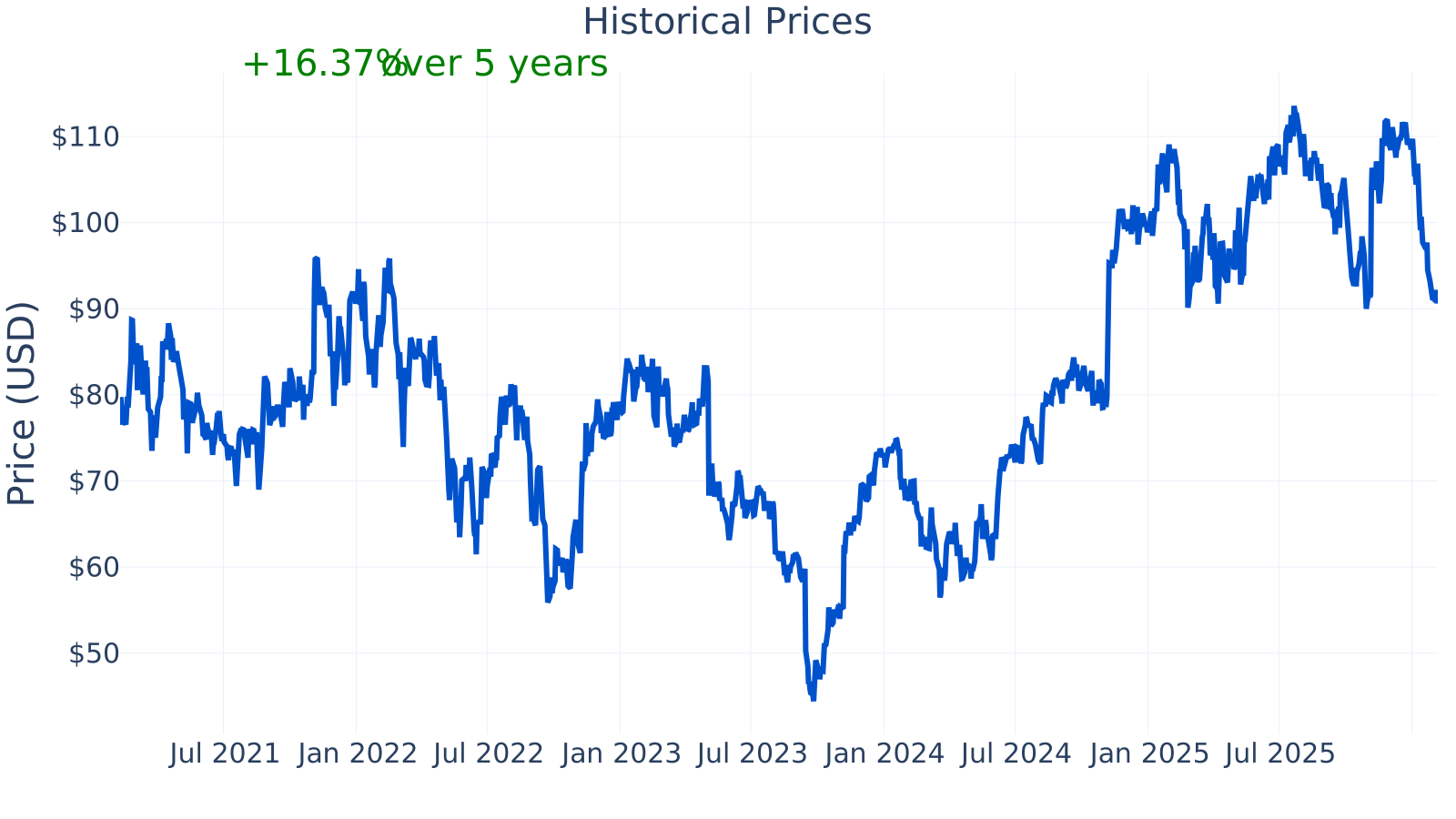
Planet Fitness has a market capitalization of about $7.7 billion and a stock beta of about 1.24, which suggests the share price has historically moved more than the overall market. The company’s P/E ratio is about 37.5 versus an industry median near 27.1, and its profit margin is about 17.1% versus an industry median around 7.9%, indicating higher profitability than many peers. Year-over-year revenue growth is about 13.3% versus an industry median near 6.0%. Free cash flow over the trailing twelve months is about $203 million. Debt-to-equity appears negative, which commonly happens when accounting equity is negative (often influenced by past share repurchases and leverage), making simple debt-to-equity comparisons less intuitive than for companies with positive equity.
Growth (Medium)
Planet Fitness operates in the fitness and leisure space, where long-term demand is supported by broad consumer interest in health, wellness, and affordable exercise options. A “value” positioning can be especially relevant when household budgets are pressured, because lower monthly fees may keep memberships more resilient than higher-priced alternatives.
Its franchise-heavy approach can support expansion with less direct capital spending than a fully company-owned retail footprint. In practice, new club openings and same-store performance both matter: openings can lift franchise royalties and drive equipment sales, while improving retention and member counts can strengthen the recurring side of the business. A potential catalyst over time is continued unit growth (more locations), alongside upgrades and refresh cycles that support equipment revenue.
Revenue growth has normalized from exceptionally high post-pandemic rebound rates to more typical levels. More recently, year-over-year growth has been in the low-to-mid teens (around 13% in the latest period shown), which is higher than the industry median in the provided comparison group.
Free cash flow has improved meaningfully over time, moving from negative in 2021 to positive and growing in subsequent years (reaching roughly $235 million by early 2025, then about $203 million in the latest trailing period shown). Positive free cash flow can help fund reinvestment, debt service, and shareholder returns, though it can vary based on timing of spending and working capital.
Risks (Medium-High)
This article is for informational purposes only and does not constitute financial advice. Some content is AI-generated. See Disclaimer