Stock Analysis · Pinterest Inc (PINS)
Overview
Pinterest, Inc. operates a visual discovery platform where people explore and save ideas (for example, home design, recipes, fashion, and shopping inspiration). Users create and browse “Pins” and “boards,” and the service is designed to help people move from discovering an idea to taking an action, such as visiting a brand’s website or purchasing a product.
From a business perspective, Pinterest sits in the digital advertising ecosystem. Companies and merchants use Pinterest to reach audiences through ad products that appear in the user experience and are meant to connect discovery with shopping and brand building. The company also invests heavily in product development and infrastructure to improve the platform, ad targeting/measurement, and tools for advertisers and creators.
Pinterest’s revenue is primarily advertising-driven. Based on the company’s reporting structure in its filings, the main sources are:
- Advertising revenue (substantially all revenue, across regions and ad formats)
- Other revenue (typically not material compared with advertising)
Over recent years, total revenue has risen from about $2.58B (2021) to $4.22B (2025). Costs directly tied to delivering the service (“cost of revenue”) increased as well, but gross profit also expanded in absolute dollars, indicating that scale has supported higher overall gross profit even as the company continued to invest in operating expenses such as research and development.
Key Figures
| Metric | Value | Industry ⓘ |
|---|---|---|
| Date | Feb 16, 2026 | |
| Context | ||
| Sector | Communication Services | |
| Industry | Internet Content & Information | |
| Market Cap ⓘ | $10.42B | |
| Beta ⓘ | 0.89 | |
| Fundamental | ||
| P/E Ratio ⓘ | 25.28 | 18.89 |
| Profit Margin ⓘ | 9.87% | 9.94% |
| Revenue Growth ⓘ | 14.30% | 6.80% |
| Debt to Equity ⓘ | 4.65% | 10.16% |
| PEG ⓘ | 0.36 | |
| Free Cash Flow ⓘ | $1.25B | |
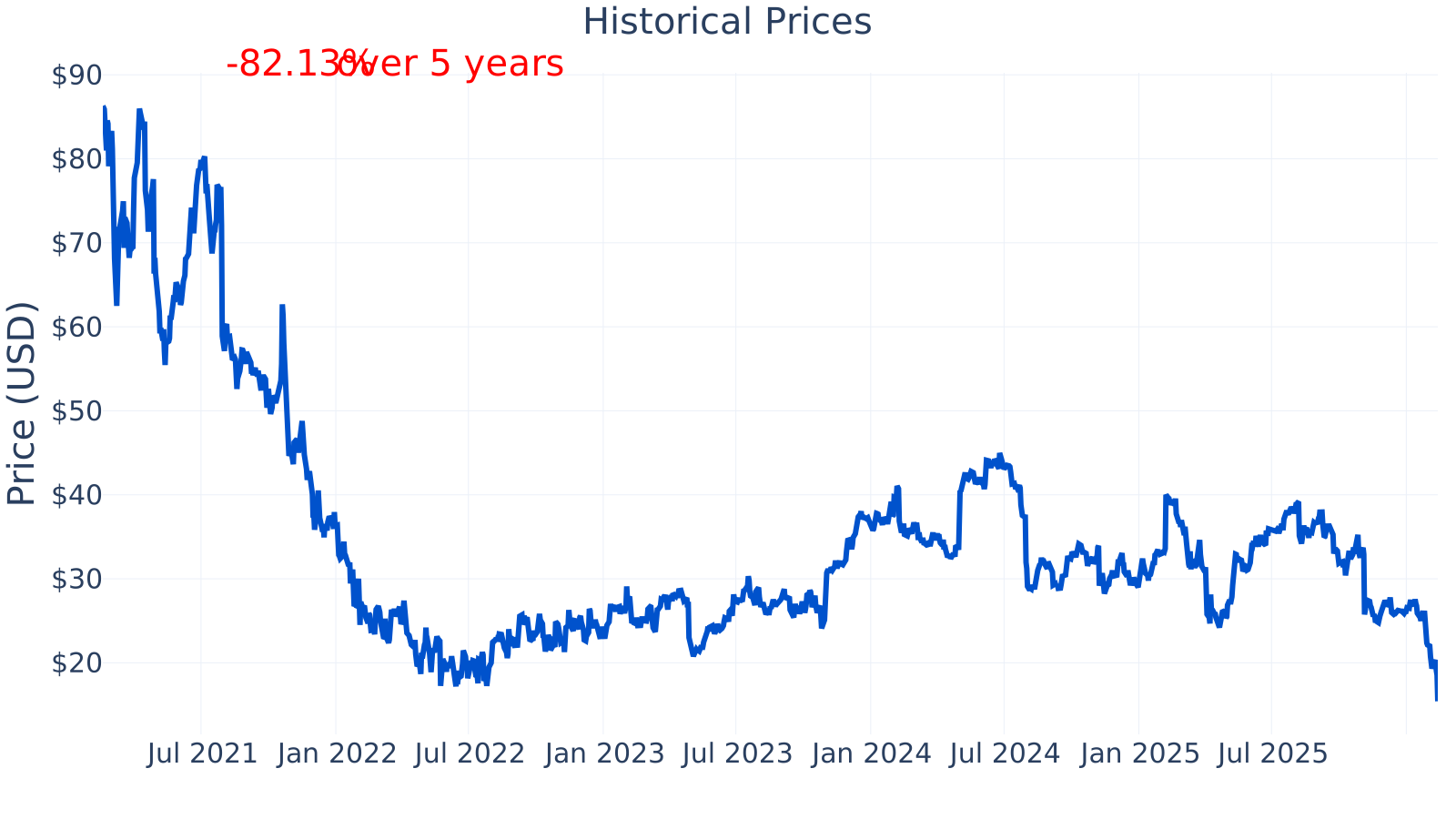
Pinterest’s equity value is about $10.4B (market capitalization). The stock’s beta of ~0.89 suggests it has historically moved somewhat less than the overall market on average (though individual periods can differ).
On profitability, the latest profit margin is ~9.9%, roughly in line with the industry median shown (~9.9%). On growth, latest year-over-year revenue growth is ~14.3%, which is notably higher than the industry median shown (~6.8%). Financial leverage appears relatively modest with debt-to-equity of ~4.6% versus the industry median shown (~10.2%). Trailing twelve-month free cash flow is about $1.25B, which can matter for flexibility (funding operations, reinvestment, and resilience through ad cycles).
Growth (Medium)
Pinterest operates in the online advertising and commerce-related discovery space, which has historically benefited from the long-term shift of marketing budgets toward digital channels. Within that broad landscape, Pinterest’s product is differentiated by its “intent” use case: many users come to the platform to plan, browse ideas, and research products. That positioning can be relevant to advertisers that want measurable actions (traffic, consideration, conversions) rather than only impressions.
Strategically, the company’s long-term growth narrative typically depends on improving monetization (earning more revenue per user through better ad tools and measurement), expanding and deepening advertiser demand, and maintaining user engagement. Continued product investment is visible in the income statement structure: research and development is a major operating cost each year, reflecting ongoing work on the platform and ad system.
The year-over-year revenue growth rate has fluctuated significantly over time—very high growth in 2021, a clear slowdown through 2022–2023, and a re-acceleration in 2024–2025. The latest reading shown is about 14% year over year, which is meaningfully above the industry median displayed on the table.
Free cash flow over the trailing twelve months has generally trended upward over the period shown (from roughly $230M in 2021 to nearly $952M by 2025-03-31, and about $1.25B in the latest table). For a platform business, sustained positive free cash flow can support ongoing investment in product features, infrastructure, and go-to-market capabilities without relying as heavily on external financing.
Risks (Medium)
This article is for informational purposes only and does not constitute financial advice. Some content is AI-generated. See Disclaimer