Stock Analysis · Photronics Inc (PLAB)
Overview
Photronics, Inc. designs and manufactures photomasks, which are high-precision templates used to transfer circuit patterns onto wafers and glass panels during semiconductor and display manufacturing. In simple terms, photomasks are a critical “stencil” step in making chips and certain flat-panel displays. Photronics sells these photomasks to customers that manufacture semiconductors and display-related products, and it operates manufacturing facilities in multiple regions to serve a global customer base.
Revenue is primarily generated by making and selling photomasks across two broad areas described in company filings:
- Integrated Circuit (IC) photomasks (typically the largest contributor): used for chips in markets such as computing, communications, and industrial applications.
- Flat Panel Display (FPD) photomasks: used in certain display manufacturing processes.
Percent splits can vary by period, and the most reliable breakdown is the company’s segment reporting in its SEC filings (annual report and quarterly reports).
Over the last several fiscal years shown, total revenue increased from roughly $664M (FY2021) to a peak near $892M (FY2023), then eased to about $867M (FY2024) and $849M (FY2025). Even with softer revenue after FY2023, net income remained relatively stable and slightly higher in FY2024–FY2025 than earlier years, while interest expense declined materially, suggesting a lighter interest burden.
Key Figures
| Metric | Value | Industry ⓘ |
|---|---|---|
| Date | Feb 08, 2026 | |
| Context | ||
| Sector | Technology | |
| Industry | Semiconductor Equipment & Materials | |
| Market Cap ⓘ | $2.20B | |
| Beta ⓘ | 1.51 | |
| Fundamental | ||
| P/E Ratio ⓘ | 16.33 | 47.44 |
| Profit Margin ⓘ | 16.06% | 9.40% |
| Revenue Growth ⓘ | -3.10% | 9.90% |
| Debt to Equity ⓘ | 0.00% | 20.73% |
| PEG ⓘ | 4.27 | |
| Free Cash Flow ⓘ | $59.57M | |
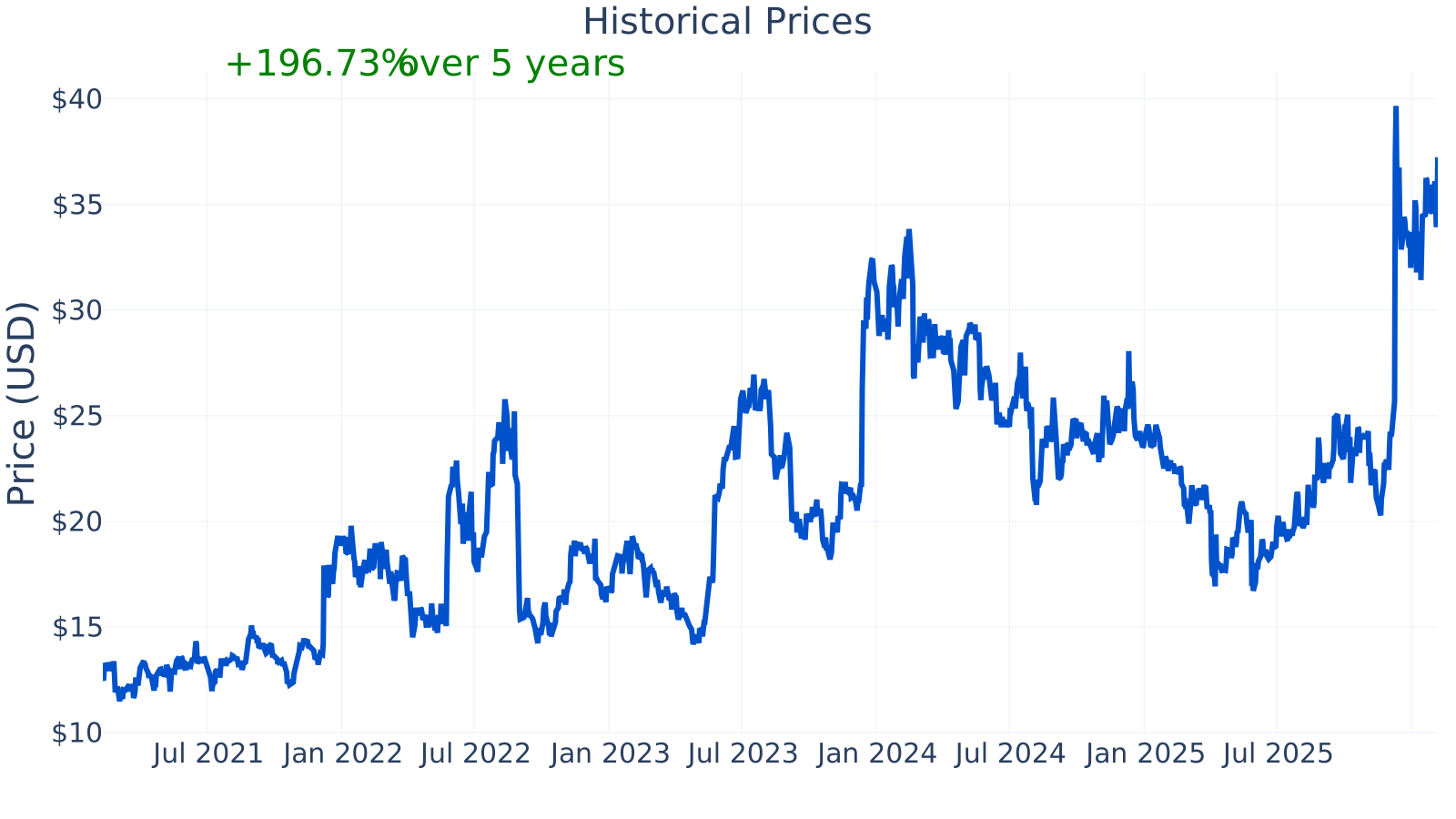
Photronics’ market capitalization is about $2.20B, and the stock’s beta of ~1.5 indicates it has tended to move more than the broader market (higher volatility). The company’s P/E ratio (~16.3) is notably below the industry median (~47.4), while its profit margin (~16.1%) is above the industry median (~9.4%). Recent year-over-year revenue growth is negative (~-3.1%) versus a positive industry median (~9.9%), highlighting a slower near-term growth profile. Debt stands out as very low: debt-to-equity is close to 0%, compared with an industry median around 20.7%. Trailing twelve-month free cash flow is about $59.6M.
Growth (Medium)
Photronics operates in the semiconductor supply chain, an area supported over the long run by ongoing demand for electronics, data center capacity, connectivity, and the continued use of chips across more products. Within that ecosystem, photomasks remain necessary for manufacturing, and demand tends to follow customers’ production levels and technology transitions. This backdrop can be favorable over long periods, but it is also known for cyclical up-and-down patterns tied to semiconductor and display end-markets.
A key question for future growth is whether the company can sustain strong utilization and pricing in its photomask capacity while staying relevant as customers push to more advanced process technologies. In filings, management typically discusses investments in manufacturing capability and technology to meet customer requirements; in this business, keeping tools and processes current is important because customer specifications can tighten over time.
The year-over-year revenue growth pattern shows a strong period in FY2021–FY2022 (often above 10%–25%+ in several quarters), followed by a clear slowdown and then mild contraction through FY2024–FY2025 (roughly -2% to -6% in multiple periods). That suggests recent demand normalized after a stronger stretch, which is consistent with the cyclical nature of semiconductor-related spending.
Free cash flow increased meaningfully from about $72.7M (FY2022) to roughly $175.6M (FY2025) based on the trailing twelve-month values shown. This matters because free cash flow is a practical indicator of how much cash the business generates after operating needs and capital spending, which can help fund reinvestment, strengthen the balance sheet, or provide flexibility during weaker parts of the cycle.
Risks (Medium)
This article is for informational purposes only and does not constitute financial advice. Some content is AI-generated. See Disclaimer


