Stock Analysis · PHINIA Inc (PHIN)
Overview
PHINIA Inc. (PHIN) is an auto-parts company focused on technologies that help internal combustion engine (ICE) vehicles run efficiently and meet emissions standards. In simple terms, it sells parts and systems that manage how fuel is delivered and how an engine ignites the fuel-air mix. These components are used by vehicle manufacturers (original equipment) and also sold later as replacement parts (aftermarket) when vehicles are serviced.
Because PHINIA’s products are tied to the global vehicle fleet, the business is influenced by (1) how many new vehicles are produced, (2) how long vehicles stay on the road, and (3) emissions and efficiency regulations that can require more advanced fuel/engine-control solutions. The company positions itself around “clean and efficient” combustion—an area that can remain relevant as the global fleet transitions over time and as hybrid vehicles continue to use combustion engines.
Main revenue sources are typically described in company reporting by product lines and end-markets (for example, fuel systems and aftermarket service parts; and exposure to light vehicles vs. commercial vehicles). Exact percentages depend on the latest annual filing and segment disclosures.
Across the years shown, revenue stays in a fairly narrow band (roughly $3.2B–$3.5B). Costs to produce products represent the majority of revenue, which is common in manufacturing. Operating income and net income move up and down over time, highlighting that profitability can be sensitive to pricing, volumes, and input costs.
Key Figures
| Metric | Value | Industry ⓘ |
|---|---|---|
| Date | Apr 28, 2026 | |
| Context | ||
| Sector | Consumer Cyclical | |
| Industry | Auto Parts | |
| Market Cap ⓘ | $2.74B | |
| Beta ⓘ | 1.27 | |
| Fundamental | ||
| P/E Ratio ⓘ | 22.27 | 24.61 |
| Profit Margin ⓘ | 3.73% | 3.56% |
| Revenue Growth ⓘ | 6.70% | 5.40% |
| Debt to Equity ⓘ | 64.27% | 76.35% |
| PEG ⓘ | N/A | |
| Free Cash Flow ⓘ | $257.00M | |
PHINIA’s market capitalization is about $2.74B. The stock’s beta of ~1.27 suggests it has tended to move more than the broader market. The latest P/E ratio is ~22.3, slightly below the industry median (~24.6). Profit margin is about 3.73%, slightly above the industry median (~3.57%). The most recent year-over-year revenue growth shown is about 6.7% (vs. an industry median near 5.4%). Debt-to-equity is about 64%, below the industry median (~76%). Trailing twelve-month free cash flow is about $257M.
Growth (Medium)
PHINIA operates in a mature part of the auto industry. That usually means growth is less about explosive market expansion and more about winning programs with vehicle makers, gaining share in specific product categories, and maintaining a durable aftermarket business as vehicles age. The company’s long-term demand drivers are connected to the size of the global vehicle fleet, ongoing maintenance needs, and tightening emissions rules that can require more sophisticated fuel and engine-management systems.
One practical growth support for many auto-parts businesses is the replacement cycle: even if new vehicle production slows in a given year, an aging vehicle fleet can sustain demand for replacement components. Another potential catalyst can come from product mix—if regulations or customer requirements shift toward higher-value systems, revenue per vehicle can rise even in a slow unit-volume environment.
The year-over-year revenue growth pattern shown is mixed: several negative quarters are followed by a return to positive growth, ending around +6.7%. This kind of swing is common for suppliers exposed to production schedules, pricing resets, and customer inventory adjustments.
Free cash flow trends upward in the period shown—from about $159M to about $220M, with the latest trailing figure around $257M. For long-term business quality, this matters because free cash flow is what can fund reinvestment, debt reduction, and shareholder returns (depending on management decisions and board policy).
Risks (Medium-High)
The biggest structural risk is industry direction: over very long periods, a higher mix of battery-electric vehicles can reduce demand for certain ICE-focused components. PHINIA’s exposure may be helped by the long life of the global vehicle fleet, continued use of combustion engines in hybrids, and ongoing demand for commercial and off-highway applications—but the transition risk remains a key point to monitor.
Like many auto suppliers, PHINIA also faces cycle risk. Vehicle production can fall during economic slowdowns, and suppliers can feel the impact quickly. In addition, customer concentration is typical in auto manufacturing; losing a major platform award, facing a large customer renegotiation, or seeing program volumes drop can affect results.
Operational risks include input-cost inflation, manufacturing execution, quality issues (which can lead to warranty costs), and supply-chain disruptions. Currency movements can also matter for globally distributed manufacturing and sales.
Debt-to-equity rises over time in the chart (from roughly 37% in mid-2023 to roughly 64% most recently), although it remains below the industry median (~76%). This suggests financial leverage has increased, even if it is not unusually high compared with peers. Higher leverage can reduce flexibility during downturns, especially if borrowing costs rise.
Profit margins are relatively thin and have fluctuated. The company is around 3.73% most recently, with earlier quarters shown closer to the 2%–3% range. Thin margins leave less room for error if volumes soften or costs increase, even though the latest point compares slightly better than the industry median (~3.4%).
On competitive positioning, PHINIA competes with other global auto suppliers and aftermarket brands in fuel systems, ignition, and related engine technologies. Competitive advantages in this space usually come from long-standing customer relationships, engineering know-how, product reliability, manufacturing scale, and global distribution. Even so, pricing pressure can be persistent because automakers tend to push suppliers for cost reductions over time, and credible alternatives often exist for many components.
Valuation
The P/E ratio shown moves across the high teens to mid-20s over time, and the latest value is about 22.3, slightly below the industry median in the table (~24.6). Interpreting this level depends heavily on expectations for future earnings stability, the durability of ICE-related demand, and how much weight the market places on transition risk (electrification) versus the company’s ability to sustain cash generation through cycles.
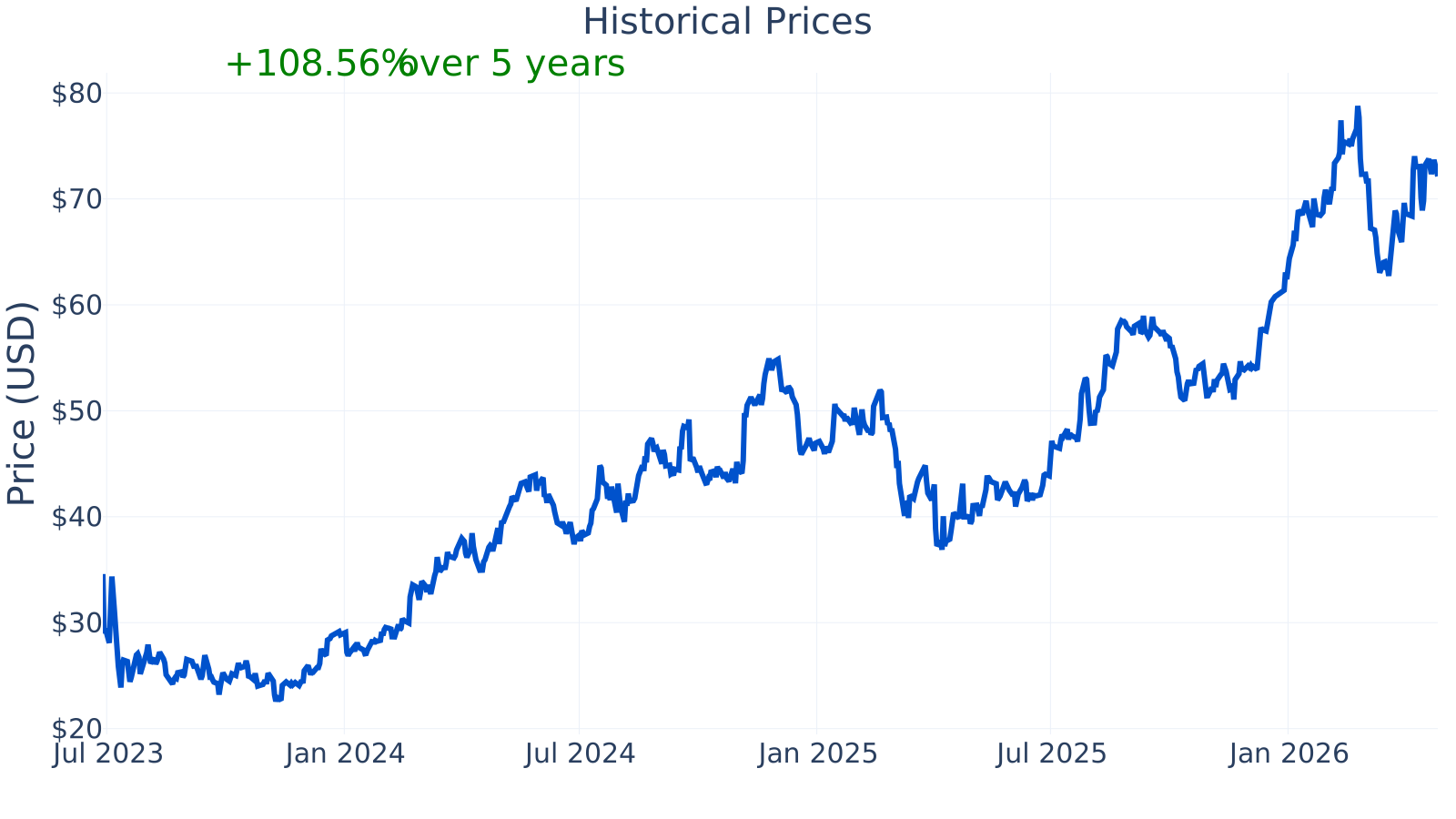
The stock price history indicates substantial volatility over the period shown, with a general upward move from mid-2023 to early 2026. Valuation metrics should be read together with margins (which are thin but recently improved), leverage (moderate and rising), and cash generation (positive and improving in the period shown). In auto parts, valuation often shifts quickly with the cycle and with changing assumptions about volumes and pricing.
Conclusion
PHINIA is a vehicle-systems supplier centered on fuel and engine technologies, with results that reflect both the stability of a large global vehicle fleet and the cyclicality of auto production. The financial picture shown is mixed but understandable for the industry: revenue has been relatively steady over several years, profitability has fluctuated with a recent improvement in margins, leverage has risen but remains below the peer median, and free cash flow has strengthened.
From a long-term viewpoint, the key factual items to track are whether the company can maintain or expand margins in a competitive supplier landscape, keep converting earnings into cash through the cycle, and manage the gradual industry transition away from pure ICE platforms. Valuation sits near peer levels based on P/E, so the main differentiators become execution, resilience in downturns, and how durable demand proves to be for the company’s product categories over time.
Sources:
- SEC EDGAR — PHINIA Inc. filings (Form 10-K, Form 10-Q, Form 8-K)
- PHINIA Inc. Investor Relations — Annual Report materials and press releases
- PHINIA Inc. Investor Relations — Earnings call materials / transcripts (company-hosted, if available)
- Wikipedia — “PHINIA” (basic company background)
This article is for informational purposes only and does not constitute financial advice. Some content is AI-generated. See Disclaimer


