Stock Analysis · PHINIA Inc (PHIN)
Overview
PHINIA Inc. (PHIN) operates in the auto parts space, supplying components and systems used in vehicles. In simple terms, the business focuses on technologies that help engines run and vehicles operate reliably, serving both vehicle manufacturers (new vehicle production) and the replacement market (parts sold after a vehicle is already on the road). This mix often matters because new-vehicle demand can swing with the economy, while replacement demand can be steadier due to ongoing maintenance needs.
Public filings typically describe PHINIA’s revenue through product families and end markets (for example, original equipment vs. aftermarket), as well as by geography. Exact, current percentage splits by revenue source should be taken from the latest annual report/10-K because they can shift year to year. At a high level, the company’s revenue is generally driven by:
- Sales to original equipment manufacturers (OEMs) supplying parts installed in new vehicles
- Aftermarket/replacement demand supplying parts used for maintenance and repairs
- Geographic mix (sales in multiple regions), which can diversify demand but adds currency and regional-cycle exposure
The income statement trend over recent years shows a business with multi-billion-dollar revenue and meaningful manufacturing costs. Gross profit has been relatively stable in dollar terms versus revenue, while net income has fluctuated more, influenced by operating costs, interest expense, and taxes.
From 2021 to 2025, revenue moved from about $3.23B to $3.48B, while net income varied more widely (about $152M in 2021, $262M in 2022, $102M in 2023, $79M in 2024, and $130M in 2025). Over the same period, interest expense increased notably (from roughly $34M in 2021 to $81M in 2025), which can matter for overall profitability and resilience in higher-rate environments.
Key Figures
| Metric | Value | Industry ⓘ |
|---|---|---|
| Date | Feb 16, 2026 | |
| Context | ||
| Sector | Consumer Cyclical | |
| Industry | Auto Parts | |
| Market Cap ⓘ | $2.91B | |
| Beta ⓘ | 1.28 | |
| Fundamental | ||
| P/E Ratio ⓘ | 23.38 | 24.32 |
| Profit Margin ⓘ | 3.73% | 3.56% |
| Revenue Growth ⓘ | 6.70% | 4.95% |
| Debt to Equity ⓘ | 61.12% | 66.38% |
| PEG ⓘ | N/A | |
| Free Cash Flow ⓘ | $257.00M | |
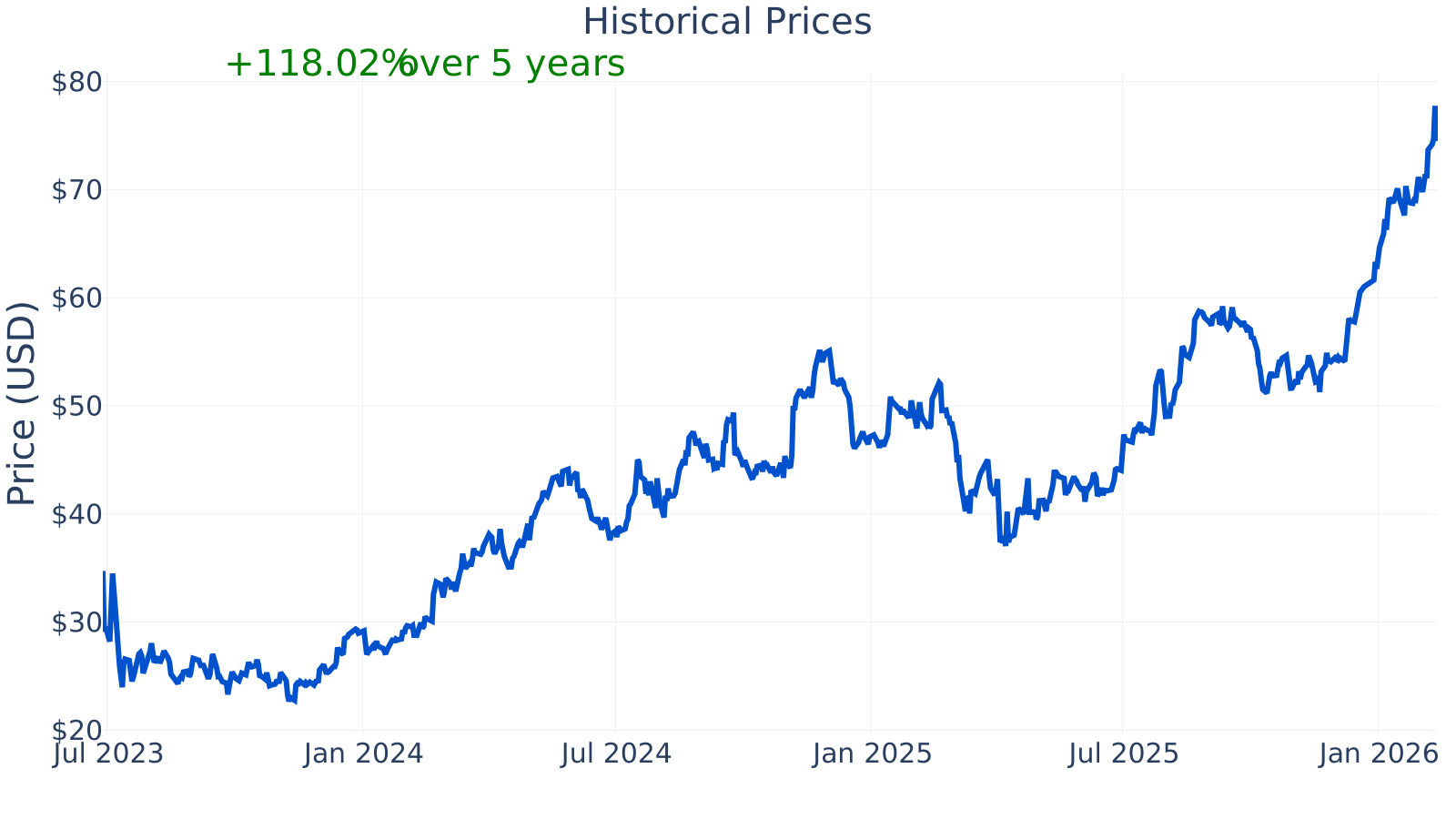
PHINIA’s market capitalization is about $2.9B, and the stock’s beta (~1.28) suggests it has historically moved more than the broader market on average. The latest P/E ratio (~23.4) is close to the auto parts industry median (~24.3). Profit margin is around 3.73%, slightly above the industry median (~3.57%) in the figures shown. Year-over-year revenue growth is about 6.7%, higher than the industry median (~5.0%) in the same snapshot. Debt-to-equity is about 61%, modestly below the industry median (~66%). Trailing twelve-month free cash flow is about $257M.
Growth (Medium)
The auto parts industry is tied to global vehicle production and the size/age of the vehicle fleet already on the road. Long-term demand is often influenced by (1) how many vehicles are being built, (2) how long vehicles stay in use (which supports replacement demand), and (3) technology changes in powertrains and emissions. For suppliers, a key question is whether their product lines stay relevant as the vehicle mix evolves.
PHINIA’s reported year-over-year revenue growth has been uneven across quarters, including a stretch of declines followed by a return to positive growth. That pattern is common in cyclical manufacturing-linked businesses, where customer production schedules, inventory moves, and regional demand can shift results from quarter to quarter.
Recent quarters show a transition from negative year-over-year revenue comparisons to positive growth later in the period displayed (reaching about +6.7% most recently in the chart). If sustained, that kind of improvement can indicate stabilization in demand and/or improved positioning with customers. However, one quarter (or a few quarters) of improvement does not by itself establish a long-term trend.
Cash generation is an important “real-world” measure because it reflects money left after operating needs and capital spending. PHINIA’s trailing free cash flow has increased over the period shown.
Free cash flow rose from about $159M to $220M (and is listed at $257M on the latest metrics table). Consistent cash generation can support reinvestment, debt reduction, or shareholder returns, though how it is used depends on management priorities and the company’s leverage and end-market conditions.
Risks (Medium-High)
This article is for informational purposes only and does not constitute financial advice. Some content is AI-generated. See Disclaimer