Stock Analysis · Penn National Gaming Inc (PENN)
Overview
Penn National Gaming, Inc. (PENN) is a U.S.-based gaming and entertainment company. It operates casinos and racetracks in multiple states and also runs an online sports betting and iCasino business. The in-person properties typically combine gaming floors with amenities like food and beverage, hotels (in some locations), and entertainment, while the digital segment focuses on online betting and casino-style games where permitted by state regulation.
In its financial reporting, PENN generally describes revenue coming from a mix of gaming, food & beverage, hotel, and other on-property activities, alongside interactive (online) revenue. The exact split can change year to year and varies by state and property mix. In broad terms, the largest driver is usually casino gaming at its physical locations, followed by other on-property spending (food, beverage, hotel, and entertainment), with online revenue representing a smaller but strategically important piece in states where it operates.
The company’s business model depends heavily on customer volume at its properties, the spending per visit, and—on the online side—customer acquisition/retention and promotional intensity. In practice, this means results can be influenced by consumer discretionary spending trends, competition, and how efficiently PENN can operate and market its offerings.
Across 2021 to 2024, total revenue rose from about $5.9B to about $6.6B, but profitability weakened meaningfully. Operating income moved from about $1.10B (2021) down to about $129M (2024), while net income shifted from a profit (2021–2022) to losses (2023–2024). A notable recurring cost is interest expense (roughly $470M–$758M in the years shown), which can weigh on net results when operating performance softens.
Key Figures
| Metric | Value | Industry ⓘ |
|---|---|---|
| Date | Feb 08, 2026 | |
| Context | ||
| Sector | Consumer Cyclical | |
| Industry | Resorts & Casinos | |
| Market Cap ⓘ | $1.96B | |
| Beta ⓘ | 1.38 | |
| Fundamental | ||
| P/E Ratio ⓘ | N/A | 22.67 |
| Profit Margin ⓘ | -13.24% | 6.12% |
| Revenue Growth ⓘ | 4.80% | 4.30% |
| Debt to Equity ⓘ | 570.39% | 525.78% |
| PEG ⓘ | 0.78 | |
| Free Cash Flow ⓘ | -$204.50M | |
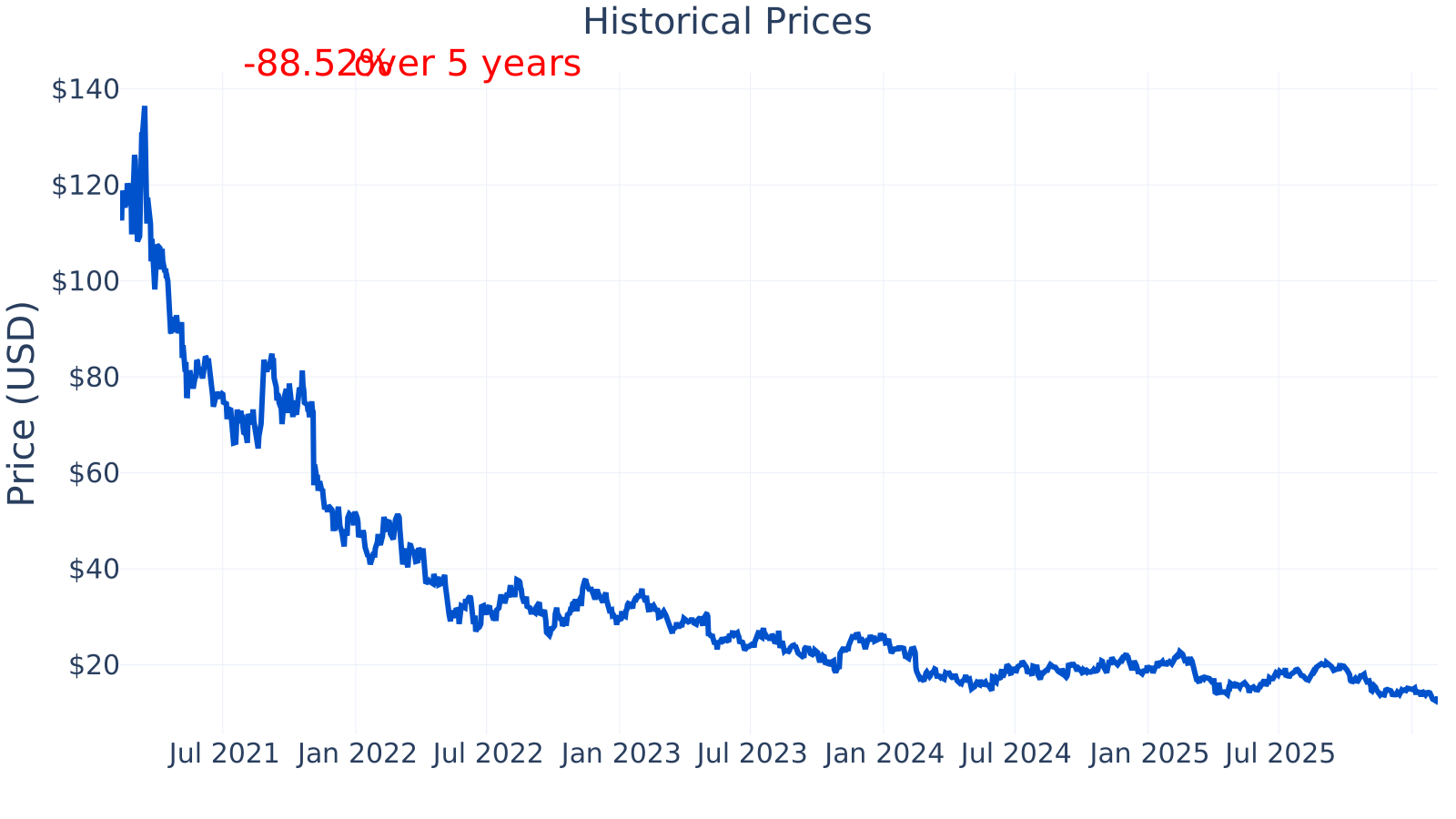
PENN’s market capitalization is about $2.0B, and its beta of ~1.38 suggests the stock has tended to move more than the overall market. The latest profit margin shown is about -13.2% versus an industry median around +6.1%, reflecting that recent earnings have been negative compared with many peers. Year-over-year revenue growth is about 4.8%, roughly in line with the industry median (~4.3%). Debt relative to equity is high at roughly 570% (industry median ~526%), which is common in capital-intensive gaming but still increases financial sensitivity. Free cash flow over the trailing twelve months is negative (about -$204.5M), which can matter for debt servicing flexibility and funding future initiatives.
Growth (medium)
The broader resorts and casinos industry is tied to leisure demand and consumer spending. In many markets, mature regional gaming can behave more like a steady, cash-generating business than a fast-growth one, while online betting and iCasino (where legal) has offered a more expansion-oriented channel. For PENN, future growth depends on maintaining stable property performance while improving digital economics—especially controlling marketing and promotions and increasing profitable customer retention.
Recent revenue growth appears moderate. After large rebounds earlier in the period shown, growth rates settled into low single digits, including approximately 4–6% in the most recent quarters displayed. This pattern can be consistent with a more mature footprint where incremental growth often comes from optimization, selective expansion, and market share shifts rather than rapid industry-wide expansion.
Free cash flow turned negative in the most recent periods shown (from positive levels in 2021–2023 to negative in 2024–2025). For long-term business momentum, a key issue is whether the company can return to consistently positive free cash flow while still investing enough to remain competitive (including technology, property maintenance, and digital product development). Potential catalysts often discussed in company materials for gaming businesses include new or expanding state legal frameworks, property-level improvements, and better unit economics in online operations—though timing and impact can be uncertain and state-specific.
Risks (high)
This article is for informational purposes only and does not constitute financial advice. Some content is AI-generated. See Disclaimer


