Stock Analysis · Peloton Interactive Inc (PTON)
Overview
Peloton Interactive Inc is a connected fitness company. It sells exercise equipment (such as bikes and treadmills) that pairs with a digital platform offering live and on-demand fitness classes. The company’s model blends “one-time” product sales with recurring subscription revenue from members who pay for access to Peloton content and features.
In its SEC filings, Peloton groups revenue into two main categories:
- Subscription revenue: recurring membership fees for access to Peloton’s fitness content and connected features.
- Connected Fitness Products revenue: sales of hardware and related products.
This mix matters for long-term business quality: subscriptions are generally more predictable than hardware sales, while equipment revenue can be more cyclical and sensitive to consumer spending.
Over recent years, total revenue has trended down from earlier peaks, while operating expenses have come down meaningfully. In the most recent period shown (FY ended 2025-06-30), operating income turned slightly positive, but net income stayed negative, largely due to sizable interest expense.
Key Figures
| Metric | Value | Industry ⓘ |
|---|---|---|
| Date | Feb 08, 2026 | |
| Context | ||
| Sector | Consumer Cyclical | |
| Industry | Leisure | |
| Market Cap ⓘ | $1.97B | |
| Beta ⓘ | 2.44 | |
| Fundamental | ||
| P/E Ratio ⓘ | N/A | 27.52 |
| Profit Margin ⓘ | -2.09% | 7.90% |
| Revenue Growth ⓘ | -2.60% | 6.00% |
| Debt to Equity ⓘ | -712.49% | 33.08% |
| PEG ⓘ | N/A | |
| Free Cash Flow ⓘ | $345.40M | |
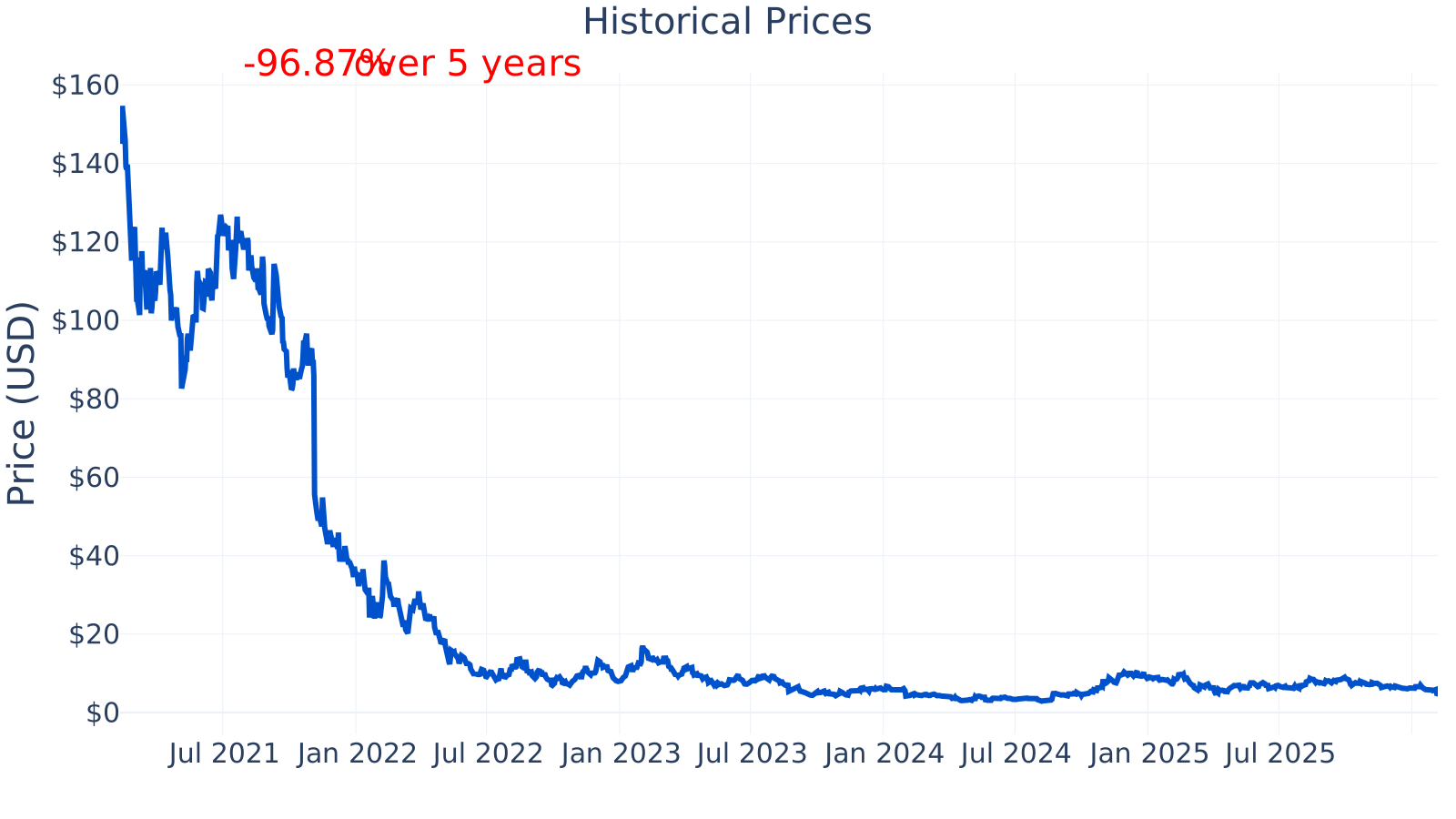
Peloton’s market capitalization is about $2.0B, and its beta of 2.44 suggests the stock has historically moved much more than the broader market. Recent fundamentals show a profit margin of about -2.1% versus an industry median near 7.9%, while year-over-year revenue growth is about -2.6% versus an industry median near 6.0%. The company shows positive trailing twelve-month free cash flow of about $345M, which is a notable improvement versus earlier periods. The debt-to-equity figure is negative (compared with a positive industry median), which often happens when accounting equity is negative; in that situation, this ratio becomes harder to interpret in the usual “leverage level” sense and is best read alongside balance-sheet discussion in filings.
Growth (Medium)
Peloton operates in the broader at-home fitness and digital fitness market, which has long-term tailwinds such as consumer interest in flexible training options and ongoing adoption of subscription-style services. At the same time, demand for home fitness equipment can be uneven: it tends to surge during certain cycles and soften when consumers delay big-ticket purchases.
The company’s strategy aims to build a recurring-revenue membership base supported by its content library, instructor brand, and integrated software experience. In simple terms, the long-term growth question is whether Peloton can stabilize (or re-accelerate) subscriptions while keeping hardware economics sustainable, since equipment sales can be volatile and expensive to support (manufacturing, logistics, service, and returns).
Revenue growth has been mostly negative for several years, with only brief periods near flat. The latest reading (about -2.6% year over year) indicates the business is still shrinking slightly, even as the pace of decline has moderated compared with earlier, steeper drops.
Free cash flow has improved dramatically from large negatives (around -$2.6B in 2022) to positive territory more recently (around $237M in 2025, with the latest TTM shown at $345M). This shift can be an important catalyst for long-term durability if it proves repeatable, because it reduces reliance on external funding. A key point to watch over time is whether positive free cash flow persists while the company invests enough to maintain product quality, content, and member experience.
Risks (High)
This article is for informational purposes only and does not constitute financial advice. Some content is AI-generated. See Disclaimer


