Stock Analysis · Patrick Industries Inc (PATK)
Overview
Patrick Industries, Inc. is a U.S.-based manufacturer and distributor of building products and components that are used mainly in recreational vehicles (RVs) and manufactured housing, with additional exposure to marine and certain industrial end markets. In simple terms, the company sells many of the “parts and materials” that go into making an RV or a factory-built home—items such as interior and exterior components, furniture-related solutions, wiring and electrical systems, and other manufactured parts.
A key point for long-term readers is that Patrick is often positioned as a supplier to large original equipment manufacturers (OEMs) rather than as a consumer-facing brand. That means demand tends to follow how many RVs, manufactured homes, and boats are produced, which can rise and fall with the economy.
In its SEC filings, Patrick reports revenue by operating segment. The main sources of revenue are typically organized as:
- RV-related products (largest segment)
- Housing-related products (manufactured housing and related building products)
- Marine (components and materials for boats and marine applications)
- Industrial / other markets (smaller and more diversified end uses)
The exact percentage split can shift from year to year depending on RV production cycles and acquisitions; the company’s latest annual report (Form 10‑K) provides the current segment breakdown.
Over the last several years, total revenue has moved with the broader RV/housing cycle: it rose strongly into 2022, fell in 2023, and then improved again. Operating income and net income also compressed after 2022, showing how profitability can narrow when volumes soften and costs (including interest expense) become a larger burden relative to sales.
Key Figures
| Metric | Value | Industry ⓘ |
|---|---|---|
| Date | Feb 08, 2026 | |
| Context | ||
| Sector | Consumer Cyclical | |
| Industry | Recreational Vehicles | |
| Market Cap ⓘ | $4.69B | |
| Beta ⓘ | 1.32 | |
| Fundamental | ||
| P/E Ratio ⓘ | 36.12 | 27.33 |
| Profit Margin ⓘ | 3.42% | 2.07% |
| Revenue Growth ⓘ | 9.20% | 12.75% |
| Debt to Equity ⓘ | 138.63% | 113.36% |
| PEG ⓘ | 1.88 | |
| Free Cash Flow ⓘ | $246.49M | |
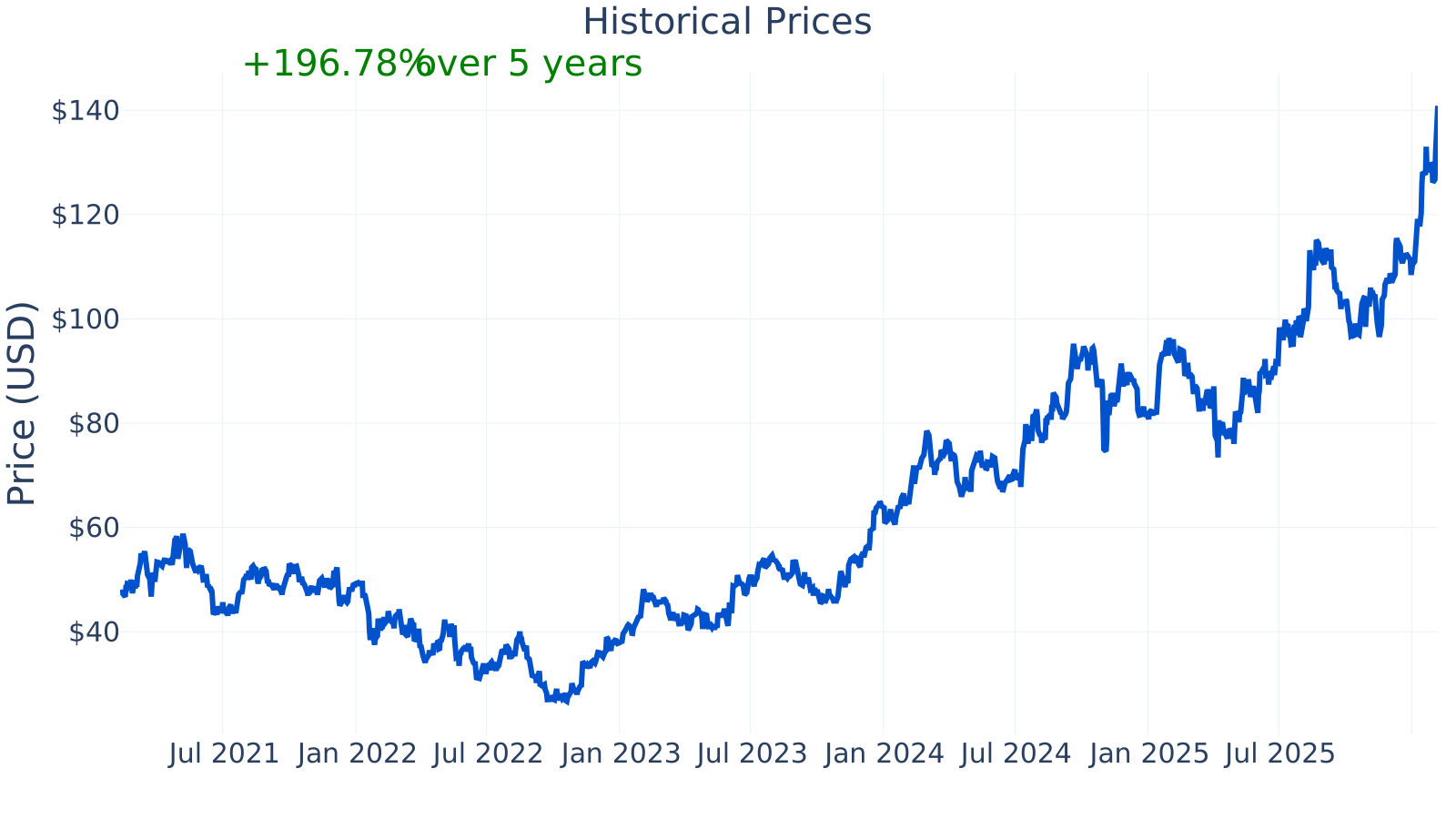
Patrick Industries has a market capitalization of about $4.7B and a beta of ~1.32, which indicates the stock has tended to move more than the overall market. The P/E ratio is ~36.1 versus an industry median around 27.3, while the profit margin is ~3.42% versus an industry median near 2.07%. Year-over-year revenue growth is about 9.2% (industry median ~12.75%). Leverage is meaningful: debt-to-equity is ~139% versus an industry median near 113%. Trailing twelve-month free cash flow is about $246.5M.
Growth (Medium)
Patrick’s growth outlook is closely tied to the long-term demand for RVs, manufactured housing, and marine products. These markets can grow over multi-year periods due to population trends, lifestyle preferences, and housing affordability pressures, but they are also cyclical: demand often weakens when interest rates rise, credit tightens, or consumer confidence falls.
Strategically, Patrick has historically pursued growth through a mix of:
- Supplying more content per unit (selling additional components into the same RV/home/boat build)
- Expanding into adjacent categories that fit its manufacturing and distribution footprint
- Acquisitions to broaden product offerings and reach more customers
A practical “catalyst” for results is a recovery in production volumes at its OEM customers (for example, when dealer inventories normalize and manufacturers increase output). Another potential support is operational efficiency: when volumes rise, fixed costs are typically spread over more units, which can lift margins—though this can work in reverse during downturns.
The revenue growth pattern shows a sharp boom in 2021–2022, a contraction in 2023, and then a return to positive growth through 2024–2025 (ending around 9.2% most recently). This shape is consistent with a business that is exposed to a cycle rather than a steady, linear growth path.
Free cash flow has stayed positive over the period shown, reaching higher levels around 2023–2024 before moderating to roughly $246M on a trailing basis. Consistently positive free cash flow can matter because it can be used for debt reduction, reinvestment, or acquisitions, but the fluctuations also highlight that cash generation can vary materially by cycle and working-capital needs.
Risks (High)
This article is for informational purposes only and does not constitute financial advice. Some content is AI-generated. See Disclaimer


