Stock Analysis · Paramount Skydance Corporation (PSKY)
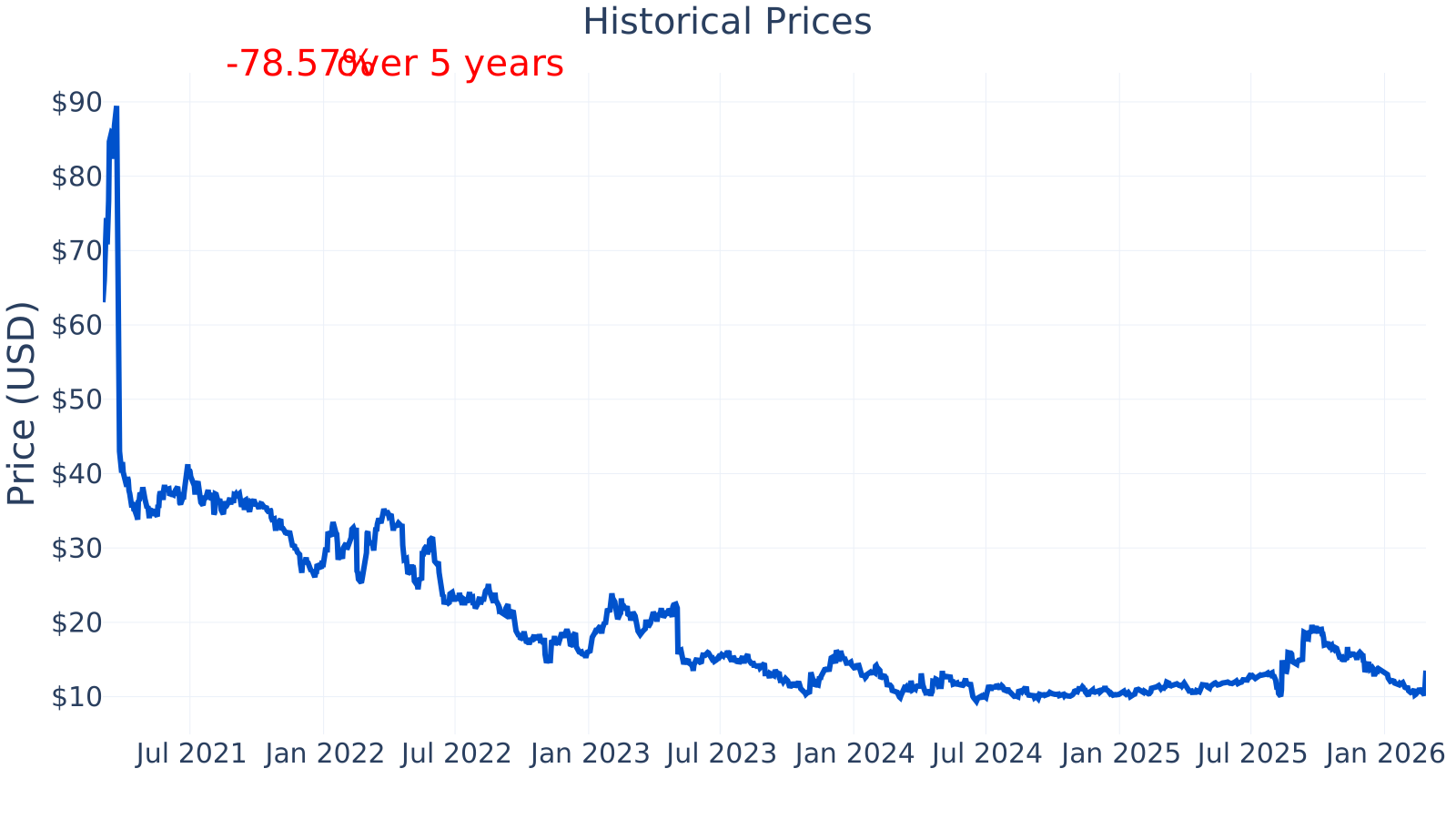
Overview
Paramount Skydance Corporation (PSKY) is an entertainment company that creates, licenses, and distributes content across film, television, and streaming. In simple terms, it makes and owns content (movies and series), then earns money by showing it in theaters, distributing it through TV channels and streaming services, licensing it to third parties, and selling advertising around audiences.
In the entertainment business, revenue typically comes from a mix of (1) subscription and streaming-related income, (2) advertising, (3) content licensing and distribution fees (including to other platforms and international partners), and (4) theatrical and home entertainment performance. The exact split can shift year to year depending on the content slate, advertising demand, and how quickly audiences move between traditional TV and streaming.
Based on the company’s segment reporting in its SEC filings, the main revenue sources are commonly organized around these buckets (largest to smallest may vary by year):
- Direct-to-consumer / streaming (subscription and related revenue)
- TV media (advertising plus affiliate/subscriber fees from pay TV distributors)
- Filmed entertainment (theatrical, licensing, and distribution of film and TV content)
- Other / publishing / ancillary (varies depending on reporting structure)
One useful way to view the business is that it is trying to balance two worlds at once: a maturing traditional TV ecosystem (where advertising and cable/satellite subscriber fees matter) and a highly competitive streaming market (where subscriber growth, churn, and content spending matter).
Across the years shown, total revenue is broadly stable (around the high-$20B range), while profitability swings significantly. That pattern highlights how sensitive results can be to content costs, restructuring/impairment-type charges, and how quickly higher-margin revenue (like advertising or licensing) can offset large fixed expenses.
Key Figures
| Metric | Value | Industry ⓘ |
|---|---|---|
| Date | Mar 02, 2026 | |
| Context | ||
| Sector | Communication Services | |
| Industry | Entertainment | |
| Market Cap ⓘ | $8.55B | |
| Beta ⓘ | 1.19 | |
| Fundamental | ||
| P/E Ratio ⓘ | 449.33 | 60.32 |
| Profit Margin ⓘ | -0.05% | 4.13% |
| Revenue Growth ⓘ | 0.50% | 9.80% |
| Debt to Equity ⓘ | 122.94% | 72.22% |
| PEG ⓘ | 1.31 | |
| Free Cash Flow ⓘ | $489.00M | |
At the latest point shown, the company’s market capitalization is about $8.6B. The stock’s beta of ~1.19 suggests it has tended to move somewhat more than the broader market. The P/E ratio (~449) is far above the industry median (~60), which often happens when earnings are very small or temporarily distorted; it can make the P/E less informative than usual. Profitability is also a key issue: the latest profit margin is about -0.05% versus an industry median near 4.13%, meaning the company is close to break-even on a net basis in the most recent period shown. Growth is modest: year-over-year revenue growth is ~0.53% versus an industry median near 9.8%. Leverage is higher than the industry median, with debt-to-equity ~123% versus an industry median near 72%. Free cash flow over the trailing twelve months is shown at roughly $489M, which indicates the business has recently generated cash despite weak net profitability.
Growth (Medium)
The company operates in a large, global entertainment market where audience attention is steadily shifting toward on-demand viewing. That long-term shift can support streaming and licensing opportunities, but it also intensifies competition and keeps pressure on content spending. In other words, the industry has secular demand for content, yet the economics depend heavily on scale, pricing power, and disciplined spending.
A strategy focused on monetizing content across multiple channels (streaming, licensing, theatrical, and advertising) can make sense over time because the same intellectual property can generate revenue in several ways. Potential catalysts in this type of business often include improved streaming economics (better pricing, lower churn, more ad-supported viewing), stronger content performance, successful cost reductions, and higher licensing sales to third-party platforms. However, whether those translate into sustained growth depends on execution and the competitive environment.
The year-over-year revenue growth trend is inconsistent, with several quarters of negative growth mixed with modest positive periods. The most recent reading is close to flat (about +0.53%), which is also below the industry median shown. This pattern suggests the near-term challenge is less about “demand for entertainment” and more about converting demand into consistent top-line expansion.
Free cash flow swings sharply across the period shown: strongly positive in 2021, negative in 2022 and 2023, then positive again in 2024 and 2025. This kind of variability is common in content businesses due to timing of productions, rights payments, and working-capital movements, but it also means cash generation can be uneven. The latest trailing free cash flow shown (about $489M) is a constructive sign, yet the history indicates it has not been stable.
Risks (High)
The biggest risks are tied to the economics of modern entertainment: high fixed costs for content, rapid shifts in consumer viewing habits, and intense competition for attention. When content spending rises faster than monetization, profitability can deteriorate quickly. Advertising demand can also be cyclical, and traditional pay-TV subscriber declines can pressure affiliate fee revenue over time.
Competitive advantages in this industry typically come from well-known brands, deep content libraries, strong distribution relationships, and the ability to consistently produce “must-watch” programming. Paramount’s positioning includes recognizable franchises and a content catalog, but it is not the clear scale leader in streaming compared with the largest global platforms. That makes differentiation and cost discipline particularly important.
Main competitors generally include large global streaming and media groups (for example, major streaming-first services and diversified media conglomerates). In that set, the largest players often have greater global scale, more diversified cash flows, and potentially more ability to fund content through multiple profit pools. Paramount’s relative position therefore depends heavily on portfolio focus, partnerships, and the company’s ability to sustain audience engagement without structurally over-spending.
Leverage has increased in the most recent points shown. The latest debt-to-equity is about 123%, above the industry median near 72%. Higher leverage can reduce flexibility: interest costs become more important, and strategic options can narrow if operating results weaken.
Profit margins show a notable deterioration from healthy double-digit levels in 2021 to negative territory in 2023–2025, with the latest reading near break-even (around -0.05%). Even if the most recent period looks improved versus the deeper negatives in 2024, the overall picture is that consistent profitability has been difficult to maintain.
Valuation
Valuation for media and entertainment companies is often discussed using multiples like P/E, but that tool can be unreliable when earnings are depressed, volatile, or affected by large one-time items. In those situations, investors and analysts often place more weight on cash flow, balance sheet strength, and the durability of the business model than on a single headline multiple.
The latest P/E ratio shown (~449) is far above the industry median (~60). The historical series also shows periods where the P/E is not meaningful (displayed as 0 on the chart when negative or extremely high). This pattern is consistent with uneven earnings, which makes it harder to interpret “expensive vs. cheap” using P/E alone. A key context point is that the company currently shows weak net profitability and modest revenue growth, while also carrying higher-than-median leverage—factors that typically increase the importance of execution and reduce room for disappointment.
Conclusion
Paramount Skydance Corporation is an established entertainment business operating through a mix of streaming, TV media, and filmed entertainment. The company’s revenue base appears relatively stable in aggregate, but recent years show meaningful pressure on profitability and uneven growth. Cash generation has improved recently compared with the negative period in 2022–2023, yet it has also been volatile across the timeframe shown.
The long-term discussion centers on whether the company can produce more consistent profits and cash flows while navigating the shift from traditional TV to streaming, and whether it can do so with a balance sheet that is more leveraged than the industry median. With earnings volatility making P/E-based valuation hard to interpret, the company’s long-term narrative is more directly tied to sustainable operating performance, cash flow stability, and financial flexibility than to a single valuation metric.
Sources:
- SEC EDGAR — Company filings for Paramount Skydance Corporation (PSKY): Annual Reports (Form 10-K), Quarterly Reports (Form 10-Q), Current Reports (Form 8-K)
- Paramount Investor Relations — Press releases and financial information
- Wikipedia — “Paramount Global” (background and general company history/context)
This article is for informational purposes only and does not constitute financial advice. Some content is AI-generated. See Disclaimer


