Stock Analysis · Paramount Skydance Corporation (PSKY)
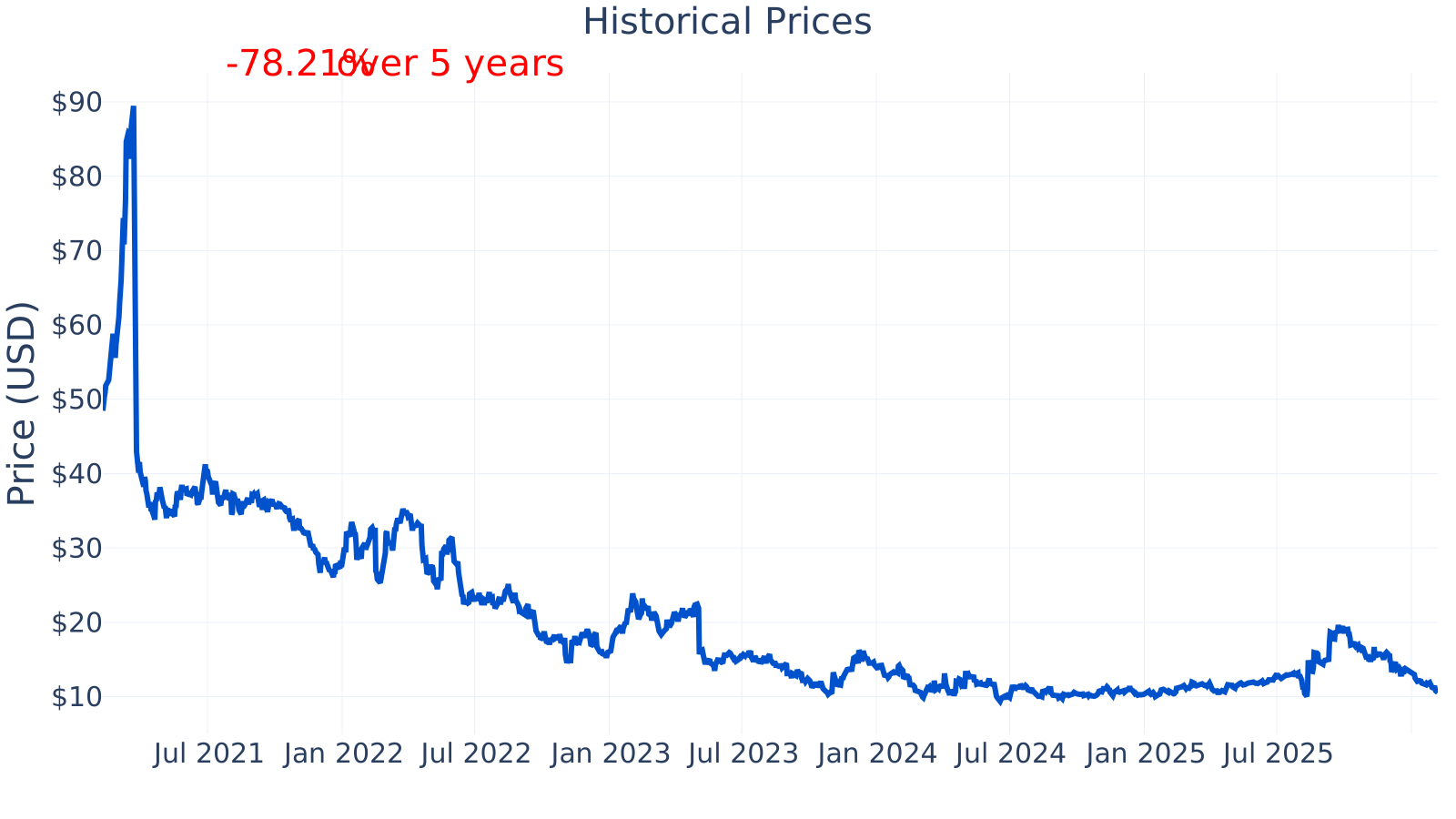
Overview
Paramount Skydance Corporation (PSKY) operates in the entertainment business, producing and distributing video content across film, television, and streaming. The company’s activities typically span content creation (developing movies and series), licensing and distribution (selling rights to broadcasters, platforms, or international partners), and monetizing audiences through subscriptions and advertising depending on the channel.
In broad terms, companies in this space aim to build recognizable franchises and a steady pipeline of programming that can be reused and monetized across many “windows” (theatrical release, streaming, TV, and licensing). Long-term outcomes are often driven by a mix of content performance, scale in distribution, and discipline in production and marketing spending.
Main revenue streams commonly include:
- Affiliate / distribution fees from TV networks carried by cable, satellite, and digital bundles (where applicable)
- Advertising sold on TV networks and digital video inventory
- Streaming and subscription revenue from direct-to-consumer services (where applicable)
- Theatrical and home entertainment from films
- Content licensing (domestic and international) and other partnerships
The mix can shift meaningfully over time as consumer viewing moves from traditional TV toward streaming, and as advertising spending cycles up and down.
Across the 2021–2024 period shown, total revenue stayed in a relatively narrow range (about $28.6B to $30.2B), while profitability changed materially: operating income moved from strongly positive in 2021–2022 to negative in 2023–2024, and net income also turned sharply negative in 2023–2024. This pattern suggests that cost structure and/or one-time charges had a larger impact on results than top-line growth.
Key Figures
| Metric | Value | Industry ⓘ |
|---|---|---|
| Date | Feb 07, 2026 | |
| Context | ||
| Sector | Communication Services | |
| Industry | Entertainment | |
| Market Cap ⓘ | $8.55B | |
| Beta ⓘ | 1.19 | |
| Fundamental | ||
| P/E Ratio ⓘ | 449.33 | 50.96 |
| Profit Margin ⓘ | -0.05% | 4.93% |
| Revenue Growth ⓘ | 0.50% | 5.20% |
| Debt to Equity ⓘ | 122.72% | 80.15% |
| PEG ⓘ | 0.84 | |
| Free Cash Flow ⓘ | $308.00M | |
The latest snapshot shows a market capitalization of about $8.6B and a beta of ~1.19, which indicates the stock has historically tended to move somewhat more than the overall market. Profitability is currently very thin: the profit margin is about -0.05%, compared with an industry median near 4.93%. Growth is also subdued: year-over-year revenue growth is about 0.5% versus an industry median near 5.2%. On leverage, debt-to-equity is ~123%, higher than the industry median near 80%. Free cash flow over the trailing twelve months is shown as ~$308M, which indicates cash generation has been positive recently even though reported profitability has been pressured. The P/E ratio (~449) is far above the industry median (~51), which often happens when earnings are very small relative to price (or volatile), making the ratio less informative than usual.
Growth (Medium)
The entertainment industry is structurally supported by long-term demand for video content, but growth is uneven and highly competitive. Audience attention continues shifting toward on-demand viewing, and large platforms compete intensely for subscribers, advertising budgets, and premium content. For many media companies, the strategic challenge is balancing investment in content and streaming capabilities with the need to protect cash flow and manage debt.
The year-over-year revenue growth trend looks inconsistent. Growth was strong in parts of 2021, then turned mixed in 2022, and frequently negative in 2023–2025. The most recent values are close to flat (around 0% to 1%), which suggests that, at least recently, the business has not been expanding meaningfully faster than the broader economy.
Cash generation has been volatile. Free cash flow was strongly positive in 2021, turned negative in 2022 and 2023, and then returned to positive territory in 2024 and 2025 (with the latest trailing period shown as positive). For long-term business durability, consistent free cash flow matters because it funds content investment, supports debt repayment, and provides flexibility during weaker advertising cycles or when content underperforms.
Potential catalysts in this type of business typically include a sustained improvement in profitability of streaming operations, a stronger film slate and TV performance, better advertising market conditions, and cost discipline that stabilizes margins. Whether those catalysts materialize tends to show up first in margins and cash flow rather than in headline revenue growth.
Risks (High)
This article is for informational purposes only and does not constitute financial advice. Some content is AI-generated. See Disclaimer


