Stock Analysis · PAR Technology Corporation (PAR)
Overview
PAR Technology Corporation (PAR) is a technology company focused on software used by restaurants and other foodservice businesses to run day-to-day operations. In simple terms, it provides tools that help a restaurant take orders, process payments, manage menus, and coordinate activity across in-store, drive-thru, and digital channels.
From a business model perspective, PAR’s goal is to grow recurring software revenue (subscriptions and ongoing service) rather than relying mainly on one-time hardware sales. This matters for long-term fundamentals because recurring revenue is typically more predictable, but it often requires ongoing investment in product development and customer support.
In its SEC filings, PAR reports revenue by operating segments (rather than giving a simple public “by-product” percentage split in all cases). The segments generally include:
- Restaurant/Retail: software and related services for restaurant operations (this is the core focus area).
- Government: technology and services delivered to government customers (smaller relative to the restaurant software focus in recent years).
Because the company’s revenue breakdown can change over time and is reported by segment and line items in filings, the most reliable way to understand the mix is to review the latest Form 10-K/10-Q segment footnotes and revenue recognition disclosures.
Over the last few years shown, total revenue rose from about $283M (2021) to about $456M (2025). Gross profit also increased over that period (about $62M to about $185M), but operating expenses grew substantially as well, which helps explain why net income has remained negative in most years shown.
Key Figures
| Metric | Value | Industry ⓘ |
|---|---|---|
| Date | Mar 09, 2026 | |
| Context | ||
| Sector | Technology | |
| Industry | Software - Application | |
| Market Cap ⓘ | $790.95M | |
| Beta ⓘ | 1.43 | |
| Fundamental | ||
| P/E Ratio ⓘ | N/A | 27.00 |
| Profit Margin ⓘ | -18.54% | 7.87% |
| Revenue Growth ⓘ | 14.40% | 16.65% |
| Debt to Equity ⓘ | 48.76% | 25.51% |
| PEG ⓘ | 0.77 | |
| Free Cash Flow ⓘ | -$30.48M | |
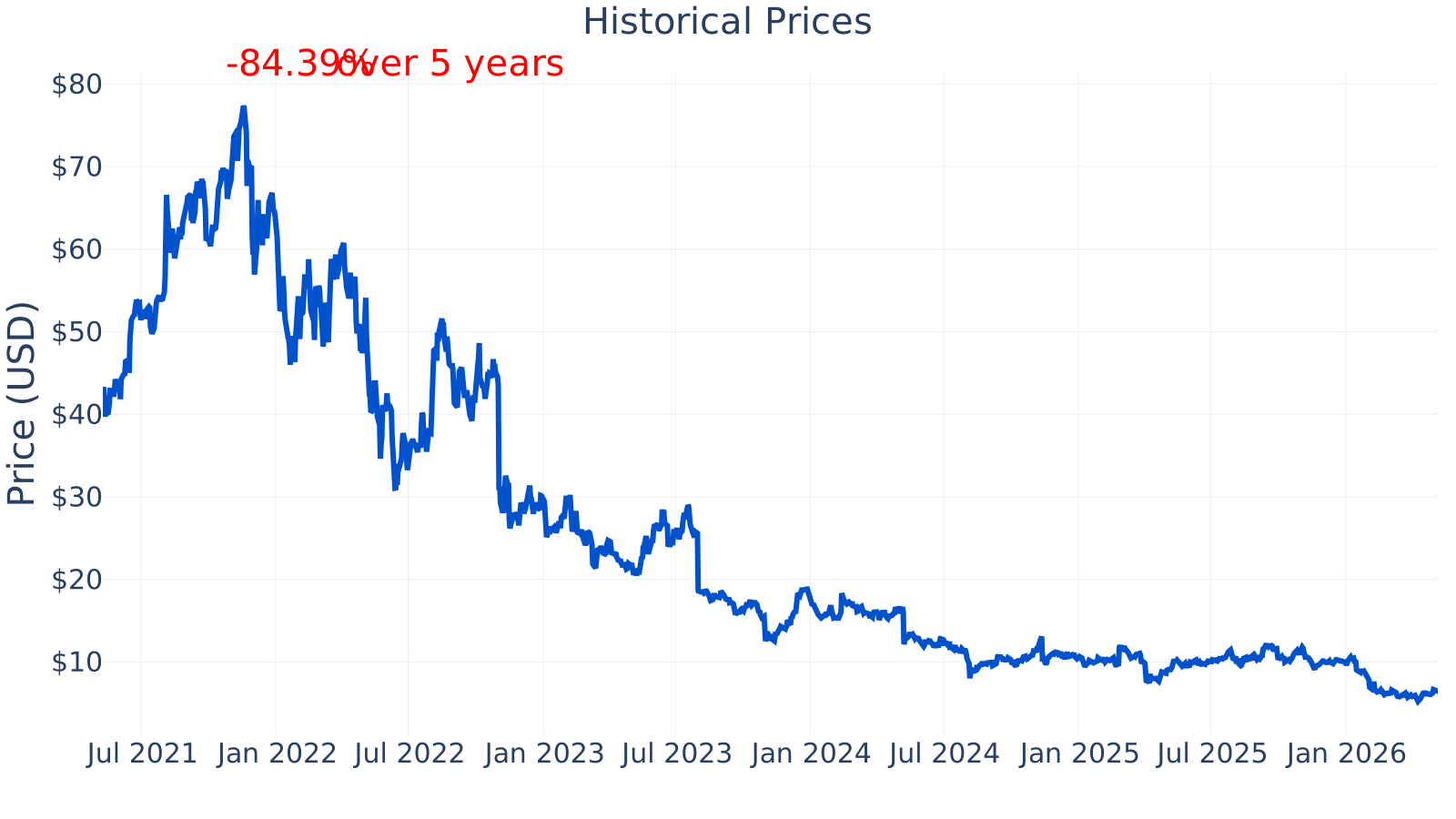
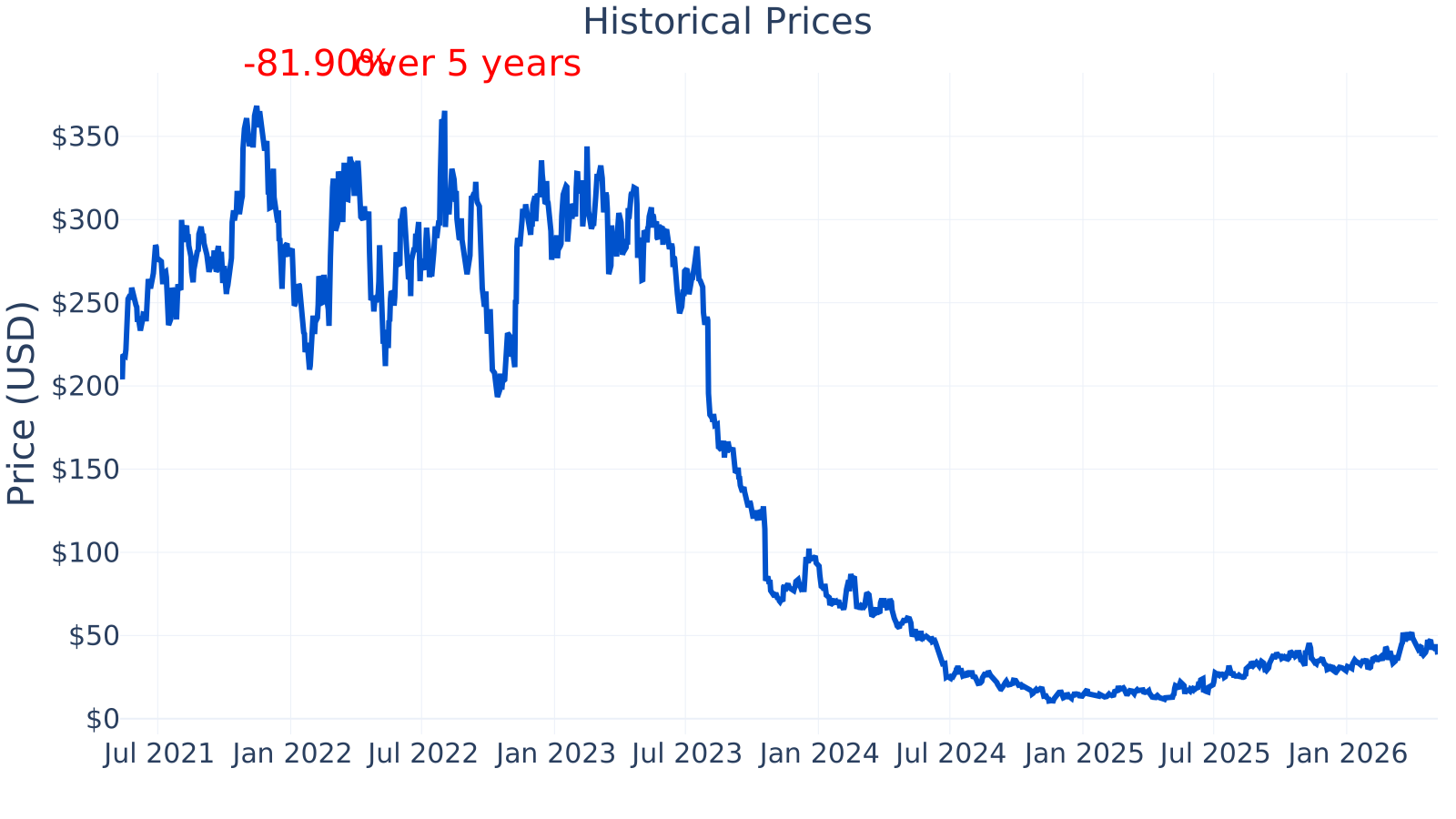
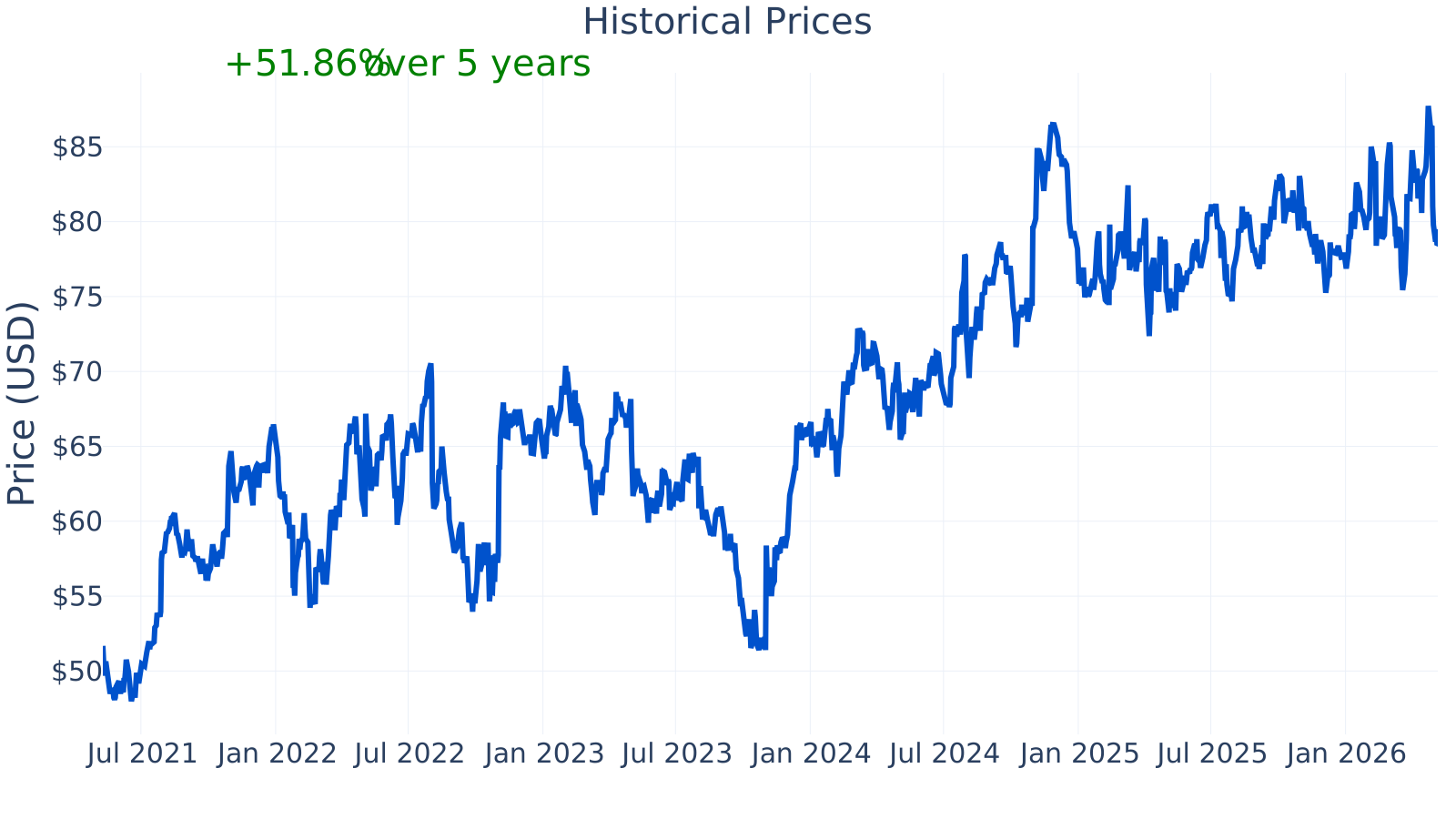
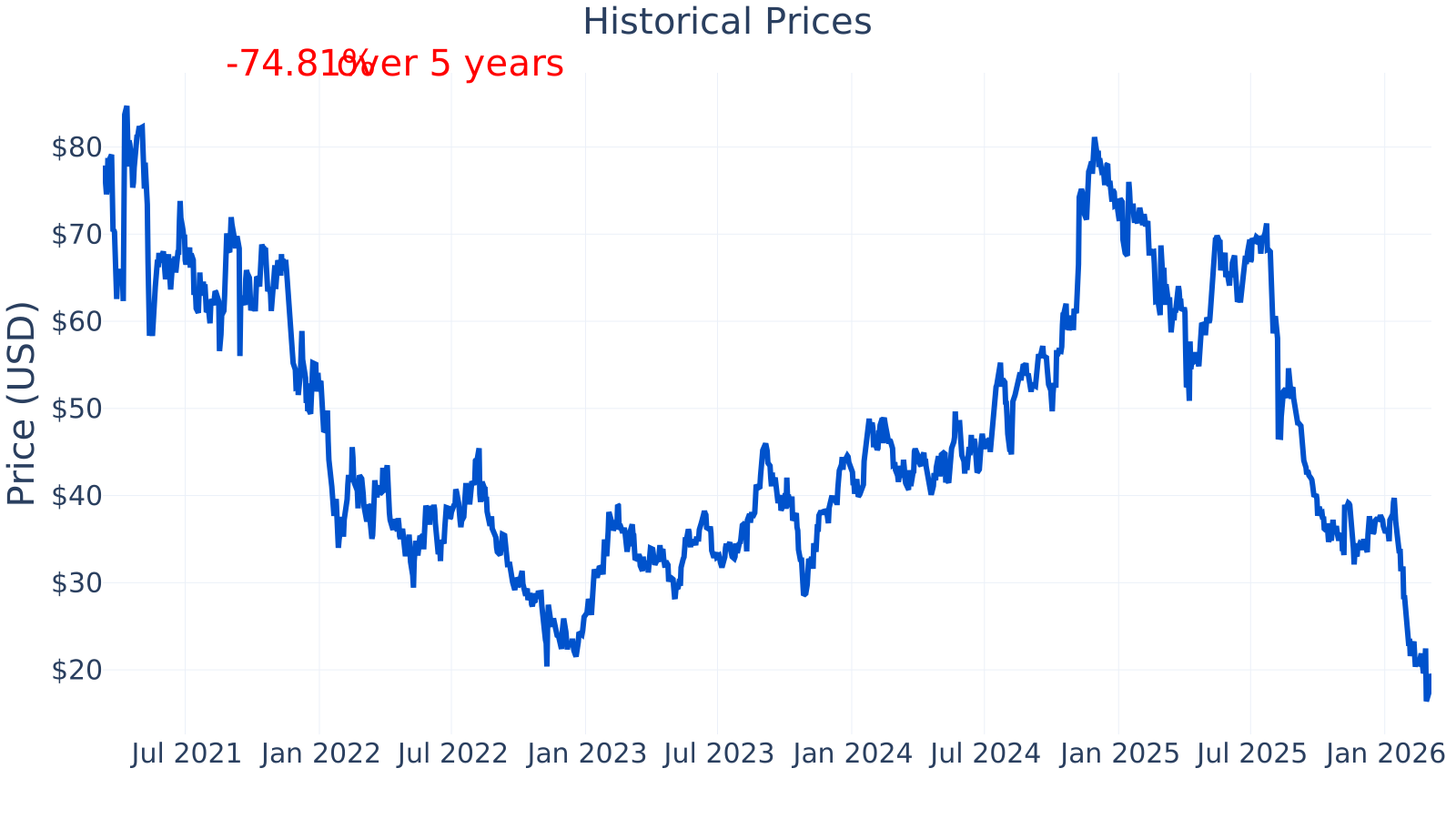
PAR’s market capitalization is about $791M, placing it in the small-cap range. The stock’s beta (~1.43) suggests it has tended to move more than the overall market (higher volatility).
Profitability is a key point: the latest profit margin shown is about -18.5%, while the industry median is about +7.9%. Revenue growth year-over-year is about 14.4% versus an industry median around 16.7%, indicating growth is present but not clearly above typical peers in this industry group.
Leverage is also higher than the peer median: debt-to-equity is about 48.8% versus an industry median around 25.5%. Free cash flow over the last twelve months is negative (about -$30.5M), which indicates the business has been consuming cash rather than producing it recently.
Growth (Medium)
PAR participates in a long-term trend: restaurants continuing to digitize operations. Many restaurants are still modernizing point-of-sale systems, integrating online ordering, improving loyalty programs, and connecting kitchen operations with delivery and in-store demand. These shifts tend to favor software providers that can offer an integrated suite and keep improving it over time.
PAR’s strategy (as described in company filings) emphasizes expanding software capabilities and increasing recurring revenue. If executed well, this approach can support durable growth because customers often prefer stable, integrated systems once deployed across multiple locations.
Revenue growth has been uneven quarter to quarter, including periods of contraction, followed by re-acceleration. The most recent value shown is about 14% year-over-year, which is positive but highlights that growth is not perfectly steady—something long-term shareholders typically need to be comfortable with in a company still scaling.
Free cash flow has remained negative across the period shown (from roughly -$77M at the low point to about -$24M to -$31M more recently). A key long-term catalyst would be a sustained move toward positive free cash flow, which would indicate the company can fund growth internally rather than relying as much on outside capital.
Risks (High)
The main fundamental risk is that PAR has not consistently converted revenue growth into durable profitability. Even with improving gross profit in the multi-year view provided, operating expenses (including R&D and selling/general/administrative costs) have been large, and net income has remained negative in most years shown. For long-term owners, the central question becomes whether operating leverage (costs growing more slowly than revenue) can materialize over time.
The profit margin trend shows extended periods of losses, a brief move near break-even around mid-2024, and then a return to a meaningfully negative margin (about -18.5% most recently shown). The industry median is solidly positive in the same period (roughly mid-single digits to low double digits). This gap suggests PAR is still in a heavier investment phase (or facing execution challenges) compared with typical profitable peers.
Debt-to-equity has improved from very elevated levels earlier in the timeline (over 100% at points) to about 49% most recently, but it remains above the industry median (about 33% at the last point shown). This matters because negative free cash flow combined with higher leverage can reduce flexibility if business conditions weaken or if costs rise.
Competitive risk is meaningful. Restaurant technology is a crowded market with well-funded and well-established participants. PAR’s competitive advantages, as typically described in filings, can include product breadth, integration across workflows, and the ability to support complex multi-location operators. However, leadership is difficult to claim definitively from public filings alone because “best” often depends on customer segment (enterprise vs. SMB), geography, and specific features.
Notable competitors in restaurant POS and restaurant operating software commonly include large POS/payment platforms and restaurant software vendors. Examples often cited by market participants include Toast and other enterprise-focused POS/software providers. The competitive landscape can pressure pricing, increase sales and marketing costs, and raise customer churn risk if products fail to keep pace.
Valuation
A traditional P/E ratio is not currently meaningful for PAR in the period shown (the chart values appear as 0, which commonly happens when earnings are negative or when the metric is otherwise not informative). In contrast, the industry median P/E shown is positive (often around 40–60 across the displayed dates, with a latest industry median around 27 in the table). This difference is important: when a company is not consistently profitable, valuation discussions often shift toward other yardsticks (for example revenue-based multiples), but those are not provided here.
The table includes a PEG ratio (~0.77), which is sometimes used to compare valuation to expected growth. However, PEG can be less reliable when earnings are volatile or negative, so it is best interpreted cautiously alongside profitability and cash flow trends.
In practical terms, whether the current market price is “expensive” cannot be concluded from P/E here, because the company’s earnings profile does not support that metric. The justification for valuation would hinge more on confidence in (1) sustaining revenue growth, (2) expanding margins toward industry norms, and (3) reaching consistently positive free cash flow.
Conclusion
PAR Technology Corporation operates in a sector with durable, long-term demand as restaurants continue moving toward modern, integrated software platforms. Over the multi-year view provided, revenue has grown substantially, and gross profit has increased as the business scaled.
At the same time, the company’s recent fundamentals show the central trade-off: profit margins are materially below the industry median and free cash flow remains negative, while leverage is higher than typical peers. In a long-term context, the key factors to monitor are whether revenue growth remains resilient, whether operating costs grow more slowly than revenue over time, and whether cash generation turns sustainably positive.
Sources:
- U.S. Securities and Exchange Commission (SEC EDGAR) — PAR Technology Corporation filings (Form 10-K, Form 10-Q, Form 8-K)
- PAR Technology Corporation — Investor Relations materials and press releases (company-hosted)
- Wikipedia — “PAR Technology” (basic company background)
This article is for informational purposes only and does not constitute financial advice. Some content is AI-generated. See Disclaimer