Stock Analysis · Papa John's International Inc (PZZA)
Overview
Papa John’s International, Inc. operates and franchises pizza delivery and carryout restaurants under the Papa Johns brand. The business is built around a large franchise system supported by the company’s own restaurant operations, brand marketing, technology (ordering and loyalty capabilities), and a supply chain that helps franchisees source ingredients and other store needs at scale.
In simple terms, Papa Johns makes money from a mix of selling pizza (in company-run stores), collecting fees from franchisees who use the brand and operating system, and selling food and materials through its supply chain network. This structure means the company’s results are influenced not only by pizza demand, but also by franchisee health and store economics across the system.
Main revenue sources are typically organized as follows (exact percentages can vary by year and are reported in the company’s annual filings):
- Supply chain revenue (selling ingredients, food, and other items to franchisees and company-owned restaurants)
- Franchise royalties and fees (ongoing royalties tied to franchise restaurant sales, plus other fees)
- Company-owned restaurant sales (sales from stores operated directly by Papa Johns)
Looking at the recent income flow, total revenue has been around the $2.1B level over the last few years (about $2.06B in 2024 versus about $2.14B in 2023). Costs of revenue are the largest expense line, which is expected for a restaurant and supply-chain-heavy model. Net income has been positive each year shown, but it has not moved in a straight line (roughly $120M in 2021, ~$68M in 2022, ~$82M in 2023, and ~$83M in 2024), highlighting sensitivity to operating costs, pricing, and demand.
Key Figures
| Metric | Value | Industry ⓘ |
|---|---|---|
| Date | Feb 08, 2026 | |
| Context | ||
| Sector | Consumer Cyclical | |
| Industry | Restaurants | |
| Market Cap ⓘ | $1.14B | |
| Beta ⓘ | 1.21 | |
| Fundamental | ||
| P/E Ratio ⓘ | 30.42 | 29.16 |
| Profit Margin ⓘ | 1.83% | 7.98% |
| Revenue Growth ⓘ | 0.30% | 6.90% |
| Debt to Equity ⓘ | -216.29% | 69.29% |
| PEG ⓘ | 2.11 | |
| Free Cash Flow ⓘ | $80.63M | |
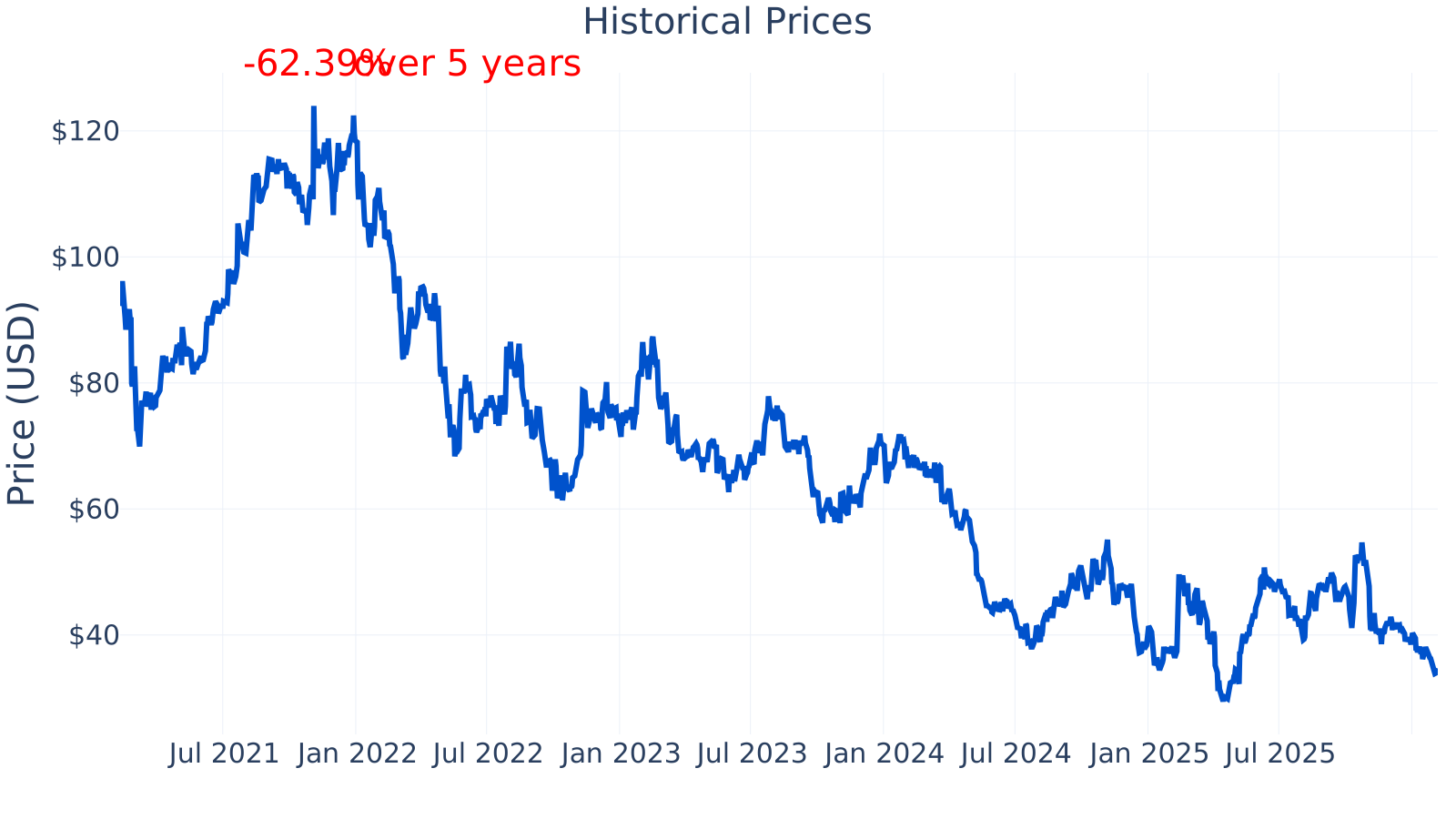
Papa John’s market capitalization is about $1.14B, placing it in the small-to-mid range compared with many public restaurant peers. The stock’s beta of ~1.21 suggests it has historically moved somewhat more than the broader market. The P/E ratio is ~30.4, close to the industry median shown (~29.2).
Profitability and growth stand out as current pressure points: profit margin is ~1.83% versus an industry median near 7.98%, and year-over-year revenue growth is ~0.27% versus an industry median near 6.9%. Free cash flow over the last twelve months is about $80.6M. The debt-to-equity ratio is negative, which commonly happens when a company’s accounting equity is negative (often linked to accumulated buybacks, dividends, and balance-sheet structure), making that ratio less intuitive to compare directly to peers.
Growth (Medium)
The pizza category is a mature part of the restaurant industry, but it has characteristics that can support long-term demand: off-premise dining (delivery/carryout), convenience, and relatively low average ticket sizes compared with many casual dining formats. Growth in this space tends to come from a combination of: adding net restaurants (especially internationally), improving same-store sales through menu/pricing/marketing, and strengthening digital ordering and loyalty to increase order frequency.
For Papa Johns, a key long-term question is whether the brand and franchise system can generate sustained gains in comparable sales while also expanding the store base—without eroding franchisee economics. Franchise health matters because a large portion of the system is franchised, and franchisees are the ones investing in new unit openings and day-to-day operations.
Recent revenue growth has been uneven. After stronger growth in 2021, revenue growth turned negative in parts of 2022–2024, and the most recent point shown is close to flat at about 0.27% year over year. That pattern indicates that recent gains have not been consistent, which can make long-term compounding harder unless the business re-accelerates via store growth, improved traffic, or better pricing/mix.
Cash generation has also fluctuated. Free cash flow was about $179M in 2021 (TTM period shown), then declined meaningfully, later rebounded, and most recently is around $80.6M. For long-term durability, investors often watch whether free cash flow stabilizes and whether it is being used to support the system (technology, marketing, supply chain) while keeping the balance sheet resilient.
Risks (High)
This article is for informational purposes only and does not constitute financial advice. Some content is AI-generated. See Disclaimer