Stock Analysis · Packaging Corp of America (PKG)
Overview
Packaging Corporation of America (PKG) is a U.S.-based producer of containerboard (the paper used to make corrugated boxes) and corrugated packaging products (shipping boxes and related packaging). In simple terms, it makes the materials and finished boxes used to ship goods across many everyday industries, including food and beverage, consumer products, and industrial markets.
PKG generally operates through two core activities: (1) making containerboard in paper mills and (2) converting that paper into corrugated products in its packaging plants. This “integrated” model matters because it links a major input (containerboard) with the finished product (boxes), which can help with supply reliability, cost control, and responsiveness to customers when demand changes.
Main revenue streams are typically organized around PKG’s operating segments (exact percentages vary by year):
- Packaging segment (corrugated products such as boxes, plus related services)
- Paper segment (containerboard and other paper products)
From the company’s income statement over recent years, PKG has shown revenue and earnings that move with packaging demand and industry pricing, with total revenue ranging roughly from about $7.8B to $9.0B in the 2021–2025 period shown below.
Across the years shown (2021–2025), revenue fluctuated with industry conditions (about $7.7B in 2021, $8.5B in 2022, $7.8B in 2023, $8.4B in 2024, and $9.0B in 2025). Net income also varied (roughly $0.77B–$1.03B), illustrating that profitability can be sensitive to changes in demand, selling prices, and input costs.
Key Figures
| Metric | Value | Industry ⓘ |
|---|---|---|
| Date | Feb 07, 2026 | |
| Context | ||
| Sector | Consumer Cyclical | |
| Industry | Packaging & Containers | |
| Market Cap ⓘ | $21.49B | |
| Beta ⓘ | 0.90 | |
| Fundamental | ||
| P/E Ratio ⓘ | 27.02 | 21.79 |
| Profit Margin ⓘ | 8.61% | 5.56% |
| Revenue Growth ⓘ | 10.10% | 6.00% |
| Debt to Equity ⓘ | 91.62% | 137.29% |
| PEG ⓘ | 1.80 | |
| Free Cash Flow ⓘ | $725.10M | |
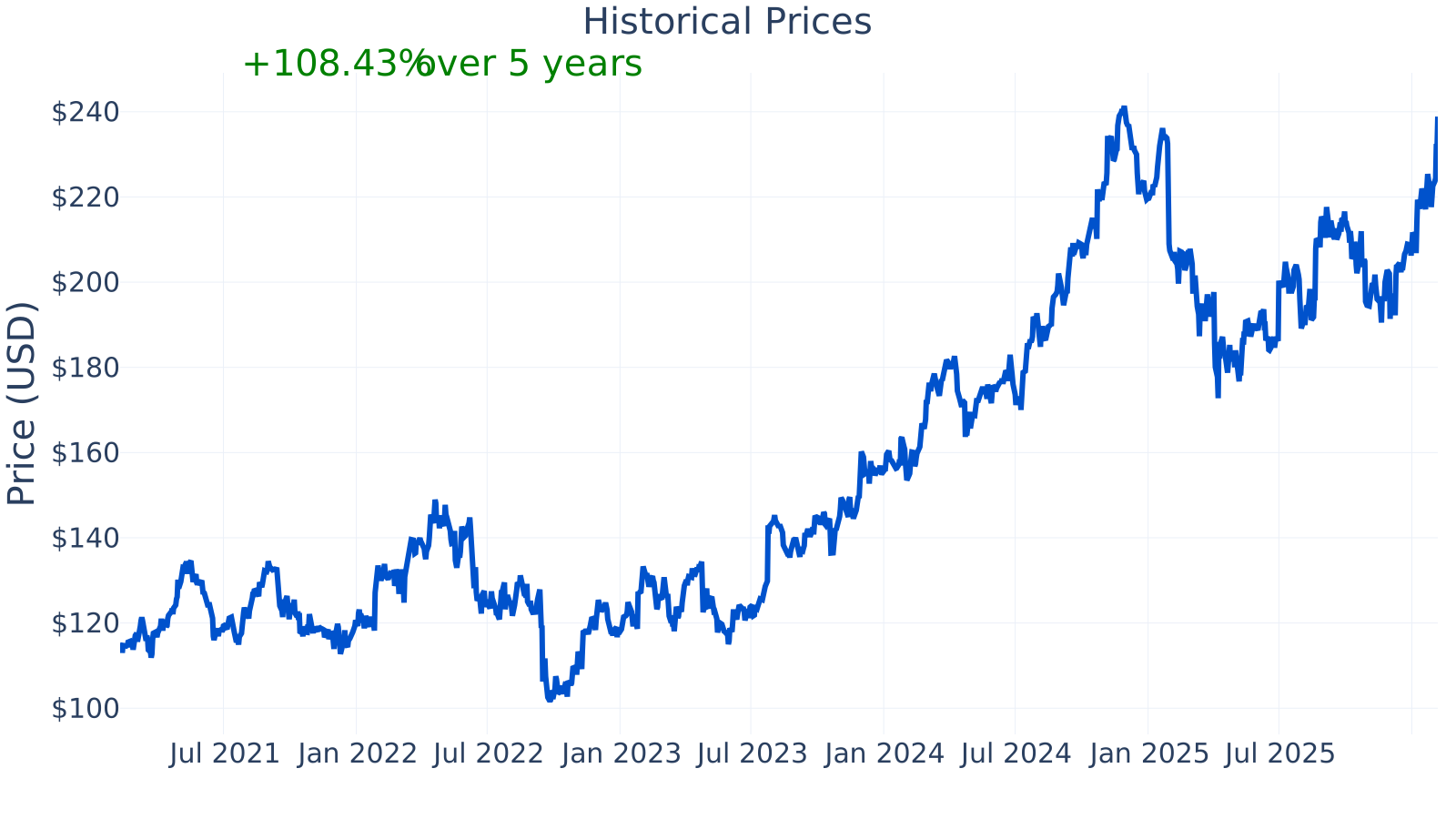
PKG’s market capitalization is about $21.5B, and its beta of ~0.90 suggests the stock has historically moved somewhat less than the broader market. The latest P/E ratio is ~27.0, which is above the industry median (~21.8). Profitability (net profit margin) is about 8.61% versus an industry median of ~5.56%, indicating stronger-than-typical margins compared with peers in the same industry grouping. Recent year-over-year revenue growth is ~10.1% versus an industry median of ~6.0%. Leverage, measured as debt-to-equity of ~91.6%, is below the industry median (~137.3%). Trailing twelve-month free cash flow is about $725M, reflecting cash generation after operating needs and capital spending.
Growth (Medium)
Corrugated packaging is closely tied to real economic activity: when manufacturers produce more, retailers ship more, and e-commerce volumes rise, demand for boxes and containerboard tends to increase. Over the long run, the need to move physical goods does not disappear, but growth is not usually linear—packaging demand can be cyclical and sensitive to inventory corrections and broader slowdowns.
PKG’s growth strategy is typically centered on running an integrated mill-and-box system efficiently, investing in mill/plant upgrades, and serving a broad base of customers. This approach can support steady participation in the industry’s long-term volume trends, while trying to protect profitability through cost control and operational reliability.
The year-over-year revenue pattern shown is cyclical: strong growth through much of 2021–2022, a downturn in 2023 (negative comparisons), and a return to positive growth across 2024–2025, ending near ~10% most recently. This type of swing is common in packaging, where volumes and pricing can reset after unusually strong periods.
Free cash flow has also varied over time (about $495M–$859M across the periods shown), with the most recent trailing figure near $725M. For long-term business durability, consistent cash generation matters because it is the pool of money that can be used for reinvestment, debt reduction, and shareholder returns, though the level can move around with earnings cycles and capital spending.
Risks (Medium)
This article is for informational purposes only and does not constitute financial advice. Some content is AI-generated. See Disclaimer


