Stock Analysis · PTC Inc (PTC)
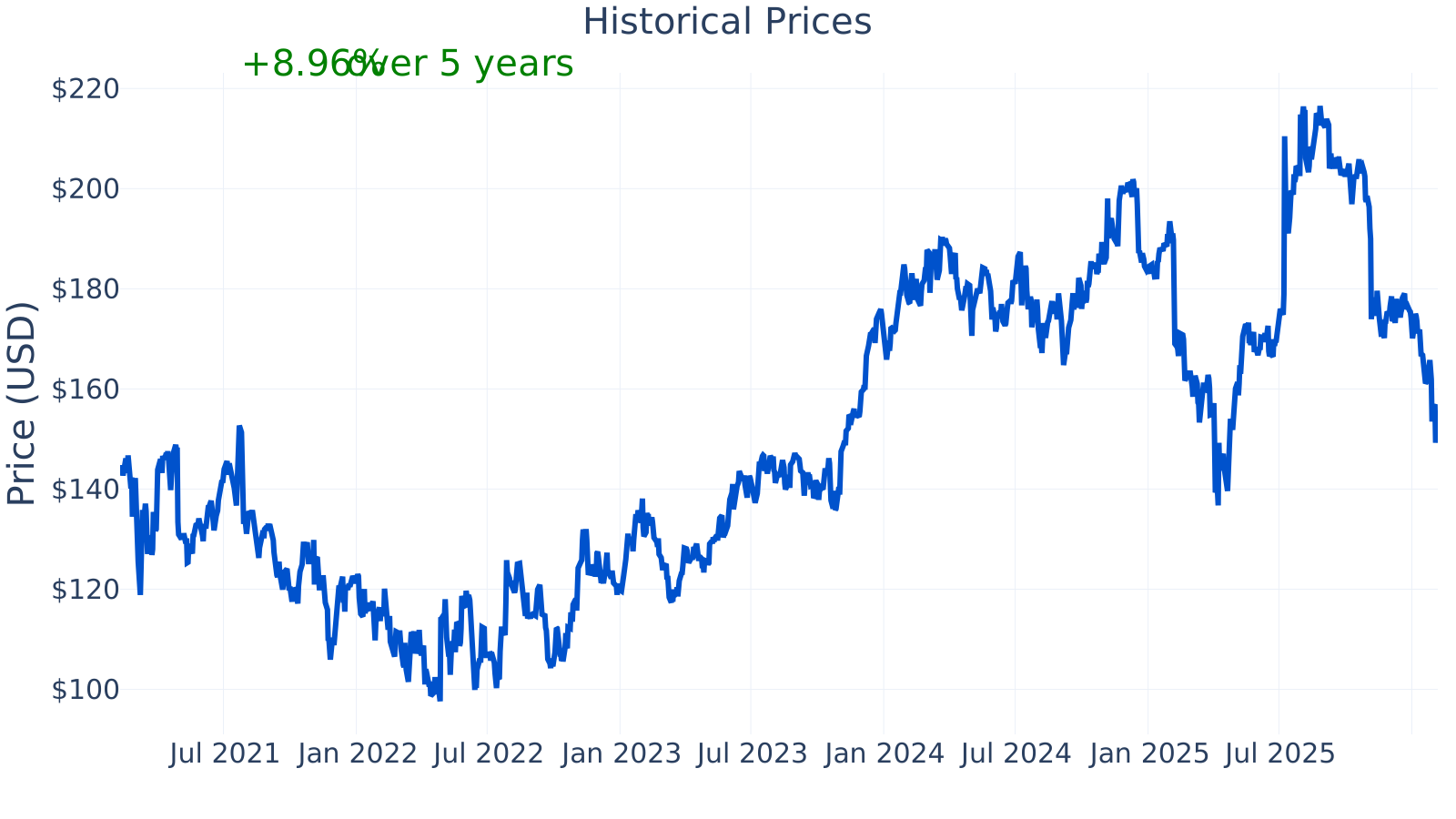
Overview
PTC Inc is a software company focused on helping industrial and product-based businesses design, build, and maintain complex products. Its tools are commonly used by manufacturers and engineering teams to manage a product from early design all the way to operations in the field. In simple terms, PTC sells software that helps companies: (1) create digital product designs, (2) manage product data and changes over time, and (3) connect products and factories to software so performance can be monitored and improved.
PTC’s offering is typically described in three main areas:
- CAD (computer-aided design): software used to design 3D parts and assemblies (for example, mechanical design workflows).
- PLM (product lifecycle management): software used to control product data, approvals, and engineering changes across teams.
- Industrial IoT and Augmented Reality: software that helps connect machines/products and support frontline workers with digital guidance.
PTC mainly earns revenue from software subscriptions and related support/services. In its annual reporting, PTC emphasizes subscription-based and recurring revenue, which tends to be more predictable than one-time license sales, but still depends on customer renewals and new customer wins.
Where revenue comes from (high-level):
- Software subscriptions (recurring): the largest contributor in PTC’s model (percentages vary by year; the company highlights subscriptions as the core of its strategy).
- Support / maintenance: ongoing customer support and update rights tied to software use.
- Professional services and other: implementation, consulting, training, and other services (generally smaller than recurring software-related lines).
Over recent fiscal years, total revenue increased from about $1.81B (FY2021) to about $2.74B (FY2025). Over the same period, operating income increased from about $442M to about $997M, suggesting operating leverage (profits growing faster than revenue) as the business scaled.
Key Figures
| Metric | Value | Industry ⓘ |
|---|---|---|
| Date | Feb 07, 2026 | |
| Context | ||
| Sector | Technology | |
| Industry | Software - Application | |
| Market Cap ⓘ | $18.53B | |
| Beta ⓘ | 1.03 | |
| Fundamental | ||
| P/E Ratio ⓘ | 22.93 | 27.79 |
| Profit Margin ⓘ | 28.61% | 6.02% |
| Revenue Growth ⓘ | 21.40% | 15.80% |
| Debt to Equity ⓘ | 40.71% | 25.15% |
| PEG ⓘ | 1.57 | |
| Free Cash Flow ⓘ | $888.43M | |
PTC’s market capitalization is about $18.5B. The stock’s beta is around 1.03, which is close to the overall market’s typical volatility. The latest P/E ratio is about 22.9 versus an industry median near 27.8. Profit margin is about 28.6% versus an industry median around 6.0%, indicating materially higher profitability than many peers in the same broad application software category. Year-over-year revenue growth is about 21.4% versus an industry median near 15.8%. Debt-to-equity is about 40.7% versus an industry median near 25.2%. Trailing twelve-month free cash flow is about $888M.
Growth (Medium)
PTC operates in industrial software markets that are supported by long-term trends: more complex products (hardware + software), more regulation and traceability needs, and the push toward “digital threads” that connect design, manufacturing, and in-field performance. These trends can encourage companies to standardize on engineering and product-data platforms over long periods, which can support multi-year customer relationships.
Strategically, PTC has positioned its business around recurring subscriptions and platform-style adoption across multiple departments (engineering, manufacturing, service). In practice, this approach aims to increase customer lifetime value through expansions (adding modules, more seats, or adjacent product lines) rather than relying only on new customer acquisition.
Revenue growth has not been steady every quarter, including periods of low growth and at least one quarter with a year-over-year decline (mid-2024). More recently, growth re-accelerated, reaching over 20% year-over-year in the latest period shown, with some quarters higher than that. For long-term business evaluation, this pattern highlights that demand can be cyclical, but growth can also rebound when customer spending improves.
Free cash flow has risen materially over time, increasing from about $344M (TTM ending March 2021) to about $816M (TTM ending March 2025), and the latest figure shown is about $888M. For a subscription-oriented software business, sustained free cash flow generation can be an important indicator of business quality, since it can fund product development, debt service, and shareholder-return programs without requiring external capital.
Potential catalysts (in general terms) include broader adoption of digital transformation in manufacturing, deeper penetration of PLM within large enterprises, and increased use of connected-product and factory software. Execution matters: converting interest in “digital thread” initiatives into deployments and renewals is what ultimately shows up in revenue and cash flow.
Risks (Medium)
This article is for informational purposes only and does not constitute financial advice. Some content is AI-generated. See Disclaimer


