Stock Analysis · PDF Solutions Inc (PDFS)
Overview
PDF Solutions Inc (PDFS) is a technology company focused on improving how advanced computer chips (semiconductors) are designed and manufactured. Its products and services are used by chipmakers and companies in the semiconductor supply chain to monitor production, analyze data from manufacturing steps, and identify issues that can reduce quality or yield (the percentage of usable chips produced). In simple terms, the company helps customers “see” what is happening in complex chip production lines and make better decisions to reduce defects and improve efficiency.
From the company’s filings, PDF Solutions describes its offerings as software, analytics, and related services that support semiconductor manufacturing and product lifecycle management, including data-driven approaches to improve process control and ramp new chip designs to volume production more smoothly. Revenue can include recurring elements (software and subscriptions/maintenance) and service-based work (implementation, consulting, and support), with customer demand influenced by semiconductor capital spending and new technology transitions.
Main revenue sources (typical categories described in company filings; exact percentages can vary by period and should be checked in the most recent annual report):
- Software and analytics offerings (often the larger, more scalable portion when adoption expands)
- Services and support (implementation, professional services, and customer support tied to deployments)
- Other related items (as disclosed in filings, if applicable)
Over recent years, total revenue increased meaningfully (from about $111.1M in 2021 to about $219.0M in 2025). Gross profit also expanded over the same period, but operating expenses (notably research and development and selling/general/administrative costs) remained substantial, which helps explain why net income has been inconsistent year to year.
Key Figures
| Metric | Value | Industry ⓘ |
|---|---|---|
| Date | Feb 16, 2026 | |
| Context | ||
| Sector | Technology | |
| Industry | Software - Application | |
| Market Cap ⓘ | $1.33B | |
| Beta ⓘ | 1.56 | |
| Fundamental | ||
| P/E Ratio ⓘ | N/A | 27.48 |
| Profit Margin ⓘ | -0.29% | 7.66% |
| Revenue Growth ⓘ | 24.60% | 15.80% |
| Debt to Equity ⓘ | 28.28% | 24.71% |
| PEG ⓘ | 2.37 | |
| Free Cash Flow ⓘ | -$20.50M | |
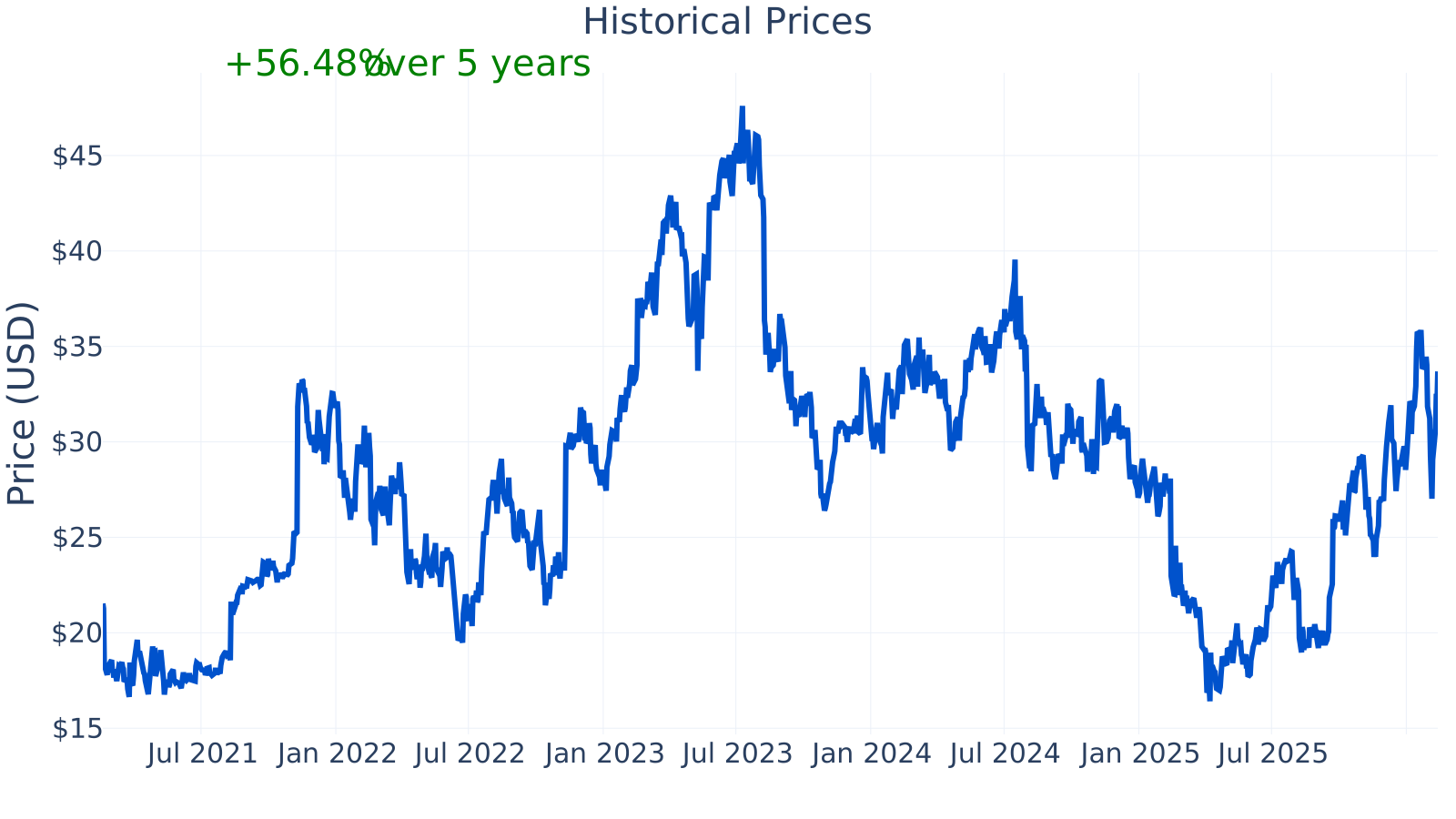
At the latest point shown, PDF Solutions has a market capitalization of about $1.33B and a beta of ~1.56, which is commonly interpreted as meaning the stock has tended to move more than the overall market. Recent fundamentals show a mixed picture: revenue growth year over year of ~24.6% (above the industry median of ~15.8%) alongside a slightly negative net profit margin of about -0.29% (below the industry median of ~7.66%). The company’s debt-to-equity is ~28.3%, somewhat above the industry median of ~24.7%. Free cash flow over the trailing twelve months is shown as -$20.5M, indicating cash outflow after operating needs and capital spending during that period.
Growth (medium)
PDF Solutions operates in and around the semiconductor ecosystem, which is shaped by long-term demand for more computing power and more chips in areas like data centers, networking, automotive electronics, and industrial systems. While the industry can be cyclical, the underlying trend toward more advanced manufacturing steps and tighter quality requirements tends to increase the value of analytics, process control, and software that can improve yield and shorten ramp times.
A key point for long-term growth is whether PDF Solutions can deepen its role in customers’ manufacturing flows and expand adoption across more production lines, more fabs, or more stages of the product lifecycle. In many software-and-analytics business models, growth can improve as deployments scale and recurring revenue becomes a larger share of the mix, although the pace depends on customer rollouts and industry conditions.
The year-over-year revenue growth shown has been strong at times (often above 20% and reaching much higher in earlier periods), dipped close to flat in parts of 2023–2024, and then re-accelerated into the mid-20% range by late 2025. That pattern is consistent with a business exposed to customer deployment timing and broader semiconductor cycles.
Free cash flow has also been uneven: it was positive in multiple periods (including a higher point around 2023) and later turned negative by 2025. For a company aiming to compound over long horizons, sustained positive free cash flow often becomes more important over time because it can fund product development and growth without relying as much on external financing.
Risks (high)
This article is for informational purposes only and does not constitute financial advice. Some content is AI-generated. See Disclaimer