Stock Analysis · PC Connection Inc (CNXN)
Overview
PC Connection, Inc. (CNXN) is a U.S.-based seller of information technology (IT) products and related services. In simple terms, it helps organizations and consumers choose, source, and deploy technology—such as computers, networking gear, software, and accessories—often bundled with configuration, installation, and support services. The company operates through multiple sales channels (including business-focused and public-sector-focused operations), with a model that mixes product resale (high volume, typically lower margins) and services (often higher margins).
Because PC Connection is primarily a technology reseller and solutions provider, revenue tends to be strongly influenced by overall IT spending cycles (for example: PC refresh cycles, infrastructure upgrades, and budget patterns in business and government).
Main sources of revenue are typically described in the company’s filings as a mix of:
- Hardware (computers, networking equipment, peripherals, and other devices)
- Software (licenses and related offerings)
- Services (configuration, warranty/service programs, and other support/solution services)
The company’s SEC filings are the best place to confirm the exact split and the definitions used for each category (and whether categories are presented as product groups, customer types, or operating segments).
Over the multi-year view shown, total revenue appears relatively stable within a broad range, while net income is positive each year. This is consistent with a distribution/reseller profile where cost of revenue is the largest line item and profitability depends heavily on managing operating expenses and maintaining disciplined pricing.
Key Figures
| Metric | Value | Industry ⓘ |
|---|---|---|
| Date | Feb 16, 2026 | |
| Context | ||
| Sector | Technology | |
| Industry | Electronics & Computer Distribution | |
| Market Cap ⓘ | $1.61B | |
| Beta ⓘ | 0.84 | |
| Fundamental | ||
| P/E Ratio ⓘ | 19.52 | 17.51 |
| Profit Margin ⓘ | 2.91% | 1.85% |
| Revenue Growth ⓘ | -0.80% | 9.70% |
| Debt to Equity ⓘ | 0.11% | 54.56% |
| PEG ⓘ | 1.64 | |
| Free Cash Flow ⓘ | $58.05M | |
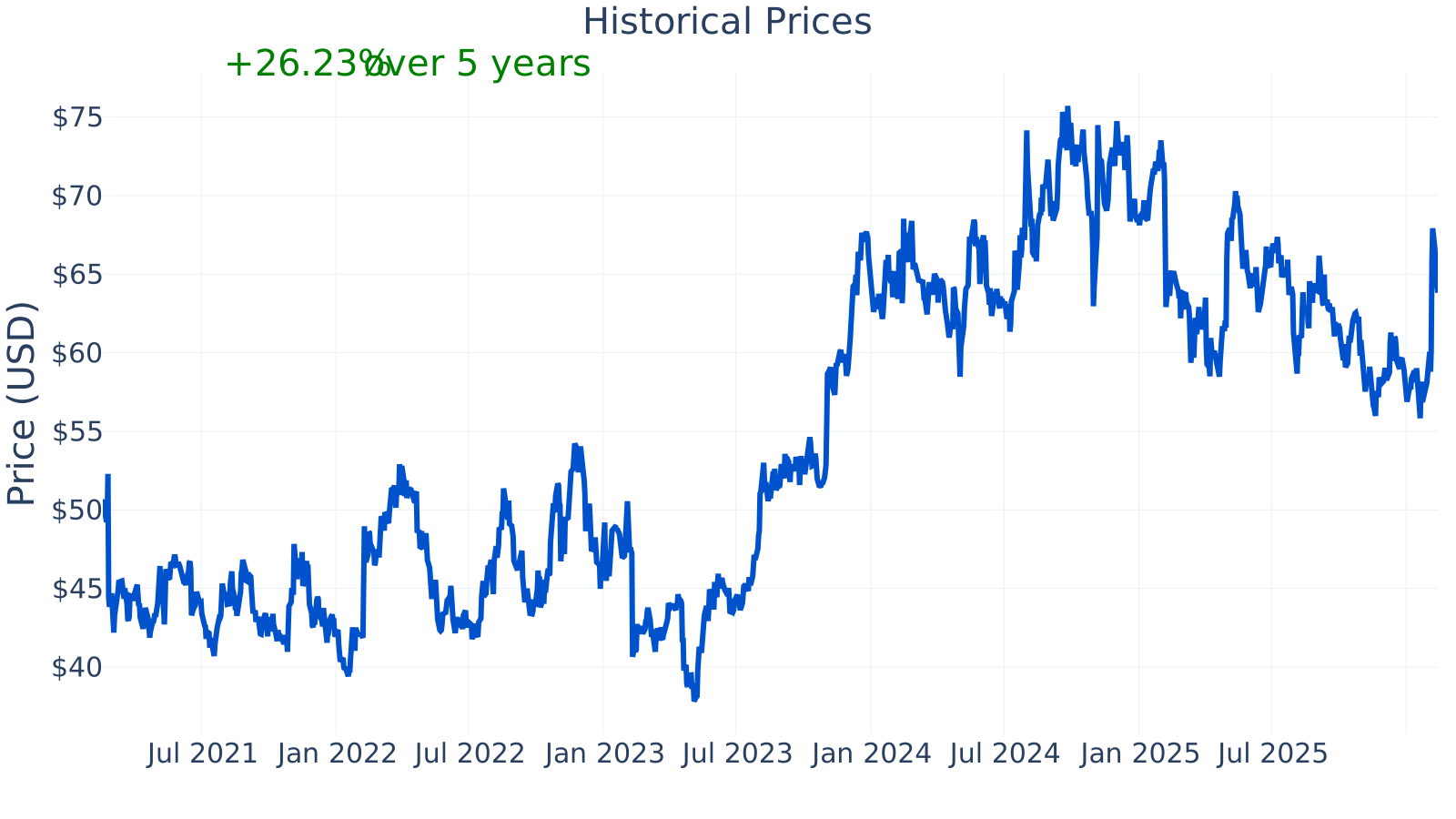
PC Connection’s market capitalization is about $1.61 billion, placing it in the small-cap range. The stock’s beta of 0.84 suggests it has historically moved somewhat less than the broader market. The company’s P/E ratio is about 19.5, slightly above the industry median shown (~17.5). Net profit margin is about 2.91%, which is higher than the industry median shown (~1.85%), reflecting relatively solid profitability for a distribution-style business. Revenue growth is currently modestly negative on a year-over-year basis (-0.84%) compared with the industry median shown (~9.7%). Balance-sheet leverage appears very low with debt-to-equity around 0.11% (far below the industry median shown). Trailing twelve-month free cash flow is about $58.0 million, indicating ongoing cash generation.
Growth (Medium)
PC Connection operates in the broad IT products and solutions ecosystem, which is supported over the long run by ongoing digitization, cybersecurity needs, cloud adoption, and periodic hardware refresh cycles. However, this area is also known for competitive pricing and demand that can fluctuate with corporate and government budgets. That combination often results in a business that can be durable over time, but not necessarily consistently “high growth” every year.
The year-over-year revenue growth pattern shown looks cyclical rather than steadily upward: strong positive growth in parts of 2021–2022, followed by a stretch of declines through 2023 and early 2024, and then mixed results into 2025 (including some quarters returning to growth). This type of profile can occur when demand normalizes after strong periods, when product categories soften (for example, PCs after a surge), or when large customer orders shift between periods.
Free cash flow over time shows meaningful variability, including a very strong period around 2024 followed by a lower (but still positive) level in 2025. For a reseller, free cash flow can swing with working-capital needs such as inventory levels and customer receivables, so it is often useful to look at it across multiple years rather than relying on a single point in time.
Potential forward-looking catalysts (in a neutral, descriptive sense) tend to be tied to: multi-year IT refresh cycles, expansion of higher-value services attached to product sales, and sustained demand from business and public-sector customers. The company’s filings typically discuss how it positions offerings across hardware, software, and services, which can matter for resilience when any single category slows.
Risks (Medium)
This article is for informational purposes only and does not constitute financial advice. Some content is AI-generated. See Disclaimer