Stock Analysis · Oracle Corporation (ORCL)
Overview
Oracle Corporation is a large enterprise software and cloud company. It is best known for database software used by organizations to run critical business systems, and it has expanded into cloud infrastructure (data centers that run computing and storage), cloud applications (such as finance, HR, and sales tools), and consulting/support services that help customers implement and operate Oracle products.
Oracle’s business model is centered on long-lived customer relationships. Many customers run essential workloads on Oracle databases and related tools, which can make switching to a different vendor complex and time-consuming. In recent years, Oracle has been pushing more of its offerings as subscriptions (cloud services), which typically means more recurring revenue compared with one-time license sales.
Main sources of revenue are typically described in company filings along these lines (exact percentages depend on the fiscal year and reporting categories):
- Cloud services and license support (recurring support and subscription-like revenue tied to Oracle software)
- Cloud license and on‑premise license (new software licenses and related rights)
- Hardware (engineered systems and related products)
- Services (consulting and implementation)
Across the business, the company’s cost structure reflects a software-and-cloud mix: substantial spending on research and development (to improve products and compete in cloud/AI infrastructure) and ongoing costs to run global data centers.
Over the last several fiscal years shown, total revenue increased (about $40.5B in FY2021 to about $57.4B in FY2025). Operating income also rose over that period, while research and development spending increased as well—consistent with a strategy focused on building and expanding cloud capabilities.
Key Figures
| Metric | Value | Industry ⓘ |
|---|---|---|
| Date | Mar 13, 2026 | |
| Context | ||
| Sector | Technology | |
| Industry | Software - Infrastructure | |
| Market Cap ⓘ | $457.44B | |
| Beta ⓘ | 1.65 | |
| Fundamental | ||
| P/E Ratio ⓘ | 29.92 | 27.58 |
| Profit Margin ⓘ | 25.30% | 7.12% |
| Revenue Growth ⓘ | 21.70% | 17.10% |
| Debt to Equity ⓘ | 392.09% | 24.92% |
| PEG ⓘ | 1.29 | |
| Free Cash Flow ⓘ | -$24.74B | |
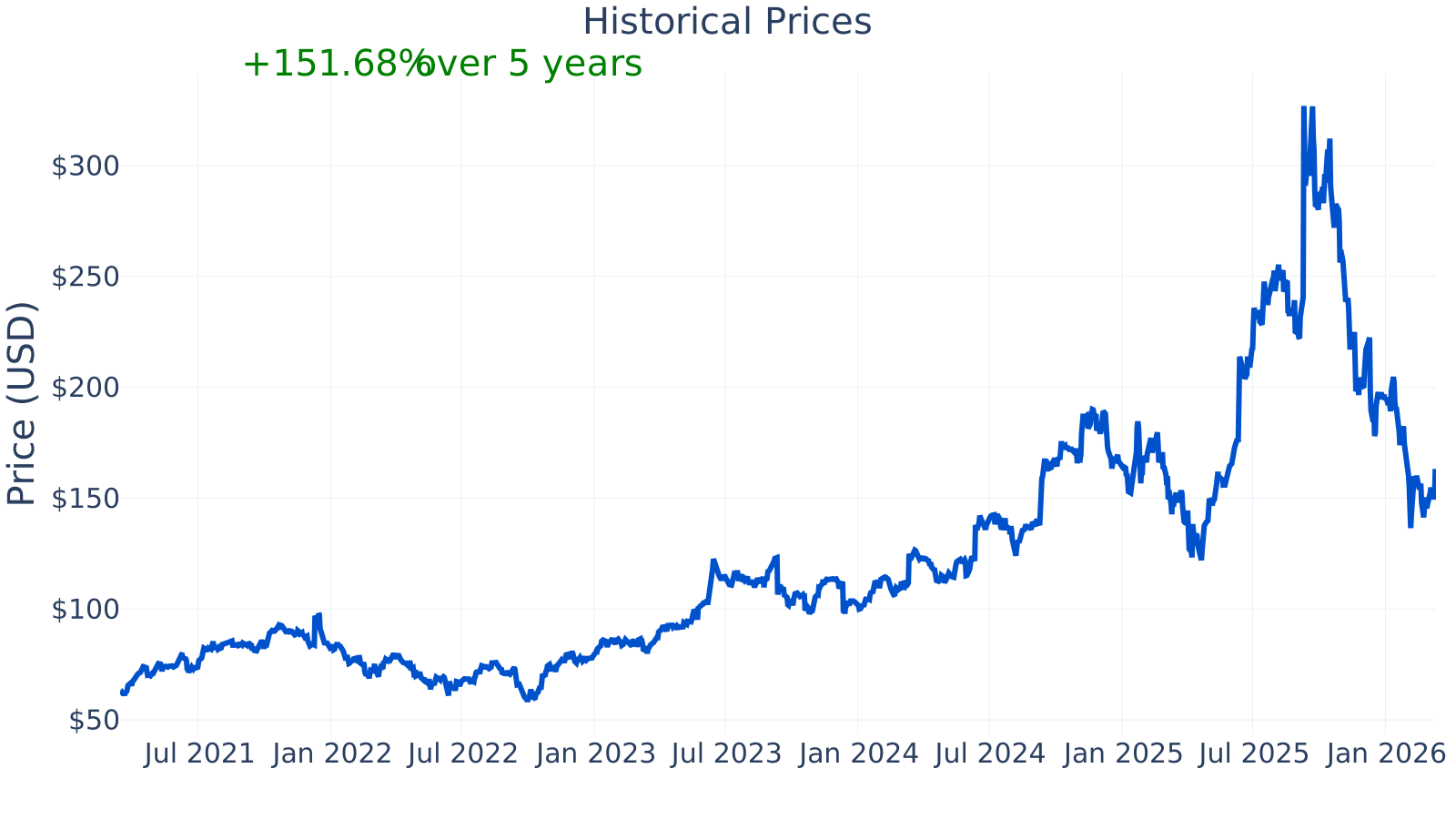
Oracle’s market capitalization is about $457B. The stock’s beta (~1.65) indicates it has historically moved more than the overall market, which can mean larger swings up or down. The company’s profit margin (~25.3%) is well above the industry median (~7.1%), suggesting strong profitability relative to many peers in Software - Infrastructure. Most recently shown year-over-year revenue growth is ~21.7%, above the industry median (~17.1%). A notable outlier is leverage: debt-to-equity is ~392% versus an industry median near 25%. Free cash flow (TTM) is shown as negative in the latest period, which stands out compared with prior years.
Growth (Medium)
Oracle operates in markets that have been growing over time: enterprise software, cloud computing, and data infrastructure. Organizations continue moving workloads from traditional, on‑premise data centers to cloud environments, while also modernizing core systems (finance, HR, supply chain) into subscription-based applications. These shifts can support multi-year demand for vendors that can offer secure, reliable platforms for mission-critical operations.
Oracle’s strategy centers on two complementary tracks: (1) defending and expanding its large installed base in databases and enterprise applications, and (2) growing Oracle Cloud Infrastructure (OCI) and cloud subscriptions so more revenue becomes recurring. In practice, this approach aims to keep long-term customers while capturing new spending as they modernize systems and adopt cloud capacity.
The year-over-year growth rate shown varies across time, with a notable re-acceleration in the latest period (about 21.6%). Earlier periods show slower growth at times, which highlights that Oracle’s growth can be uneven as products transition from licenses to subscriptions and as cloud capacity ramps.
Free cash flow is positive in several earlier periods (for example, about $12.3B in 2024) but turns negative in the latest trailing twelve months shown (about -$24.7B). For a cloud provider, a swing like this can be influenced by the timing of large capital expenditures (building data centers and purchasing equipment) and working capital movements. Even so, negative free cash flow is an important item to monitor because it can affect flexibility for debt repayment, buybacks, and other corporate uses of cash.
Risks (High)
Oracle faces several notable risks tied to competition, execution, and financial structure. Competition in cloud infrastructure and enterprise software is intense, and customers have meaningful bargaining power—especially large organizations that can negotiate pricing and multi-vendor strategies. Winning cloud workloads often requires major upfront investment in capacity, which can pressure cash generation in the short run.
The leverage level shown is high relative to the industry median. The latest debt-to-equity ratio is roughly 392% (versus an industry median near 19%). The historical series is also volatile, which can happen when equity levels change materially over time. High leverage can increase sensitivity to interest costs and refinancing conditions, and it reduces room for error if operating conditions weaken.
Profitability is a clear strength in the series: Oracle’s net profit margin trends around the low-to-mid 20% range recently and is shown at about 25.3% in the latest period, well above the industry median (about 7.0%). That said, margins can come under pressure if cloud infrastructure expansion requires aggressive pricing, if data-center costs rise, or if the mix shifts toward lower-margin activities.
In competitive positioning, Oracle has durable advantages in databases and deeply embedded enterprise systems, which can create switching friction and support long customer relationships. However, it is not the overall leader in public cloud infrastructure by scale. Major competitors include large cloud and software vendors such as Microsoft (Azure), Amazon (AWS), Google (Google Cloud), and IBM, as well as application-focused competitors in certain categories. Oracle’s ability to grow depends heavily on execution—converting its installed base to cloud subscriptions, successfully scaling cloud regions, and delivering performance/security that convinces customers to run critical workloads on OCI.
Valuation
The price-to-earnings (P/E) ratio shown fluctuates over time and is currently around 29.9, modestly above the industry median of about 27.6. Historically in the chart, Oracle’s P/E has ranged from the mid-teens to higher levels, with periods of expansion and contraction. A higher P/E typically implies the market is assigning more value to each dollar of current earnings, which can reflect expectations for future growth, improving margins, or a shift toward more recurring revenue. At the same time, when leverage is high and free cash flow is volatile, valuation can be more sensitive to changes in growth expectations or financing conditions.
In context, a near-industry P/E combined with above-industry profit margins suggests the market is recognizing Oracle’s profitability and its cloud transition, while still weighing the execution and capital intensity of competing in cloud infrastructure. Whether the current multiple is sustained over time depends largely on Oracle’s ability to translate revenue growth into durable cash generation while managing debt levels.
Conclusion
Oracle is a large, profitable enterprise technology company with entrenched positions in databases and business software and a strategy aimed at expanding recurring cloud revenue. The company has shown improving revenue scale over the multi-year period displayed and maintains profit margins well above the industry median, which is a meaningful operating strength.
At the same time, the latest figures highlight areas that can materially affect long-term outcomes: high leverage relative to peers and a sharp deterioration in trailing free cash flow. Oracle also operates in highly competitive markets where the largest players invest heavily and pricing pressure can emerge. A long-term assessment typically comes down to whether Oracle continues growing cloud subscriptions and infrastructure while restoring steadier cash generation and keeping financial risk within acceptable bounds.
Sources:
- U.S. Securities and Exchange Commission (SEC) — EDGAR Database (Oracle Corporation filings, including Form 10-K and 10-Q)
- Oracle Investor Relations — Annual Reports and SEC Filings
- Wikipedia — “Oracle Corporation” (general company background)
This article is for informational purposes only and does not constitute financial advice. Some content is AI-generated. See Disclaimer


